In Michigan, medical cannabis users prefer it to traditional medicines

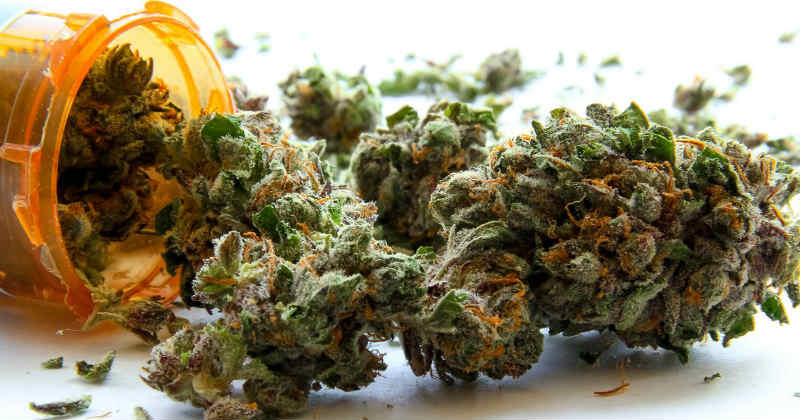
A survey conducted on American medical cannabis users shows that they prefer it to traditional medicines and consider it to be an effective alternative. This seems to reflect both a normalization of cannabis as medicine and a distrust of traditional pharmacy.
The survey
The research team conducted a paper survey of 450 adults (only 392 responses were validated). Respondents were approached at an event campaigning for cannabis law reform at the University of Michigan, which explains why the vast majority (78%) reported using medical cannabis. This sample is not necessarily representative of the American population, but the responses are interesting nonetheless.
Medical cannabis has been legal in Michigan since 2008 (and dispensaries since 2016) but the survey results suggest that many users practice self-medication. For example, 30% said they hadn't told their doctor they were using medical cannabis. Then, only 47% claimed to obtain their cannabis from a dispensary. Furthermore, none of the conditions most commonly cited by respondents to justify their use are listed in Michigan's medical program.
An alternative to opioids
These conditions include pain, back problems, anxiety, panic attacks, depression and bipolar disorder. These conditions are commonly treated with painkillers, opioids, anxiolytics and antidepressants. However, as a result of their use of medical cannabis, 42% of the users surveyed have stopped taking such drugs, and 38% have at least reduced their consumption.
This trend is indicative of a form of mistrust of opioids in the context of the current overdose epidemic in the United States. According to the French National Health Council, Today, it's more likely to die from an opioid overdose than from a road accident. Not only do users have more confidence in medical cannabis, they also find it more effective. According to the survey results, they consider it superior in terms of efficacy, side effects, safety, addictive potential, availability and price.
The challenges
In the context of the opioid crisis, medical cannabis has also become a political issue. In fact, it's an important theme in the upcoming US presidential election. Almost all the Democratic candidates are on the side of patients and see cannabis as a cure for the opioid crisis. Nevertheless, as the researchers point out, research into medical cannabis is currently shaky and insufficient, and some studies are sometimes contradictory.
The level of precision in administering medical cannabis (dose, dosage, strength) is very low compared with that of current pharmaceutical products. The effects of many cannabinoids are still poorly understood, and solid, systematic research needs to be carried out into the right dosage for each disease. We also need to educate consumers. Among the users surveyed, for example, 74% were unable to name specific varieties, and only 4% and 1 % were able to specify the THC and CBD content of their cannabis. Research is also lacking into the short- and long-term risks of this use, and when it is associated with risky activities such as driving.












«Vincy Gold»: Humboldt Seed Company on the Hunt for Saint Vincent Sativas

Cronos Completes the Acquisition of CanAdelaar for 57.5 million euros

Cannabis with a "bloody" twist: Discover Sensi True Blood and Sensi Sangria, the two new strains from Sensi Seeds

Hemp: The Council of the EU Takes a Stand on New Production and Marketing Rules

Missouri's legal cannabis market accounts for 93 % of consumer spending

THC Gummies: How to Read a Certificate of Analysis Before Buying

British patients now have access to THCV-rich cannabis flowers

Spain: Medical Cannabis Is Coming to About 50 Hospitals

JIHE 2026: Japan’s Largest Trade Show Dedicated to Hemp and CBD Returns to Tokyo with More Than 100 Industry Players

New Caledonia: The Courts Clear the Way for the Return of CBD
-
 Business3 weeks ago
The legal cannabis market in New York exceeds 4 billion $ in revenue
-

 Cannabis in France4 weeks ago
Which countries legalized medical cannabis before France?
-
Cannabis in France1 week ago
France already has 3,000 cannabis retail outlets. None of them are legal.
-
Business4 weeks ago
South Korea is preparing to begin local production of medical cannabis to meet rising demand
-
Cannabis in the U.S.1 week ago
A DEA report confirms that there are no fatal cannabis overdoses
-
Cannabis in Thailand4 weeks ago
From the boom in dispensaries to a purely medical approach: Thailand is revising its cannabis policy
-
Cannabis and driving4 weeks ago
Medical Cannabis and Driving: New South Wales Ends Automatic Penalties for THC
-
Cannabis in France3 weeks ago
France’s Drug Policy Chief Defends Cannabis Prohibition... and Runs Into the Facts
















You must be logged in to post a comment Login