
Study: 70% of the best-selling CBD products in the USA contaminated with heavy metals and pesticides

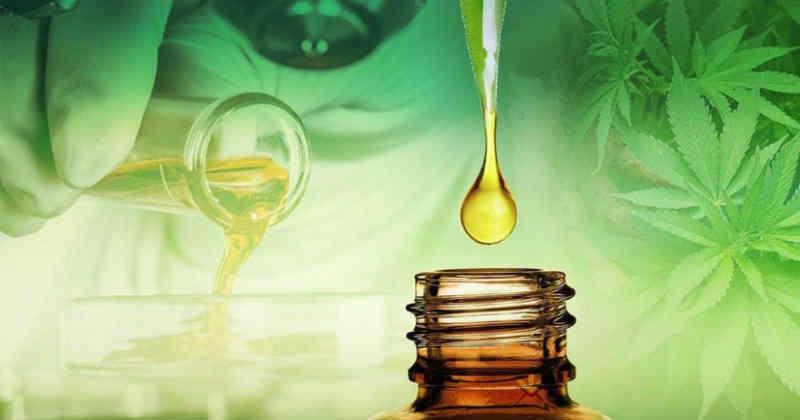
In a survey Recently, the laboratories Ellipse Analytics tested the 240 best-selling CBD products—both online and at retailers outside of dispensaries—in the United States. They tested for the presence of more than 300 contaminants and verified the accuracy of the labels regarding CBD content. The results are clear: 70% of these products contain significant levels of heavy metals, pesticides, toxic mold, and other substances hazardous to human health.
Alarming test results
The tests indicate that 70% of the products are «heavily contaminated.» Among other substances, they contain lead, arsenic, glyphosate, and bisphenol A. In one product in particular, the tests revealed lead levels 100 times higher than the threshold set by the Environmental Protection Agency for drinking water. The company that manufactures it, Ananda Hemp, protested these results.
Jason Cranford, a cannabis grower from Colorado, explains: «Overseas, they use hemp as a cover crop. They use it specifically to absorb pesticides and heavy metals from their soil so they can replant food crops afterward. These hemp crops are then imported into the United States, and people use them to make CBD. What’s really scary is that when there are these kinds of contaminants in the plant material and you turn it into oil, you concentrate them.».
The United States have legalized hemp this year paving the way for domestic cultivation of the plant. Previously, the country imported all of its hemp. The vast majority of the imported hemp came from China which is the world's leading producer of hemp. Currently, about 70% of U.S. hemp is still imported from China. This trade dependency was precisely what spurred its legalization in the United States.
An Industry in Need of Regulation
«We have an industry with a widespread quality control problem,» explains Dr. Sean Callan, director of research for Ellipse Analytics. « »Compared to other products [other than CBD] that we tested, we found very high levels of pesticides and very high levels of heavy metals.".
In addition to these toxic substances, the research team found that the CBD content rarely matched the levels listed on the labels. «There are several products whose labels claimed they contained CBD, but in which we found no CBD at all. On the other end of the spectrum, there are products that had five or six times the CBD content they claimed to have,» Callan explains. «They [the producers] are required by federal law to test THC levels, but there are no regulations requiring them to test CBD levels.».
This isn't the first study to highlight these kinds of issues. The problem with misleading labels had already been raised by the Spanish Medical Cannabis Observatory in a study that showed that two-thirds of the CBD oils tested did not contain the CBD concentration listed on their labels. As for the chemical components, a study by Virginia Commonwealth University had even detected the presence of the molecule 5F-ADB, a compound found in so-called «synthetic» cannabis» found on the street (K2, Spice), in CBD e-liquid.
Cases of poisoning following the ingestion of contaminated CBD products have been reported numerous times, particularly in the United States—although these problems are not limited to the United States. The CBD boom has attracted all kinds of opportunists who do not necessarily prioritize consumer protection. Furthermore, the lack of regulation prevents consumers from separating the wheat from the chaff and exposes them to contaminated products. The U.S. CBD market is estimated at $22 million in 2022.








A new tax of 0.5% could disrupt the hemp industry in Canada

Medical Cannabis and Driving: New South Wales Ends Automatic Penalties for THC

China's Yongji Health Takes Control of Tasmanian Botanics

Autism and Cannabis: Results from the First Placebo-Controlled Trial of NTI164

Which countries legalized medical cannabis before France?

From the boom in dispensaries to a purely medical approach: Thailand is revising its cannabis policy

South Korea is preparing to begin local production of medical cannabis to meet rising demand

In the United States, cannabis use among high school students has reached an all-time low

Medical cannabis use surges by 64 % in Denmark

Canopy Growth Enters the U.K. Market with Four Canadian Strains
-
 Cannabis and driving2 weeks ago
Cannabis and CBD: French Drivers Can Now Lose Their License Even Without a Positive Test Result
-

 Cannabis in France2 days ago
Which countries legalized medical cannabis before France?
-
Cannabis in France3 weeks ago
Cannabis Legalization: The LFI Bill Has a Major Problem—THC
-
Cannabis in the Netherlands2 weeks ago
One year after the launch of the Dutch cannabis experiment, the first trends are emerging
-
Cannabis in France2 weeks ago
French medical cannabis remains stalled at the Ministry of Health
-
Cannabis in Argentina1 week ago
Argentina Opens Its Market to Hemp Flowers Containing 1% of THC
-
Business3 days ago
South Korea is preparing to begin local production of medical cannabis to meet rising demand
-
Business2 weeks ago
The United Kingdom Is Moving Closer to a Regulated CBD Market












marce
June 9, 2019 at 10:45 p.m.
That’s why you need to go through a company that has its CBD oils tested by a lab. I stopped buying from the U.S. because the products there are often handmade and unregulated; in Europe, there are https://www.naturicious.com which is pretty good—they use THC-free oils that are guaranteed to be free of heavy metals and pesticides; you have to ask them for the test results via email.