Study: at high doses, CBD could be toxic to the liver

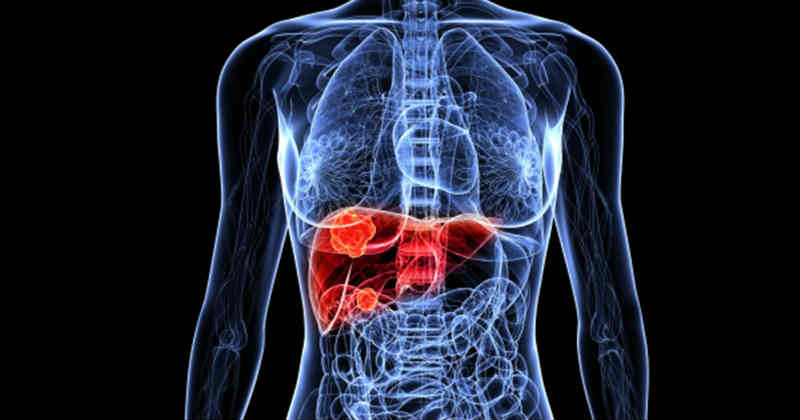
CBD has emerged in recent years as a must-have wellness trend and potential remedy for a variety of conditions. A new study suggests that at high doses, CBD could be toxic to the liver.
Worrying results
Cannabis interacts with the CB1 and CB2 receptors on the endocannabinoid system. These are mainly located in the brain, but high concentrations are also found in other organs, including the liver. Taking CBD therefore has the potential to alter the normal functioning of the liver. It is also known to block the degradation of certain drugs by the liver, which is why it is contraindicated in conjunction with certain treatments.
Researchers at the University of Arkansas for Medical Sciences wanted to go a step further, conducting a study on mice to investigate possible CBD toxicity on the liver. To establish the doses to be administered, the researchers referred to the safety recommendations indicated for Epidiolex - this CBD oil used to treat epilepsy is the first cannabis-based medicine FDA-approved.
The dose recommended daily limit for humans is 20mg/kg. This limit was then adapted for experimentation on mice. Mice were given varying doses of CBD, some in one day (acute intoxication), others over ten days (progressive intoxication). They received 0, 246, 738 or 2460 mg/kg over 24 hours, or daily doses of 0, 61.5, 184.5 or 615 mg/kg for 10 days.
At 2460 mg/kg, mice showed immediate signs of liver damage: increased liver weight compared to the body, increased plasma ALT and AST enzymes signaling liver cell destruction, and increased levels of bilirubin, a product of red blood cell disintegration that is normally metabolized by the liver and whose accumulation signals liver dysfunction. At 615 mg/kg daily, 75% mice developed liver disease by the third or fourth day.
«Expression arrays of genes related to hepatotoxicity revealed that CBD regulates more than 50 genes, most of which are related to oxidative stress response, lipid metabolism pathways and drug metabolizing enzymes,» the researchers write. «In conclusion, CBD shows clear signs of hepatotoxicity, possibly of a cholestatic nature (impediment to bile evacuation). The involvement of numerous chemical synthesis pathways associated with lipid and xenobiotic metabolism raises serious questions about CBD's potential interaction with drugs, as well as its overall safety.».
In other words, it seems that CBD disrupts the liver's ability to metabolize a number of molecules, including lipids - leading to an accumulation of fat in the liver, otherwise known as hepatic steatosis - and certain therapeutic molecules, including antibiotics. What's more, at too high a dose, it appears that it could even be highly toxic, i.e. cause liver cell damage and destruction.
Study director Igor Koturbash, specifies that these risks are known, as they are clearly indicated on the leaflet Epidiolex When you look at the Epidiolex leaflet, it clearly states that it can cause liver damage. It states that the patient's enzyme levels should be monitored. In clinical trials, 5 to 20% of patients developed elevated enzyme levels and some had to be withdrawn from the trials«.
How the liver reacts seems to depend on the patient, his or her condition and the dose ingested. It would seem, among other things, that taking CBD is contraindicated in cases of Hepatitis C: «Hepatitis C patients who use cannabis have more liver scarring than those who don't, and their disease progresses more rapidly. Something in cannabis could increase hepatic steatosis», explains Dr. Hardeep Singh, a Californian gastroenterologist. These results are corroborated by other studies. However, in the case of hepatic steatosis induced by excess alcohol, CBD seems to have a positive effect.
To date, no CBD intoxication has ever been reported in humans and the WHO considers that the molecule is safe and without risk of abuse. What's more, most conventional drugs also damage the liver. The same is true of alcohol. This should not invalidate its medical use, but it does raise a number of questions about its use in everyday consumer products and maximum exposure limits.






JIHE 2026: Japan’s Largest Trade Show Dedicated to Hemp and CBD Returns to Tokyo with More Than 100 Industry Players

New Caledonia: The Courts Clear the Way for the Return of CBD

The Brazilian medical cannabis market continues to grow

Morocco: Three Cannabis-Based Medications Approved for the Treatment of Epilepsy

Canopy Growth Receives New EU-GMP Certification to Strengthen Its Presence in Europe

Three years after legalizing medical cannabis, Albania continues to establish regulations for it

The first plant-based medical THC spray arrives in the United Kingdom

Medical Cannabis in Germany: THC Prices Vary by a Factor of 12

France already has 3,000 cannabis retail outlets. None of them are legal.

Morocco's exports of legal cannabis have expanded to 15 countries
-
 Business2 weeks ago
The legal cannabis market in New York exceeds 4 billion $ in revenue
-

 Cannabis in France4 weeks ago
Which countries legalized medical cannabis before France?
-
Business4 weeks ago
South Korea is preparing to begin local production of medical cannabis to meet rising demand
-
Cannabis in France4 days ago
France already has 3,000 cannabis retail outlets. None of them are legal.
-
Cannabis in Thailand4 weeks ago
From the boom in dispensaries to a purely medical approach: Thailand is revising its cannabis policy
-
Cannabis in the U.S.5 days ago
A DEA report confirms that there are no fatal cannabis overdoses
-
Cannabis and driving3 weeks ago
Medical Cannabis and Driving: New South Wales Ends Automatic Penalties for THC
-
Cannabis in France3 weeks ago
France’s Drug Policy Chief Defends Cannabis Prohibition... and Runs Into the Facts
















You must be logged in to post a comment Login