China in contradiction: the cannabis industry expands but prohibition persists

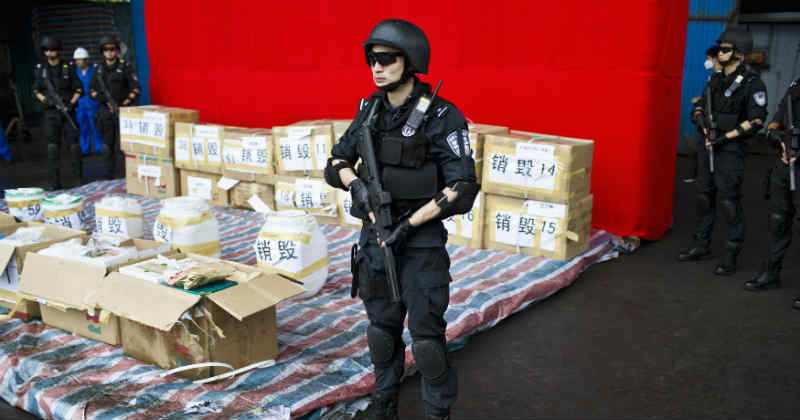
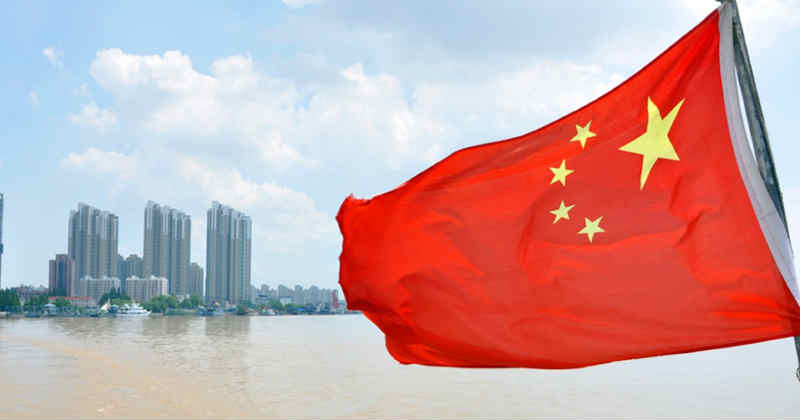
China maintains a latent contradiction between its industrial use of cannabis and its extremely strict anti-cannabis laws. The world leader in hemp production, China produces around a third of the world's hemp, which it exports in large quantities to the United States. Despite growing economic interest in the plant, its consumption remains a social taboo.
A collaboration between China and Israel?
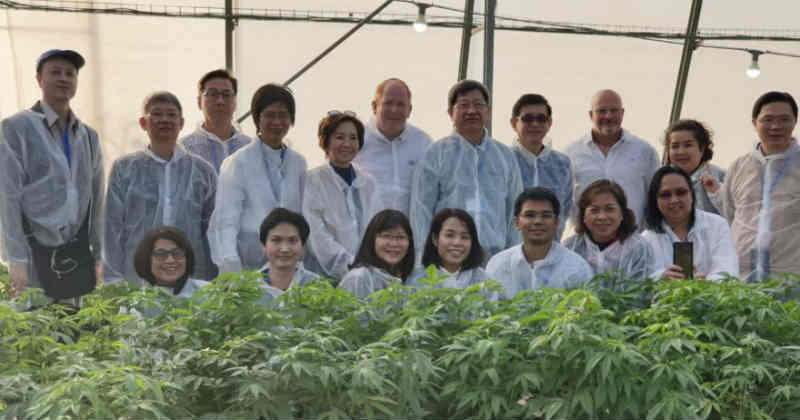
Last week, China sent a delegation to Israel. Composed of entrepreneurs and researchers in the agricultural technology sector, the Chinese delegation is due to meet their Israeli counterparts working in the medical cannabis industry. According to Ascher Shmulewitz, President of Therapix Biosciences Ltd, who accompanies the Chinese group. His company, based on the outskirts of Tel Aviv, works on the development of pharmaceutical products composed of cannabinoids.
The delegation will meet leading figures from research and industry who are currently working to create new products and discover new therapeutic applications for the plant. Israel is a world leader in cannabis R&D. Some 70 Israeli start-ups are currently developing cannabis-related technologies or products. What's more, the country's government has just approved an export law. On the other hand, thanks to its large hemp production, dynamic business sector and numerous scientists, China has the potential to become a cannabis superpower. It could greatly benefit from Israeli expertise in the field.
Chinese industry cannabis is growing fast
Despite the taboo surrounding cannabis in China, Chinese companies are already positioning themselves to tap foreign markets in Europe and America. In the Xishuangbanna Industrial Eco-Park in Yunnan province, for example CannAcubed produces CBD and hemp clothing for export to Europe. Stock market analysis website Chineseinvestors also announced that it was investing in the XiBiDi laboratory, which is to produce CBD-based cosmetics and pharmaceutical products. Chinesinvestors has also launched the ChineseCBDoil.com website, which will deliver CBD products to all countries where it is legal. With the hemp legalization at the federal level in the United States, the American CBD market promises to explode.
Chinese companies are also looking to develop new pharmaceutical products that can be patented. Hemp Investment Group (HIG), a Beijing-based investment firm has announced in the press that it is partnering with the military to develop CBD-based products that could treat post-traumatic stress disorder. Demand for such a product is extremely high in the United States, where veterans militate for several years to get cannabis approved as a treatment for this syndrome. HIG has also associated with Best Health International Industry Group, a Hong Kong-based pharmaceutical company, for the development of new cannabis-based medicines. «We estimate that the sector will become a 100 billion yuan (13 billion euros) industry for China within the next five years».» says HIG President Tan Xin.
China maintains extremely strict anti-drug laws
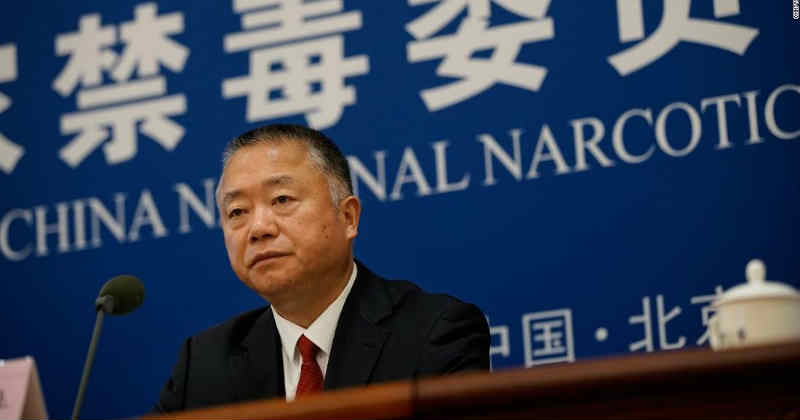
Despite China's emerging cannabis industry, its consumption (even outside the country) and above all its trafficking remain punished by extremely harsh laws that include, in particular, life imprisonment and the death penalty. In its 2017 annual report, Amnesty International estimated that China has executed more people than the rest of the world combined, even though the number of executions is still classified as a state secret. China sometimes conducts theatrical public trials in which it stages these sentences. In 2017, the public trial of 10 individuals death row inmates drew thousands of Chinese into a stadium. Of the 10 condemned, 7 were accused of drug trafficking.
Since 2009, at least a dozen foreigners were executed in China for drug trafficking. The latest conviction is that of a 36-year-old Canadian, Robert Lloyd Schellenberg, sentenced for drug trafficking by a court in the northern city of Dalian. He had appealed his first conviction (15 years in prison), but in the context of the worsening Sino-Canadian diplomatic relations he received a death sentence.
In some respects, China's attitude is reminiscent of Colombia's contradictions, but much more extreme. The latter has sought to attract the international cannabis industry and has gradually converted itself into a production platform. Yet it has recently recriminalized the consumption of small quantities of cannabis. This kind of posture is the sign of a fracture between the economic and social vision of cannabis, and shows that the development of the cannabis industry is not necessarily accompanied by a form of liberalism.










Medical Cannabis in Germany: THC Prices Vary by a Factor of 12

France already has 3,000 cannabis retail outlets. None of them are legal.

Morocco's exports of legal cannabis have expanded to 15 countries

Aurora Cannabis Doubles Its Production Capacity in Germany

Tilray is accelerating its operations in Europe thanks to a license in Portugal

Boston will host the 10th annual State of the Cannabis Industry Conference on October 26

A DEA report confirms that there are no fatal cannabis overdoses

A British patient is challenging the NHS's refusal to reimburse medical cannabis

October 2026 CBD Highlights: 10 Strains and Hash to Discover from 5 French Producers

CBD in France: Traceability, Retail Stores, THC and Driving… What the New Bill Proposes
-
 Business2 weeks ago
The legal cannabis market in New York exceeds 4 billion $ in revenue
-

 Cannabis in France3 weeks ago
Which countries legalized medical cannabis before France?
-
Business3 weeks ago
South Korea is preparing to begin local production of medical cannabis to meet rising demand
-
Cannabis in Thailand3 weeks ago
From the boom in dispensaries to a purely medical approach: Thailand is revising its cannabis policy
-
Cannabis and driving3 weeks ago
Medical Cannabis and Driving: New South Wales Ends Automatic Penalties for THC
-
Cannabis in Argentina4 weeks ago
Argentina Opens Its Market to Hemp Flowers Containing 1% of THC
-
Autism3 weeks ago
Autism and Cannabis: Results from the First Placebo-Controlled Trial of NTI164
-
Cannabis in France2 weeks ago
France’s Drug Policy Chief Defends Cannabis Prohibition... and Runs Into the Facts

















You must be logged in to post a comment Login