After CBD, South Korea is betting on CBG, CBN, and CBC starting in 2027


South Korea is preparing to expand its medical cannabis initiatives beyond CBD. Starting in 2027, the country plans to expand research and experimental production to three other cannabinoids : cannabigerol (CBG), cannabinol (CBN), and cannabichromene (CBC). This initiative is part of a four-year investment program aimed at strengthening domestic pharmaceutical production and establishing a regulated cannabis supply chain.
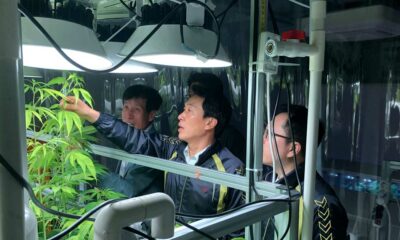
This announcement follows the October 30 visit by Lee So-young, South Korea’s Minister of SMEs and Startups, to the regulatory free zone dedicated to industrial hemp in Andong, North Gyeongsang Province. The meeting brought together government officials, lawmakers, and industry representatives to discuss the future of the country’s emerging medical cannabis sector.
South Korea is allocating $22 million to cannabinoid research and development
Established in 2020, the Andong Regulatory Free Zone for Industrial Hemp has served as a testing ground for cannabis cultivation, the extraction of pharmaceutical ingredients, and regulatory oversight. To date, much of its experimental work has focused on the cannabidiol (CBD). The next phase will significantly expand this scope of action.
According to the South Korean news agency Newsis, Andong plans to invest 29.5 billion won (approximately $22 million) between 2027 and 2030 in new experimental projects. These will include the development of production capacity for CBG, CBN, and CBC—three cannabinoids found in smaller quantities in the cannabis plant.
The program will also establish a comprehensive safety management system for controlled pharmaceutical ingredients, covering production, processing, and traceability. The goal is to move beyond isolated research projects and evolve toward an integrated industrial model capable of supporting future pharmaceutical manufacturing.
Why are CBG, CBN, and CBC generating so much interest?
The move beyond CBD reflects the growing scientific interest in the broader chemical composition of Cannabis sativa. While CBD has already gained pharmaceutical recognition through medications such as the’Epidiolex, while other cannabinoids are still in the early stages of research.
The CBG (cannabigerol) is being studied for its potential anti-inflammatory and neurological properties. The CBC (cannabichromene) has sparked interest in preclinical research, particularly with regard to inflammation and pain. The CBN (cannabinol), a compound associated with the breakdown of THC, is also being studied for potential therapeutic applications.
However, the evidence supporting their clinical efficacy remains limited. Research findings—particularly those obtained in laboratory or animal studies—should not be confused with proven benefits in patients.
For South Korea, the development of production methods for these compounds could provide pharmaceutical researchers with more consistent access to standardized raw materials.
Andong hopes to establish an integrated medical cannabis industry
Regional authorities are also considering a broader industrial infrastructure linking smart agriculture facilities, the manufacturing of pharmaceutical ingredients, and the production of finished drugs.
According to the New Daily, the proposed model would include facilities operating in accordance with Good Manufacturing Practice (GMP) standards, as well as contract development and manufacturing organizations (CDMOs).
This approach would allow the various stages of pharmaceutical production to be integrated into a coordinated national ecosystem.
At the October meeting, participating companies called for regulatory changes, additional public funding, and financial support to help bring the technologies developed within the pilot zone to market.
Despite six years of trials, South Korea’s restrictive cannabis laws continue to complicate the transition from research to commercial pharmaceutical production.
Regulatory reform remains the key challenge
This new program comes as South Korean lawmakers are considering legislation that would authorize the domestic production of medical cannabis.
Introduced by Kim Hyung-dong of the People Power Party, the proposed amendment to the Narcotics Control Act aims to facilitate the domestic development and manufacture of CBD-based pharmaceutical products.
Among its stated objectives are reducing dependence on imported drugs and improving access to treatment for patients with rare diseases, particularly severe epilepsy.
Mr. Kim, who attended the meeting in Andong, reiterated his intention to move this bill forward.
However, the proposed legislative changes have not yet been adopted, and the expansion of experimental cannabinoid production does not constitute authorization for commercial sale.























After CBD, South Korea is betting on CBG, CBN, and CBC starting in 2027

Massachusetts Rejects Repeal of Cannabis Legalization by an Overwhelming Majority

Organigram is set to acquire Aurora for 360 million euros

Massachusetts Set to Allow Out-of-State Patients Access to Medical Cannabis

Italy Faces a Shortage of Medical Cannabis Following the Bankruptcy of Its Main Supplier

CBG and High Blood Pressure: A New Study Reveals Surprising Cardiovascular Effects

Medical Cannabis: Patients Issue a Formal Notice to the Government to Break the Deadlock

The DEA has approved 900 medical cannabis dispensaries but is closing the door on others

Cannabis and Heart Disease: New Studies Raise Questions About Cardiovascular Risks and Strokes

Chronic Pain: New Zealand Is Testing Cannabis to Improve Sleep
-
 Cannabis in France3 weeks ago
France already has 3,000 cannabis retail outlets. None of them are legal.
-
Business2 weeks ago
Cronos Completes the Acquisition of CanAdelaar for 57.5 million euros
-
Cannabis in Quebec6 days ago
Cannabis: What France Could Learn from Quebec, Eight Years After Legalization
-
Cannabis in the U.S.3 weeks ago
A DEA report confirms that there are no fatal cannabis overdoses
-
Studies on cannabis3 weeks ago
Cannabis Oil and Endometriosis: A Promising Study for Pain Relief
-
Business3 weeks ago
Tilray is accelerating its operations in Europe thanks to a license in Portugal
-
Cannabis in France3 weeks ago
CBD in France: Traceability, Retail Stores, THC and Driving… What the New Bill Proposes
-
CBD4 weeks ago
In Brazil, researchers are developing an innovative CBD eye drop
















You must be logged in to post a comment Login