UK: Health Secretary calls on public service doctors to prescribe medical cannabis


A new case of a seriously ill child being denied cannabis treatment has prompted the British Secretary of State for Health to speak out about the ineffectiveness of the UK’s medical cannabis program. He spoke of «immense frustration» over the refusal of public-sector doctors to prescribe cannabis to patients. Currently, only patients wealthy enough to afford private practitioners have genuine access to medical cannabis.
Following Billy Caldwell and Alfie Dingley, Teagan Appleby
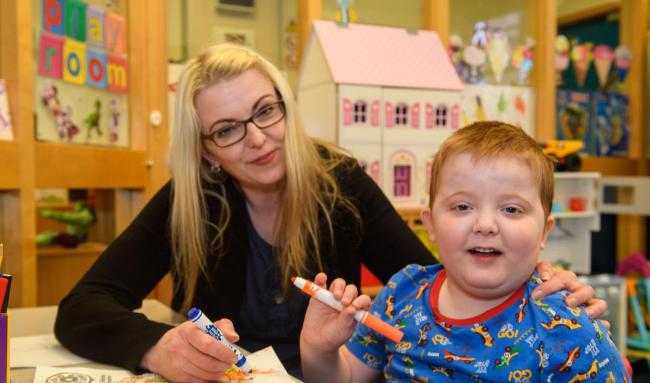
Teagan Appleby is a nine-year-old girl with a rare genetic disorder that causes her to have some 300 seizures a day. Her parents had found that cannabis treatment could reduce her seizures and offer hope for a better quality of life for their child. After being denied an import license, Teagan’s mother, Emma Appleby, set out to obtain cannabis oil herself in the Netherlands. The oil was entirely confiscated by customs from Southend Airport last weekend. The seized oil was enough for three months of treatment and was worth £4,500.

The case looks exactly like what Billy Caldwell's mother went through whose cannabis oil had been confiscated upon her return from Canada. In fact, it was this case and that of Alfie Dingley, a child with epilepsy whom the government had refused to grant a license, who had raised public awareness about medical cannabis and pushed for British leaders to legalize it. Media coverage of this new case highlights the flaws in the system. Indeed, despite the legalization Medical cannabis is unavailable through the public health care system (NHS).
A two-tier system
Medical cannabis is, however, available through private healthcare providers, but it is not covered by insurance and is prohibitively expensive for many patients. For example, in the the very first specialized clinic which recently opened; a simple consultation costs about £200, and treatment costs about £700 per month without any health insurance coverage. This wealth-based preferential access has been criticized many times.
«A system where only families with money can access medical cannabis is a betrayal of the principles of the NHS. Some families, like mine, have limited means. The NHS should provide the best possible care available, and that shouldn’t depend on whether or not you have money,» said an indignant Emma Appleby. For Carly Barton, an activist with the’United Patients Alliance (UPA), who has fibromyalgia, echoes this sentiment: «I’m a criminal just because I can’t afford treatment that costs £1,400 a month.»
The NHS Shutdown
The problem lies with the doctors of the NHS—or rather, of its leadership. In fact, two leading medical institutions, the Royal College of Physicians (RCP) and the British Pediatric Neurology Association (BPNA) have taken a stance against prescribing cannabis because they believe the evidence of its effectiveness is insufficient. Most prescriptions for medical cannabis are denied on this basis. NHS institutions also require that all conventional treatment options (including surgery in some cases) have been exhausted before considering a prescription for medical cannabis.
Even when a doctor agrees to prescribe medical cannabis, the prescription must be approved by a higher-level committee, which in the vast majority of cases rejects it. This is what happened to Carly Barton, who uses medical cannabis to relieve her chronic pain after unsuccessfully trying extremely potent opioid treatments (morphine, fentanyl). She explains that a doctor had prescribed medical cannabis for her, but that her prescription was blocked by the clinical committee. «I have no choice but to become a «criminal» again,” she laments.
In the private sector, on the other hand, doctors are free to prescribe cannabis as they see fit. «Private doctors are not accountable to NHS management, so if they believe that medical cannabis is a viable treatment option, they can prescribe it directly without going through the highly bureaucratic process of obtaining approval from a trust committee ,» explains Dr. Dani Gordon, an expert in medical cannabis.
A political reaction
Summoned to the House of Representatives last Monday, Health Secretary Matthew Hancock, spoke on the subject : «We’ve changed the laws to ensure that medical cannabis is made available. To do that, we need clinical approval. The problem is that this approval isn’t coming through. This is a huge source of frustration for me, as you can imagine, and we’re currently trying to resolve the issue.» He assured lawmakers that he had demanded the NHS remove the barriers preventing the prescription of medical cannabis.
During the session, Congressman Philip Hollobone raised an interesting paradox: «While several police departments have recently publicly admitted that…’they would no longer prosecute recreational cannabis users, », customs officials from the Ministry of the Interior are taking action to stop the trafficking of a seriously ill child.".












Hemp-derived THC: U.S. Senators Are Divided Over the Ban

Sweden Will End Reimbursement for Medical Cannabis

Georgia Becomes the First U.S. State to Ship Medical Cannabis via the Postal Service

New Zealand cannabis is making its way to Europe, and its terpenes are on fire

The UK's largest pharmacy chain is launching a medical cannabis service

Medical cannabis: still no executive orders, but a new report is coming soon

Netherlands: Edibles at the Center of a Policy Review of the Cannabis Experiment

Ottawa Simplifies Cannabis Taxes, Without Reducing the Tax Burden on Producers

Malta Wants Licenses for the Sale of «CBD Products»

From «Cannabro» to «AI Bro»: Some U.S. cannabis growers are envisioning a new future in data centers
-
 Business4 weeks ago
Cronos Completes the Acquisition of CanAdelaar for 57.5 million euros
-
Cannabis in Quebec3 weeks ago
Cannabis: What France Could Learn from Quebec, Eight Years After Legalization
-
Cannabis in New Zealand3 weeks ago
Chronic Pain: New Zealand Is Testing Cannabis to Improve Sleep
-
Cannabis in France3 weeks ago
Dr. Pascal Douek, a tireless advocate for medical cannabis in France, has died
-
Cannabis in France3 weeks ago
Medical cannabis: The Greens introduce two amendments to accelerate its widespread adoption
-
Cannabis in Spain4 weeks ago
Spain: Medical Cannabis Is Coming to About 50 Hospitals
-
Business4 weeks ago
British patients now have access to THCV-rich cannabis flowers
-
Cannabis in Canada3 weeks ago
A Canadian study reveals the pleasant psychotropic effects of high-dose CBD















You must be logged in to post a comment Login