Medical cannabis now available in the UK

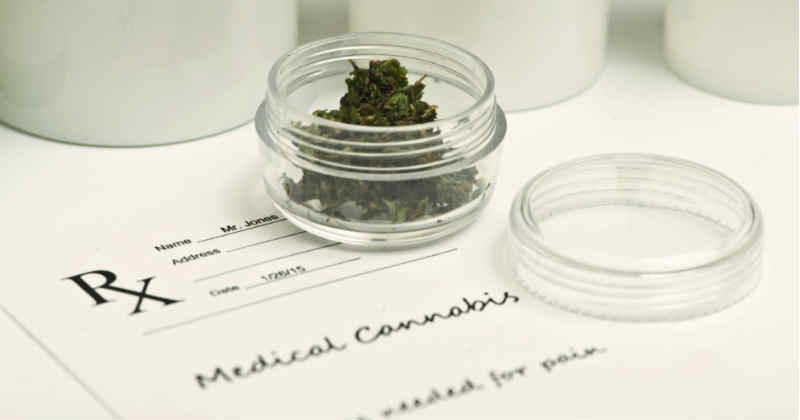
Medical cannabis is now available in the UK, but government regulations make it almost impossible to access. Due to a lack of information or fear of the legal consequences for their careers, specialist doctors authorized to prescribe are very reluctant to prescribe unverified and unlicensed medicine. Despite the official entry into force of the regulations yesterday, there is every reason to believe that the practical introduction of the medical cannabis in the UK will be marked by strong inertia.
ADVERTISING
Recognition of medical cannabis
The high-profile cases of two children suffering from severe forms of epilepsy and treating themselves with cannabis led the UK Home Office to launch a review of the status of cannabis last June. The first phase of this review was led by the UK's Chief Medical Officer, Professor Dame Sally Davies. She concluded that there was convincing evidence of the therapeutic benefits of cannabis, and recommended the reclassification of therapeutic products containing cannabis off the market. schedule 1 which prohibited them. Then the’Advisory Council on the Misuse of Drugs which also recommended that «the« cannabis-based medicines that meet the appropriate standards» are classified outside the Schedule 1.
Faced with these recommendations, the government decided to initiate regulations aimed at reclassifying cannabis-based medicines in the schedule 2. These regulations do not concern drugs containing synthetic cannabinoids, whose status will be addressed later. The regulations specify a standard definition and regulated access routes for cannabis-based medicines. As we explained in a previous article, For the time being, these will be treated like other «special» unlicensed drugs, available only on prescription from specialist doctors. Only Sativex, which already benefits from a license, has been reclassified as a "special" drug. schedule 4 and has obtained marketing authorization, making it prescribable by GPs through the conventional healthcare system.
A strict, rigorous process
To prescribe medical cannabis, the practitioner will need to provide evidence of the product's efficacy in the medical literature, and that conventional treatments have all failed to improve the patient's condition. Practitioners will need to be certain of the product, its composition, quality and compliance with MHRA criteria, the UK's drug regulatory agency. The prescribing decision will then have to be approved by a multidisciplinary board such as the Drug and Therapeutics Committee Chair or the Trust Medical Director. Medication will be prescribed on a named basis, and treatment will be rigorously monitored.
Prescriptions and associated treatments will be monitored by CADDs, Controlled Drug Accountable Officers, whose mission is to monitor the prescription, supply and administration of controlled drugs. Practitioners wishing to prescribe medical cannabis will need to be in close contact with these officers. The patient's treatment will also have to be documented to enable a medical cannabis database to be established. Eventually, medical cannabis could be introduced into the public health system and the private sector, but for the time being, it's more or less in the experimental phase.
This experimental phase with unverified, nationally-approved medicines places the responsibility for prescribing medical cannabis on the specialist physician, a process that is likely to curb prescriptions considerably. Guidelines and guidance for practitioners must be made available before October 2019. Until then, most practitioners will be reluctant to prescribe medical cannabis, for lack of information and fear of the risks. According to the Independent, patients and their families are already facing refusal from specialists or the temporary approval panel.
Medical cannabis: theory and practice
Access to medical cannabis is highly restrictive. Not only does it only cover a small number of illnesses (epilepsy, multiple sclerosis and the side effects of chemotherapy), but doctors' reluctance to accept responsibility is a major barrier.
Dr Waqar Rashid, consultant neurologist at St George's Hospital, explains: «If a neurologist prescribes a private medical cannabis drug for multiple sclerosis symptoms and something happens to the patient, or the patient experiences even mild adverse side effects, that neurologist is legally in big trouble if the drug in question is unlicensed.».
Professor Mike Barnes, a neurologist and medical cannabis consultant involved in the Alfie Dingley case, agrees with Dr. Rashid: «The biggest barrier to prescribing will really be the doctors». He explains that specialist doctors don't trust the products and want proof of its harmlessness and efficacy from double-blind, placebo-controlled clinical trials, the standard procedure for licensed drugs. Dr Rashid explains that clinical trials are indeed the only system that could protect patients and doctors, but they are expensive and participation is limited.
«To say that doctors can prescribe medical cannabis as early as November is not right, really,» he adds. It's a safe bet that doctors will wait for clinical trials and government licensing before prescribing medical cannabis. This will take time and condemn a number of patients to pain. Professor Barnes explains that he understands doctors' reluctance, but that the side effects of traditional medication and the brain damage caused by seizures in epileptic children must also be taken into account.
Those tempted to produce cannabis oil or order it over the Internet are still considered outlaws. Although pure CBD is not classified as a controlled substance, if preparations contain traces of THC (which is usually unavoidable) they de facto fall into the category schedule 1. The government warns that products sold on the Internet do not correspond to the official definition of medical cannabis and are potentially dangerous and illegal. Producers of medicines for prescription by doctors or for trials are subject to good manufacturing practices.
The government is currently considering the granting of a license for Epidiolex, already FDA-approved. But even if the product is manufactured to the appropriate standards or licensed by the MHRA, this does not guarantee its availability. Sativex, for example, was licensed in 2010, but the National Institute of Health and Care has issued a recommendation to doctors not to prescribe it, as it is not considered cost-effective. Two other medicines, this time based on synthetic cannabinoids, nabilone and dronabinol, are licensed, but one is rarely prescribed and the other has no marketing authorization. So, although medical cannabis is officially available in the UK, it will take time to become a reality.









Medical Cannabis in Germany: THC Prices Vary by a Factor of 12

France already has 3,000 cannabis retail outlets. None of them are legal.

Morocco's exports of legal cannabis have expanded to 15 countries

Aurora Cannabis Doubles Its Production Capacity in Germany

Tilray is accelerating its operations in Europe thanks to a license in Portugal

Boston will host the 10th annual State of the Cannabis Industry Conference on October 26

A DEA report confirms that there are no fatal cannabis overdoses

A British patient is challenging the NHS's refusal to reimburse medical cannabis

October 2026 CBD Highlights: 10 Strains and Hash to Discover from 5 French Producers

CBD in France: Traceability, Retail Stores, THC and Driving… What the New Bill Proposes
-
 Business2 weeks ago
The legal cannabis market in New York exceeds 4 billion $ in revenue
-

 Cannabis in France3 weeks ago
Which countries legalized medical cannabis before France?
-
Business3 weeks ago
South Korea is preparing to begin local production of medical cannabis to meet rising demand
-
Cannabis in Thailand3 weeks ago
From the boom in dispensaries to a purely medical approach: Thailand is revising its cannabis policy
-
Cannabis and driving3 weeks ago
Medical Cannabis and Driving: New South Wales Ends Automatic Penalties for THC
-
Cannabis in Argentina4 weeks ago
Argentina Opens Its Market to Hemp Flowers Containing 1% of THC
-
Autism3 weeks ago
Autism and Cannabis: Results from the First Placebo-Controlled Trial of NTI164
-
Cannabis in France2 weeks ago
France’s Drug Policy Chief Defends Cannabis Prohibition... and Runs Into the Facts

















You must be logged in to post a comment Login