
How Luxembourg and the UK are integrating (or not) doctors into the medical cannabis program

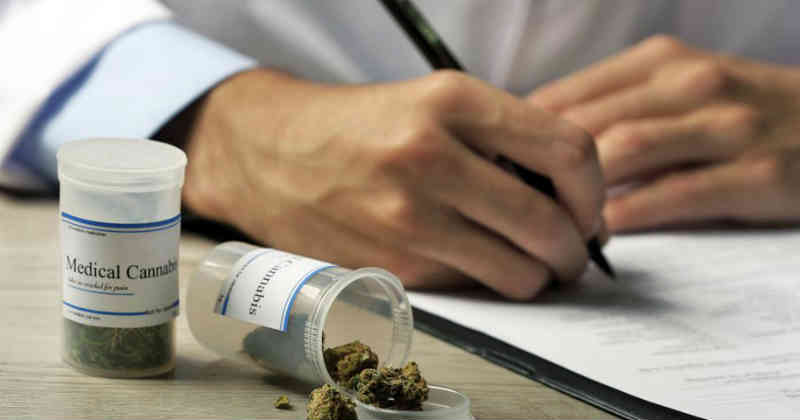
The legalization of medical cannabis does not always mean that medical cannabis is readily available. The most striking example of this contradiction is undoubtedly France, which has legalized certain cannabis-based medications but maintains extremely restrictive access (and is then concerned that (Patients buy potentially harmful products online.) The training of healthcare professionals, access to medications, and their prices are all factors that could cause legalization to remain a dead letter.
The UK's superficial legalization
Similar to France, medical cannabis is «legal» in the United Kingdom but is rarely prescribed. The United Kingdom has conducted a quick legalization in just a few months. However, the only practitioners authorized to prescribe medical cannabis (some 80,000 medical specialists) do not do so for fear of committing malpractice. Since medical cannabis is considered as a special medication Without a license, prescribing medication exposes the physician to liability, and without in-depth knowledge and adequate training, physicians are not willing to take that risk.
Originally, cannabis was to be made available to treat the symptoms of cancer and its treatment, epilepsy, multiple sclerosis, and chronic pain. However, the Royal College of Physicians (RCP) and the British Pediatric Neurology Association (BPNA), two leading but conservative medical institutions, concluded that there was insufficient evidence to support the use of cannabis in the treatment of chronic pain and that EPIDIOLEX® should be considered only when all other treatment options—including surgery—had been exhausted. The vast majority of doctors follow these extremely restrictive guidelines for convenience and to comply with their professional association.
In public hospitals, High Times reports that Healthcare workers are sometimes instructed not to prescribe medical cannabis to treat chronic pain. This directly contradicts the recommendations of the Advisory Committee on Drug Abuse, which was tasked by the government with preparing for legalization. Jon Liebling, policy director of the United Patients Alliance (UPA) believes that «for the nearly 1.1 million British patients, this is not satisfactory.» «Our doctors have a duty of care that many seem to be neglecting right now,» he adds. According to Wired, in the United Kingdom, more than 30,000 people break the law to obtain their medication.
The lack of training for doctors
Patient advocacy groups point to the lack of training among doctors. «We’ve seen patients actually turned away from public hospitals, and this is yet another example of just how much our medical community needs to learn,» explains Jon Liebling. Even Billy Caldwell, one of the children with epilepsy who the high-profile case accelerated legalization in the UK, was forced to return to Canada to adjust his treatment. In children with epilepsy, treatments can reach a sort of «plateau» and become less and less effective. In this case, developing a new cannabinoid formulation goes well beyond the scope of expertise of British doctors. «We need more expertise—we need our doctors to be trained and educated,» says Billy’s mother.
To address this situation and protect its interests, the British medical cannabis industry is seeking to educate doctors about cannabis on its own—a task that normally falls to the Ministry of Health. European Cannabis Holding For example, a lobbying group that brings together leading companies in the British medical cannabis industry has just appointed a Medical Advisory Board. ECH also owns the e-learning platform The Academy of Medical Cannabis designed to introduce and train doctors in the use of medical cannabis.
The Luxembourg Model of Legalization
Luxembourg legalized medical cannabis last June for the treatment of cancer, multiple sclerosis, and chronic pain. Healthcare professionals who wish to prescribe medical cannabis must complete mandatory training provided by the National Health Laboratory in Dudelange. An initial selection of 150 PhDs Doctors authorized to prescribe medical cannabis began prescribing it this week. The training is open to any doctor who would like to prescribe medical cannabis.
The list of authorized doctors is then published on the laboratory’s website. This way, patients who wish to use cannabis for medical treatment know where to go. With their prescription in hand, they can then obtain cannabis from the country’s four largest hospitals. The medication is fully reimbursed by the government. Every effort is thus made to best meet the patient’s needs.
Cannabis: A Medicine Like No Other
In Luxembourg, cannabis is treated like any other medication. In the United Kingdom, however, despite the fact that the British laboratory GW Pharmaceuticals Although it is a pioneer in cannabis-based pharmaceutical products, a certain degree of skepticism toward cannabis persists. Its classification as a «narcotic» still hinders its acceptance as a medicine, and this translates into a fear of «side effects.».
Luxembourg, on the other hand, takes a much more laid-back approach to cannabis. In fact, the country has plans to legalize its recreational use. Luxembourg’s medical cannabis program reflects a commitment to making medical cannabis accessible to patients who need it. In England, this commitment to making it more widely available does not exist. Cannabis is considered only as a last resort, and its prescription is restricted to specialists. The guidelines of the National Health Service (NHS) (National Healthcare System) in fact, it specifies «that only a very small number of patients are likely to receive a prescription for medical cannabis.».
According to Jon Liebling According to the UPA, public health authorities seem intent on shirking responsibility: «It seems as though they haven’t really given the matter much thought, except in terms of protecting themselves and absolving themselves of the responsibility for introducing a new class of drugs.» He admits, however, that they were severely short on time to establish these guidelines. Next October, the National Institute for Clinical Excellence (NICE) is set to publish new guidelines, and it is already clear that the UPA will participate in the discussion. This time, patients’ needs will be taken into account.













The legal cannabis market in New York exceeds 4 billion $ in revenue

France’s Drug Policy Chief Defends Cannabis Prohibition... and Runs Into the Facts

Cannabis and the Adolescent Brain: French Scientists Make a Key Discovery

EFSA Gives Initial Approval for Synthetic CBD; Natural Extracts Still Pending

Federal Cannabis Reform Once Again on Hold in the United States

Contest: Win a trip to Quebec to experience the hemp harvest firsthand

Bedrocan on Hold Amid Uncertainty Over Medical Cannabis

Newsweed Launches Its Own AI

A new tax of 0.5% could disrupt the hemp industry in Canada

Medical Cannabis and Driving: New South Wales Ends Automatic Penalties for THC
-
 Cannabis and driving4 weeks ago
Cannabis and CBD: French Drivers Can Now Lose Their License Even Without a Positive Test Result
-

 Cannabis in France1 week ago
Which countries legalized medical cannabis before France?
-
Cannabis in France4 weeks ago
Cannabis Legalization: The LFI Bill Has a Major Problem—THC
-
Cannabis in the Netherlands3 weeks ago
One year after the launch of the Dutch cannabis experiment, the first trends are emerging
-
Business1 week ago
South Korea is preparing to begin local production of medical cannabis to meet rising demand
-
Cannabis in Thailand1 week ago
From the boom in dispensaries to a purely medical approach: Thailand is revising its cannabis policy
-
Cannabis in Argentina2 weeks ago
Argentina Opens Its Market to Hemp Flowers Containing 1% of THC
-
Cannabis in France3 weeks ago
French medical cannabis remains stalled at the Ministry of Health

















You must be logged in to post a comment Login