Netherlands: Edibles at the Center of a Policy Review of the Cannabis Experiment


THC-infused edibles are becoming a political issue in the Netherlands’ experiment with a regulated cannabis supply chain.
Following the initial concerns raised in the Q1 interim report, Health Minister Sophie Hermans announced on November 11, 2026, that she intended to reevaluate their role in the system, as reported by Cannabisindustrie.nl. The government is expected to announce its position in the second quarter of 2027, although no ban has been decided at this point.
What's Changing: From Health Concerns to a Political Reassessment
In the Netherlands, the edibles, these cannabis-infused food products are not a novelty in the context of the wietexperiment. Their presence among the products sold by participating coffeeshops had already been documented in the first follow-up report on the pilot program.
The real news lies elsewhere: the Dutch government now intends to reevaluate their role in the system, as questions about products with high THC content take on a political dimension.
During the parliamentary committee debate on drug policy on November 11, 2026, Health Minister Sophie Hermans indicated that she wanted to revisit the developments regarding edible products.
This announcement marks a new milestone for the’Experiment with a closed coffee shop chain, which aims to test a regulated cannabis supply chain in several Dutch municipalities.
Until now, discussions have focused primarily on the implementation of the system, the quality of the supply, and early trends in the regulated market. The issue of product diversity—particularly with regard to products intended for ingestion—is now emerging as a public health and regulatory concern.
What the T1 Report Said About THC-Containing Products
Submitted to the Lower House of the Dutch Parliament on September 9, 2026, the first interim report (T1) covers the period from April 7, 2025, to the first quarter of 2026. As Newsweed had already reported this back in September, initial observations show that the products offered by participating coffeeshops are not limited to cannabis flowers.
Consumers can also find edibles, vaporizers, and concentrates. However, this diversification raises questions about products with high THC concentrations.
The stakeholders interviewed as part of the evaluation specifically mentioned the lack of clear guidelines regarding the potency of the products, their dosage, and the risks of overconsumption.
These concerns are particularly important for edibles. Unlike inhaled cannabis, whose effects generally set in quickly, the Ingested THC may take longer to take effect to take effect. A consumer who is not sufficiently informed may then take another dose before feeling the effects of the first one.
The report notes that the government had already updated the consumer information leaflets and asked the Trimbos Institute, a Dutch organization specializing in addiction and mental health, to conduct further research on products with high THC content.
The Dutch government's position: a decision expected in 2027
The parliamentary debate on November 11 gave these concerns political expression. According to the transcripts published by the Bond Coffee Shop and Cannabisindustrie.nl, Sophie Hermans announced that she would reexamine developments related to edibles as part of the experiment. The minister plans to submit a government letter to Parliament on second quarter of 2027 in order to clarify the executive branch's position.
Several questions remain unanswered: Should edible products remain subject to their current regulations, should the requirements applicable to them be strengthened, or should specific restrictions be imposed on the most potent formulations?
Above all, the response will provide insight into how Dutch authorities balance the diversification of legal offerings with the reduction of health risks.








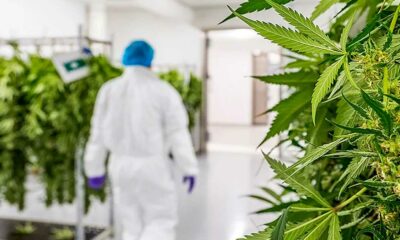










Netherlands: Edibles at the Center of a Policy Review of the Cannabis Experiment

Ottawa Simplifies Cannabis Taxes, Without Reducing the Tax Burden on Producers

Malta Wants Licenses for the Sale of «CBD Products»

From «Cannabro» to «AI Bro»: Some U.S. cannabis growers are envisioning a new future in data centers

Israel renews its allegations of dumping against Canadian medical cannabis

Bedrocan Bankruptcy: The Dutch Government Under Pressure

1.2 million adults in Great Britain use cannabis almost every day

CBD, CBN, and CBC Isolates: What Can You Expect from These Products?

The SQDC sold $207.5 million worth of cannabis in Q2 2026, with vape pens driving growth

The United States Bans «Non-Natural» Synthetic Cannabinoids; THC Remains Legal Until December 11
-
 Business4 weeks ago
Cronos Completes the Acquisition of CanAdelaar for 57.5 million euros
-
Cannabis in Quebec3 weeks ago
Cannabis: What France Could Learn from Quebec, Eight Years After Legalization
-
Cannabis in New Zealand2 weeks ago
Chronic Pain: New Zealand Is Testing Cannabis to Improve Sleep
-
Cannabis in Morocco4 weeks ago
Morocco: Three Cannabis-Based Medications Approved for the Treatment of Epilepsy
-
Cannabis in France3 weeks ago
Dr. Pascal Douek, a tireless advocate for medical cannabis in France, has died
-
Business4 weeks ago
The Brazilian medical cannabis market continues to grow
-
Cannabis in Spain4 weeks ago
Spain: Medical Cannabis Is Coming to About 50 Hospitals
-
Cannabis in France3 weeks ago
Medical cannabis: The Greens introduce two amendments to accelerate its widespread adoption















You must be logged in to post a comment Login