
From Marathons to Ultratrails: How Extreme Running Affects the Endocannabinoid System

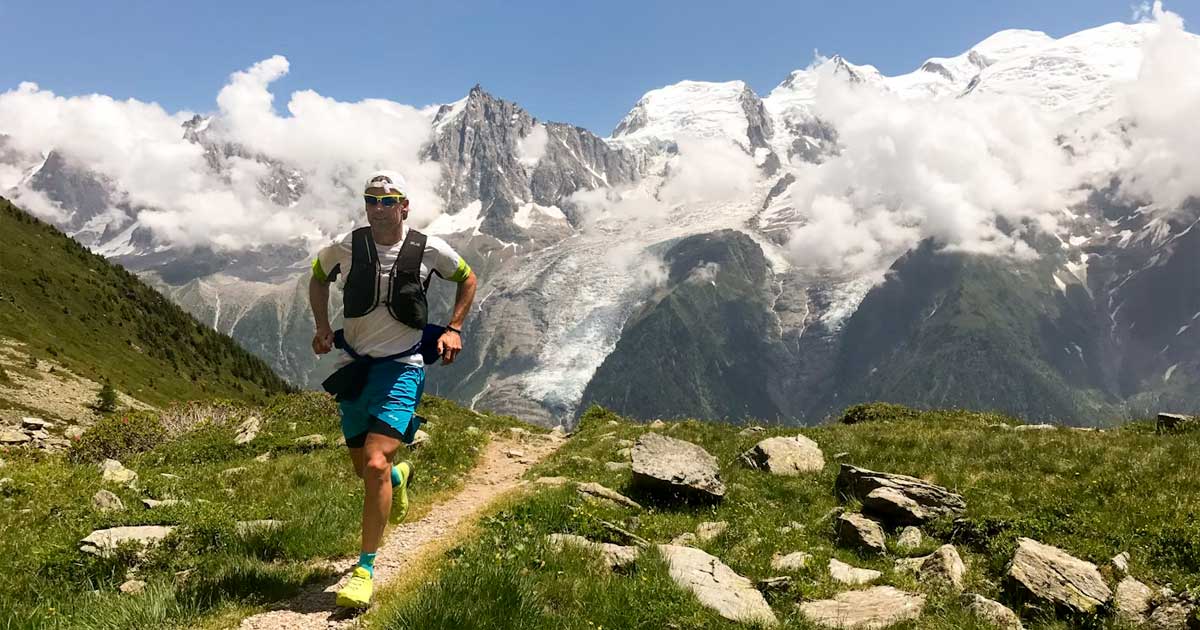
Running for several hours doesn't just put a strain on your muscles, heart, or energy reserves. Prolonged exertion is also accompanied by measurable changes in the endocannabinoid system, with momentum that continues well beyond the first hour of the race.
This is shown by a study published in 2026 in BMC Medicine, devoted to the evolution of endocannabinoids during a marathon and several ultramarathons. Until now, most research had focused on efforts lasting less than 60 minutes, leaving the system’s response largely unknown when a race lasts several hours or even an entire day.
Above all, the results shed new light on the’anandamide (AEA) and 2-arachidonoylglycerol (2-AG), two molecules produced by the human body that are capable of activating cannabinoid receptors. They also help clarify the biological mechanisms underlying the famous «runner's high», a state sometimes described by runners as a combination of well-being, reduced anxiety, and altered pain perception.
From blood tests to the finish line of the marathon
The researchers conducted two complementary field studies. The first involved 19 trained runners, who each ran a marathon and then, during a separate session, walked for an equivalent duration. Blood samples were collected at the start, every 14 kilometers, at the finish, and after 45 minutes of recovery.
The second study focused on 36 ultramarathon runners engaged in the TorTour of the Ruhr, in Germany, with distances of 100, 160, or 230 kilometers. This time, blood samples were collected before and after the race. In particular, the researchers measured AEA, 2-AG, 1-AG, arachidonic acid, and PEA, along with assessments of euphoria, anxiety, and pain.
This real-world approach is one of the study’s key strengths: rather than replicating endurance testing on a treadmill in a laboratory setting, it examines the biological response of athletes engaged in actual long-duration exercise.
Anandamide levels gradually increase as you run
The most striking result concerns the’anandamide. During the marathon, his concentration gradually increases and becomes clearly higher than that observed during the walk. Most importantly, this increase does not disappear immediately after crossing the finish line: it remains significant 45 minutes after exercise.
This phenomenon is also observed among ultratrail runners. Regardless of the distance covered—100, 160, or 230 kilometers—AEA concentrations are significantly higher after the race than before.
The 2-AG follows a different timeline, however. Its increase is most evident during the later stages of the marathon and during recovery. After ultra-marathons, its concentrations are also higher than baseline levels. The authors therefore suggest that AEA and 2-AG may be involved in different physiological or psychological processes, while emphasizing that their study does not allow for a precise determination of these mechanisms.
Another interesting observation: post-exercise concentrations of AEA and 2-AG were higher after the marathon than after the ultramarathons. The researchers propose, in particular, the hypothesis that’exercise intensity : Running 42 kilometers at a relatively high intensity might stimulate certain endocannabinoid responses more than a much longer run at a slower pace.
The «runner’s high» is more than just euphoria
From a psychological perspective, the findings complicate the sometimes oversimplified view of the runner's high.
During the marathon, levels of euphoria were generally higher than those observed during the walk, while anxiety decreased toward the end of the race. But only 3 of the 19 participants reported in retrospect that they had experienced a runner’s high during the marathon; eight answered no, and eight said they weren’t sure.
Among the ultra-runners, the situation was different still. Euphoria did not increase significantly after the race, while anxiety decreased and pain increased significantly. Twelve out of 36 participants reported experiencing a runner’s high during the race, compared to 19 who said they did not experience it.
In other words, an increase in endocannabinoids does not automatically correspond to a specific euphoric sensation. Rather, the runner’s high appears to be a multidimensional phenomenon, the nature of which may depend on the intensity and duration of the exertion, as well as the context.
From the endocannabinoid system to cannabis: a connection that intrigues
This new data also adds another piece to a topic already explored by Newsweed: the complex relationships between Cannabis and Endurance Sports.
In our previous article on the cannabis and trail running, we looked in particular at the accounts of runners who use cannabis before, during, or after exercise, as well as at scientific studies that seek to distinguish between effects on performance and changes in the subjective experience of exercise. Some of the research cited in this article suggested that the THC could impair endurance performance while altering the perception of exertion, whereas other studies had observed that users reported increased feelings of euphoria, relaxation, or pleasure during exercise.
The new study published in BMC Medicine approaches the subject from the other angle: it does not focus on cannabis use, but on the cannabinoids produced naturally by the body.
This distinction is essential. The presence of a biological system that is sensitive to cannabinoids does not mean that using cannabis simply replicates or enhances the runner's high. On the contrary, the new study shows that the relationship between endocannabinoids, euphoria, anxiety, and pain is far from linear: among ultramarathon runners, for example, AEA increases significantly, while euphoria does not increase significantly.
An endocannabinoid system that is still far from revealing all its secrets
The results should be interpreted with caution. The sample sizes are small, the marathon and ultra-marathon protocols are not identical, and several factors (diet, timing of blood draws, fatigue, competition stress, or pacing strategy) could not be fully controlled. Furthermore, the psychological measurements were based on simple visual scales, which are necessarily limited in their ability to describe a state as complex as the runner’s high.
The study therefore does not prove that the endocannabinoids are solely responsible for the sensations associated with running. However, it establishes that their concentration changes in a robust and structured way during prolonged endurance exercise: the’AEA is constantly increasing, while the 2-AG seems to respond more slowly.
To take this further, the researchers specifically mention PET imaging and the simultaneous study of other neurochemical mediators, including dopamine, serotonin, cortisol, oxytocin, and BDNF (which has nothing to do with Théo Detienne). This serves as a reminder that, even after 230 kilometers, the human endocannabinoid system is probably just one piece of the vast biological puzzle associated with endurance.





















Rima Hassan: When «Drugs» Become a Political Weapon

From Marathons to Ultratrails: How Extreme Running Affects the Endocannabinoid System

Four days of THC may make breast cancer less aggressive, according to a new study

Medical Cannabis: 14 Organizations Finally Call for Enforcement of the Law

One year after the launch of the Dutch cannabis experiment, the first trends are emerging

High Ground: The Crash of a Plane Full of Marijuana That Made History in Yosemite

The United Kingdom Is Moving Closer to a Regulated CBD Market

Mexico's Supreme Court Authorizes Cannabis-Infused Edibles for Personal Use

French medical cannabis remains stalled at the Ministry of Health

Things are heating up between Sherbinski and Doja
-
 Cannabis and driving7 days ago
Cannabis and CBD: French Drivers Can Now Lose Their License Even Without a Positive Test Result
-
Cannabis in France1 week ago
Cannabis Legalization: The LFI Bill Has a Major Problem—THC
-

 Cannabis in the Netherlands2 days ago
One year after the launch of the Dutch cannabis experiment, the first trends are emerging
-
Cannabis in Europe2 weeks ago
Andorra Paves the Way for Medical Cannabis Cultivation
-
Cannabis in France3 days ago
French medical cannabis remains stalled at the Ministry of Health
-
Business2 days ago
The United Kingdom Is Moving Closer to a Regulated CBD Market
-
Cannabis in France2 weeks ago
Drought: Could Hemp Become the New Hope for French Farmers?
-
Cannabis in the U.S.2 weeks ago
United States: Congress Rejects Ban on THC Derived from Hemp











You must be logged in to post a comment Login