We finally know how endocannabinoids spread in the brain

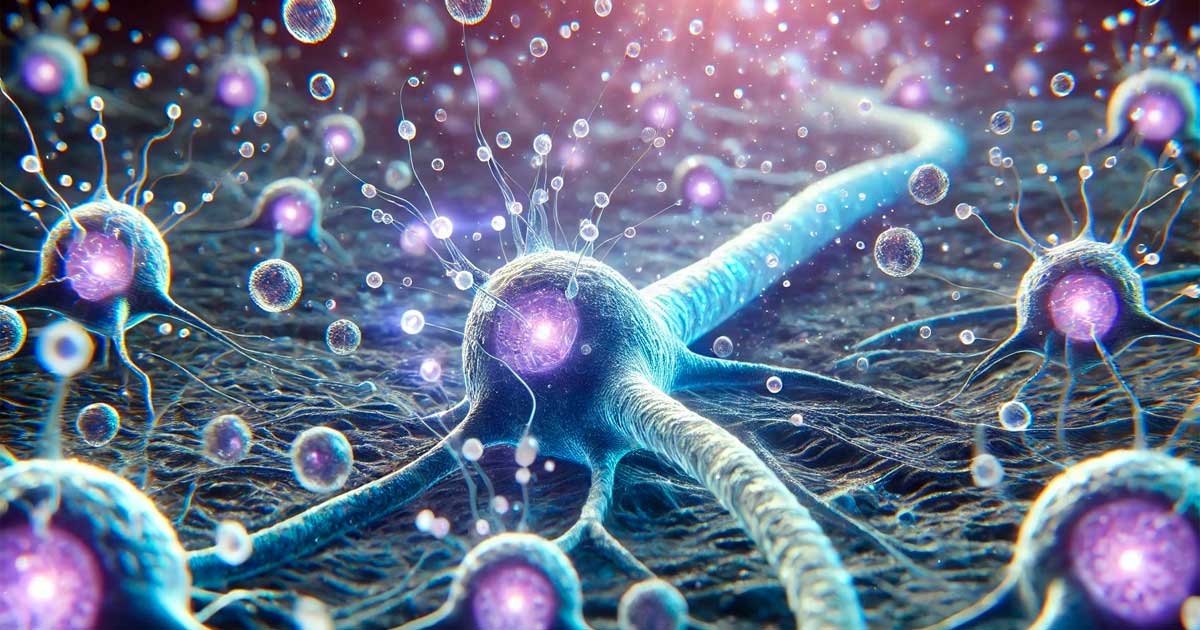
For three decades, the endocannabinoids, These compounds are similar to certain cannabis molecules, but are produced by the body itself.
A recent study led by Mario van der Stelt, Professor of Molecular Physiology at Leiden University, has revealed that these substances travel through the brain in fat vesicles, rather than in the form of floating molecules like dopamine or serotonin.
This discovery, published in the magazine PNAS, could pave the way for innovative treatments for pain and neurological disorders.
A new form of communication in the brain
The human brain naturally produces endocannabinoids, compounds similar to those found in cannabis. These molecules play an essential role in processes such as memory, anxiety and pain regulation. Among them, two main types stand out: the’anandamide and the 2-AG. The recent study focused on 2-AG, with the aim of understanding its mode of transport between the nerve cells.
Until now, it has been difficult to keep up with the 2-AG movement because of its fat composition, which made it invisible under the microscope. Standard scientific methods did not provide a clear picture, as they often destroyed the cells being examined.
A major breakthrough has been achieved with the development of a sensor technology developed by Chinese researchers. This sensor enabled scientists to observe the movement of 2-AG in real time, by causing the cells to light up when they detected the molecule coming from a neighboring nerve cell.
Fat vesicles: The key to 2-AG transport
Using this innovative sensor, Verena Straub, a PhD researcher in Van der Stelt's team, has confirmed that 2-AG is transported in vesicles.
Through extensive testing, she demonstrated that blocking vesicle formation led to a decrease in 2-AG levels, while stopping 2-AG production led to the formation of vesicles not containing the compound. On average, each vesicle contained around two thousand molecules of 2-AG.
To further validate their results, the researchers collaborated with a US-based research group to analyze the process in intact brain tissue. In addition, in collaboration with the team of Coen van Hasselt, Professor of Pharmacology, they have developed a mathematical model which could only explain the observed signals if 2-AG was effectively transported by the vesicles.
A step towards medical innovation
«This may be a new form of communication between nerve cells in the brain,» explains Van der Stelt.
This discovery not only changes our understanding of the endocannabinoid signaling, but also opens up new avenues for medical applications. Given that 2-AG plays a crucial role in pain management and neurological diseases, understanding its movements could lead to targeted therapies that regulate its function.
The potential of these discoveries extends beyond endocannabinoids. Van der Stelt suggests that other fatty messenger molecules could also use a similar vesicle-based transport system.
As Van der Stelt puts it, «now that we know how it moves, we can look for ways to influence its function».
Thanks to ongoing studies and further validation, this breakthrough could lead to the development of new treatments against chronic pain, epilepsy and neurological disorders.























JIHE 2026: Japan’s Largest Trade Show Dedicated to Hemp and CBD Returns to Tokyo with More Than 100 Industry Players
New Caledonia: The Courts Clear the Way for the Return of CBD

The Brazilian medical cannabis market continues to grow

Morocco: Three Cannabis-Based Medications Approved for the Treatment of Epilepsy

Canopy Growth Receives New EU-GMP Certification to Strengthen Its Presence in Europe

Three years after legalizing medical cannabis, Albania continues to establish regulations for it

The first plant-based medical THC spray arrives in the United Kingdom

Medical Cannabis in Germany: THC Prices Vary by a Factor of 12

France already has 3,000 cannabis retail outlets. None of them are legal.

Morocco's exports of legal cannabis have expanded to 15 countries
-
 Business2 weeks ago
The legal cannabis market in New York exceeds 4 billion $ in revenue
-

 Cannabis in France4 weeks ago
Which countries legalized medical cannabis before France?
-
Business4 weeks ago
South Korea is preparing to begin local production of medical cannabis to meet rising demand
-
Cannabis in France4 days ago
France already has 3,000 cannabis retail outlets. None of them are legal.
-
Cannabis in Thailand4 weeks ago
From the boom in dispensaries to a purely medical approach: Thailand is revising its cannabis policy
-
Cannabis in the U.S.5 days ago
A DEA report confirms that there are no fatal cannabis overdoses
-
Cannabis and driving3 weeks ago
Medical Cannabis and Driving: New South Wales Ends Automatic Penalties for THC
-
Cannabis in France3 weeks ago
France’s Drug Policy Chief Defends Cannabis Prohibition... and Runs Into the Facts

















You must be logged in to post a comment Login