CBD is said to promote athletic recovery, without improving performance
CBD may help reduce muscle soreness and promote muscle recovery after intense exercise. This is suggested by a new scientific review, which, however, finds no significant benefits of cannabidiol on athletic performance. These findings provide a clearer picture of the actual value of this compound for athletes.


Published in September 2026 in the’International Medical Journal, a scientific study conducted by researchers from two hospitals in Wrocław, Poland, examined the effects of the Cannabidiol (CBD) and Its Effects on Recovery and Athletic Performance.
To this end, the researchers reviewed scientific studies published between 2021 and 2026, focusing in particular on the effects of CBD on muscle recovery, endurance, strength, sleep, and psychological responses to exercise.
Their findings highlight an important distinction: while CBD may promote recovery after intense exercise, its effectiveness in directly improving performance The benefits for athletes have not been proven.
CBD May Help Relieve Post-Workout Soreness
One of the key findings of this review concerns the delayed-onset muscle soreness (DOMS), more commonly known as muscle soreness, which usually occurs within 24 to 72 hours after intense exercise.
Several studies suggest that CBD may help reduce certain muscle damage markers, including creatine kinase and myoglobin, whose blood levels may rise after strenuous exercise.
In a clinical trial, participants who received 67 mg of CBD sublingually each day for 15 days reported significantly less pain 48 hours after an experimentally induced muscle injury. Their loss of muscle strength was also less pronounced than that of the placebo group.
Another study found a decrease in markers of muscle damage 72 hours after a strength training session, following the administration of a single 60-mg dose of CBD.
However, these results should be viewed with caution. Other studies have found no significant effect, suggesting that The effectiveness of CBD depends, among other things, on the dose administered, its formulation, and the physiological characteristics of each individual.
No proven effect on athletic performance
If the results regarding recovery While the results are encouraging, the findings show no improved physical performance. Trials conducted with runners and cyclists showed no significant improvement in race times, maximum power, running economy, or endurance following CBD supplementation.
Thus, administering 300 mg of cannabidiol did not improve performance on a two-mile run, which is approximately 3.2 kilometers. Similarly, daily supplementation with 150 mg for three weeks did not provide any measurable benefit during exercise on a stationary bike.
However, the researchers observed certain physiological changes, including a decrease in systolic blood pressure and an increase in oxygen consumption during exercise. These changes did not, however, result in improved performance.
CBD could therefore help some athletes recover more effectively, without necessarily making them faster, stronger, or more enduring.
Oils, creams, and ointments: Not all forms of CBD are created equal
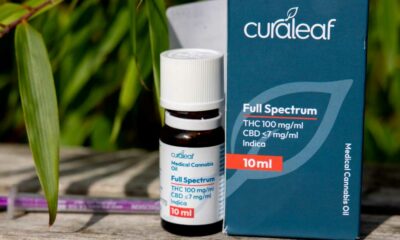
The methods of CBD administration appears to play a decisive role in the observed results. Researchers are particularly cautious about the effectiveness of CBD creams and ointments, even though they are widely recommended for relieving muscle pain.
Trials involving preparations containing between 100 and 1,000 mg of cannabidiol showed no significant reduction in muscle soreness or improvement in muscle strength.
According to the authors, the skin barrier may limit the penetration of CBD into deep muscle tissue, thereby preventing the molecule from having a sufficient effect on the inflammatory mechanisms associated with exercise.
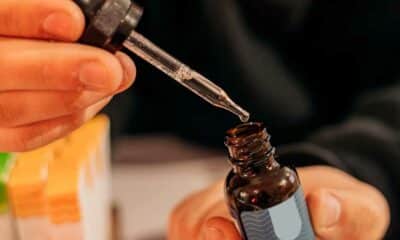
Conversely, some oral and sublingual formulations, particularly those that enhance the absorption of cannabidiol, have yielded more promising results. However, these observations do not yet allow us to determine an optimal dose or an administration protocol applicable to all athletes.
Sleep: Another Path to Athletic Recovery
Beyond its effects on muscles, CBD may also play an indirect role in recovery by affecting sleep quality. In particular, researchers point to a possible reduction in the time it takes to fall asleep and in the number of times a person wakes up at night—two factors that could improve recovery between workouts.
However, this hypothesis has yet to be confirmed by objective studies conducted with elite athletes.
The The results are also mixed when it comes to anxiety before a competition. Despite the anxiolytic properties often attributed to cannabidiol, the controlled trials analyzed did not demonstrate a significant reduction in pre-competition stress.
Finally, the authors discuss the potential benefits of CBD for neuroprotection, particularly in contact sports where mild head injuries are common. However, the available data are still insufficient to draw clinical conclusions.






From «Cannabro» to «AI Bro»: Some U.S. cannabis growers are envisioning a new future in data centers

Israel renews its allegations of dumping against Canadian medical cannabis

Bedrocan Bankruptcy: The Dutch Government Under Pressure
1.2 million adults in Great Britain use cannabis almost every day

CBD, CBN, and CBC Isolates: What Can You Expect from These Products?

The SQDC sold $207.5 million worth of cannabis in Q2 2026, with vape pens driving growth

The United States Bans «Non-Natural» Synthetic Cannabinoids; THC Remains Legal Until December 11

Morocco's first CBD medication for epilepsy hits pharmacy shelves

November 2026's CBD Highlights: 10 Flowers and Rosins to Discover from 5 French Producers

Vanuatu is still trying to get its medical cannabis sector off the ground after years of delays
-
 Business4 weeks ago
Cronos Completes the Acquisition of CanAdelaar for 57.5 million euros
-
Cannabis in Quebec3 weeks ago
Cannabis: What France Could Learn from Quebec, Eight Years After Legalization
-
Cannabis in New Zealand2 weeks ago
Chronic Pain: New Zealand Is Testing Cannabis to Improve Sleep
-
Cannabis in Morocco4 weeks ago
Morocco: Three Cannabis-Based Medications Approved for the Treatment of Epilepsy
-
Cannabis in France3 weeks ago
Dr. Pascal Douek, a tireless advocate for medical cannabis in France, has died
-
Business4 weeks ago
The Brazilian medical cannabis market continues to grow
-
Cannabis in Spain4 weeks ago
Spain: Medical Cannabis Is Coming to About 50 Hospitals
-
Cannabis in Germany4 weeks ago
Medical Cannabis in Germany: THC Prices Vary by a Factor of 12










You must be logged in to post a comment Login