

New study suggests that Cannabis was domesticated 12,000 years ago in China

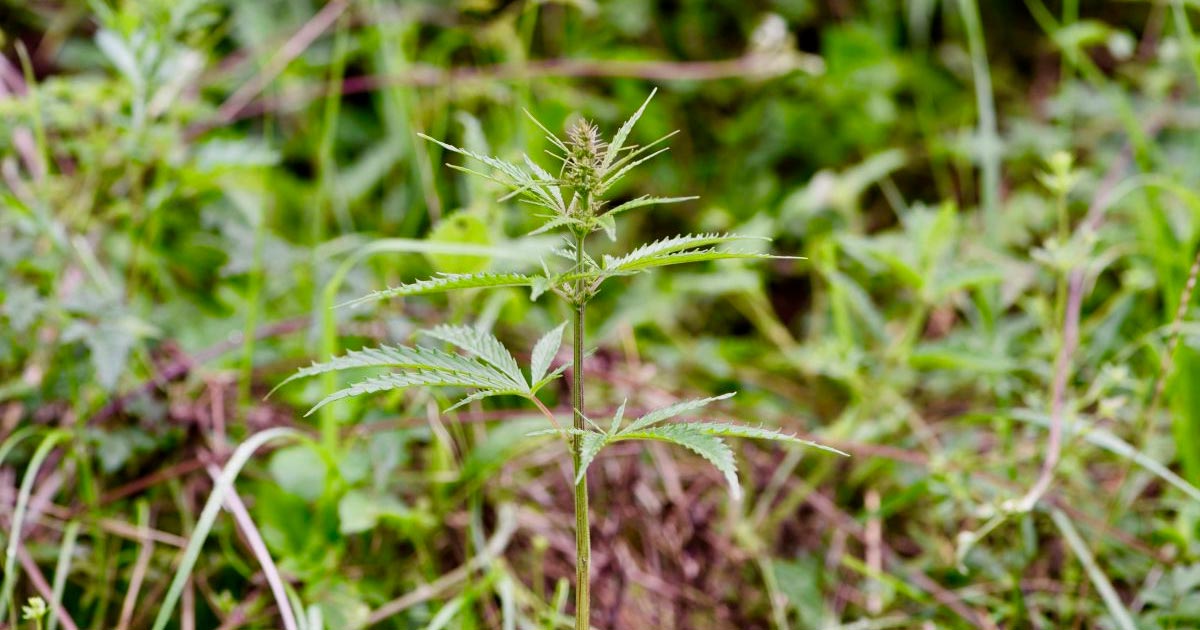
While it is widely accepted that the Cannabis comes from the Tibetan Plateau, a new study published in the journal Science Advances suggests that East Asia is the most likely source and that all existing strains of the plant originate from an «ancestral gene pool» represented by wild and cultivated varieties currently growing in China.
The study’s authors found that the plant was a «primarily multipurpose crop» cultivated around 12,000 years ago, at the beginning of the Neolithic period, likely for its fiber and medicinal uses.
Farmers began cultivating the plant specifically for its psychoactive properties about 4,000 years ago, when cannabis began to spread throughout Europe and the Middle East, reported the authors of the study.
A 2016 study A study conducted by other scientists showed that the early records of cannabis originated mainly in China and Japan, but most botanists believe it was likely first domesticated in eastern Central Asia, where wild varieties of the plant are widespread.
Genetic sequencing conducted as part of the latest study suggests that the species has a «single point of origin for domestication» in East Asia, the researchers wrote.
By sequencing genetic samples from the plant, they discovered that the species was most likely domesticated during the early Neolithic period. They stated that their conclusion was supported by pottery and other archaeological evidence from the same period, discovered in present-day China, Japan, and Taiwan.
Luca Fumagalli, one of the study’s authors and a Swiss biologist specializing in conservation genetics, stated that the theory of a Central Asian origin was largely based on observational data from wild specimens in that region.
«It’s easy to find wild specimens, but they aren’t wild types,» said Dr. Fumagalli. «These are plants that have escaped from captivity and readapted to the wild.».
«In fact, that's why it's called a weed" [editor's note: weed [in English], »because it grows just about anywhere,” he added.
The study was led by Ren Guangpeng, a botanist at Lanzhou University in the western Chinese province of Gansu. Dr. Ren said in an interview that the original site of cannabis domestication was most likely northwestern China, and that this discovery could contribute as part of the country's ongoing efforts to select new varieties of hemp.
To conduct this study, Dr. Ren and his colleagues collected 82 samples—including seeds and leaves—from around the world. The samples included strains that had been selected for fiber production, as well as others from Europe and North America that had been selected to produce large quantities of THC.
Dr. Fumagalli and his colleagues then extracted genomic DNA from the samples and sequenced it at a laboratory in Switzerland. They also downloaded and reanalyzed sequencing data from 28 other samples. The results showed that the wild varieties they analyzed were in fact «historical escapees from domesticated forms,» and that the strains existing in China—both cultivated and wild—were the closest descendants of the ancestral gene pool.
«Although additional sampling of wild plants in these key geographic areas is still needed, our results—which are already based on a very large sample size—suggest that pure wild C. sativa broodstock have become extinct,» they wrote.




















The «cannabis» fine raised to 500 euros under the RIPOST Act

Sacha Baron Cohen Brings Ali G Back to Life During a Surprise Appearance at Wimbledon

Botswana Paves the Way for Commercial Hemp Cultivation

The First Authorized Medical Cannabis Cultivation in the Canary Islands

Germany Ends Public Health Insurance Coverage for Medical Cannabis Flowers

Cannabis Legalization in Pennsylvania Once Again on Hold

Democratic senators are reviving a bill to legalize cannabis at the federal level in the United States

A THC:CBD oil shows promising results in reducing agitation in people with dementia

San Francisco Allows «Cannabis Cafés»

Kenya Denies Rastafarians the Right to Use Cannabis
-

 Cannabis in Europe4 weeks ago
Bosnia and Herzegovina Continues to Roll Out Medical Cannabis Following Its Legalization
-
Cannabis in France4 weeks ago
France Submits the Long-Awaited Decree on the Reimbursement of Medical Cannabis to the Council of State
-
Cannabis in the U.S.4 weeks ago
The DEA Begins Hearings on the Federal Rescheduling of Cannabis
-
Business3 weeks ago
China Invests $10 Million in Medical Cannabis in Lebanon
-
Cannabis in Thailand4 weeks ago
Thailand Threatens Cannabis Shops with Severe Penalties
-
Cannabis in Australia3 weeks ago
South Australia is working to identify more water-efficient hemp varieties
-
Exchange4 weeks ago
Glass House will be the second U.S. cannabis company to list on the New York Stock Exchange
-
Cannabis in Africa2 weeks ago
Kenya Denies Rastafarians the Right to Use Cannabis















You must be logged in to post a comment Login