
5 breeders behind modern cannabis

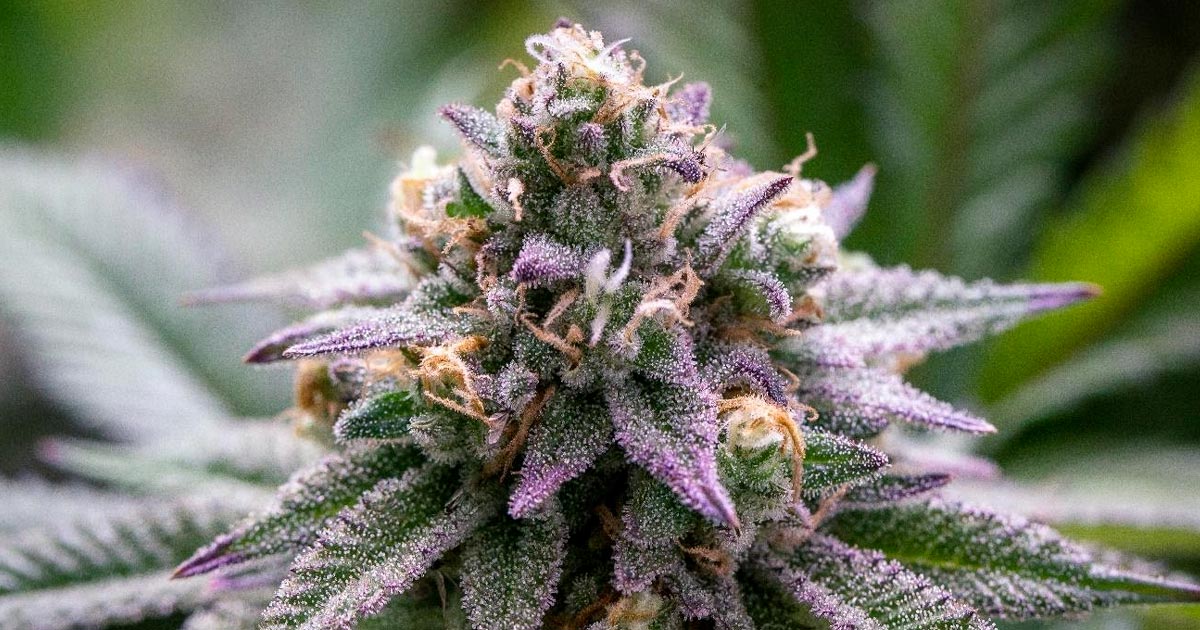
Cannabis is a dioecious species. The male and female reproductive structures involved in propagation are generally found on different plants, rather than on a single plant (as in the case of a monoecious species). Cannabis is also an annual plant, meaning that it dies every winter, but not before dropping seeds that will germinate the following spring, allowing the life cycle to continue for another year.
In nature, these seeds are formed in late autumn, when male plants pollinate the females. Whenever such pollination takes place, the result is a genetically unique seed, which contains the DNA of both parents, but without the direct involvement of human beings, the genetic diversity observed from generation to generation is very limited.
In theory, whenever two unique strains are crossed in this way, the result is an entirely new strain. But in practice, only the most successful of these hybrids will stabilize and become popular enough to earn a permanent place in the hearts of cannabis enthusiasts. To add to the complexity (and potential confusion) of this process, until relatively recently all such cross-breeding was done underground, so documentation on who created what and how is often unknown or disputed.
But that's just one more reason to identify and properly honor the incredible breeders of yesteryear, who have given birth to brand-new, genetically distinct cannabis varieties that have truly changed the game.
Dave Watson (aka «Sam the Skunkman»)
One of the most fascinating and controversial figures in the history of cannabis, Dave Watson (much better known as the « Sam the Skunkman«) is praised by some and vilified by others, but no one can dispute the outsized role it has played in the once small world of cannabis growers.
Watson's journey began in Santa Cruz, California, in the 1970s, where he was linked to two of the first cannabis breeding companies to gain notoriety - the Haze Brothers and the Sacred Seed Collective - both of which played a decisive role in the development of the first hybrid varieties.
In 1985, Watson was reportedly arrested for possession of cannabis in California. A month later, he landed at Amsterdam's Schiphol airport, allegedly with a box of 250,000 seeds including Skunk #1, Original Haze and Afghani #1, all of which had been bred or stabilized by his cannabic compatriots. Watson then got in touch with people working in Amsterdam coffeeshops, including Neville Schoenmakers to whom he sold seeds.
On the controversial side, some believe he was an FBI mole sent to Amsterdam to monitor the local cannabis scene. Watson obtained the only authorization for medical cannabis research in Holland at the time, which only fueled the rumors.
With Robert Colonel Clarke (author of Hashish! and Marijuana Botany), he went on to found Hortapharm, a company dedicated to collecting cannabis seeds from around the world, both to create a stable genetic library and to select new hybrids with desirable characteristics. In the late 1990s, they sold Hortapharm to GW Pharmaceuticals, with their entire seed library.
GW has since created «the first medicine derived from the cannabis plant».» approved by Europe and the FDA, but at the time, the company was still in its infancy and looking for cannabis seeds to use in developing its pharmaceutical preparations.
Ben Dronkers
In the late 1960s, Ben Dronkers, A Dutchman who sailed on merchant ships to exotic ports of call, initially looking for fabrics to start his own clothing business, ended up collecting local cannabis seeds. After a while, his collection was truly unrivalled, containing genetics from all over Central Asia, Southeast Asia and the Indian subcontinent. He then used these local strains to create his own hybrids.
In 1985, Dronkers created the Sensi Seed Bank and began offering for sale the strains he had collected and the hybrids he had created, notably after crossing his own discoveries with recently arrived American varieties.
Among his best-known contributions, the Jack Herer, one of the most popular strains of cannabis, named after one of the cannabis activists of all time. It has also made the Bedrocan company successful, whose variety of the same name is «just» a Jack Herer.
DJ Short
According to a long portrait of 2013 entitled « The Willie Wonka of Pot« DJ Short, the legendary and mythical breeder behind the Blueberry and many other classic strains, is part of a long line of plant workers. Her great-grandmother «grew grass, opium, tobacco, sage and lavender in a backyard garden». The curtains in her grandmother's house were made of hemp. Her family used to joke: «If the house catches fire, stay there a while and breathe.
Eventually, he began collecting cannabis seeds from the cannabis pouches he bought as a teenager, carefully recording them and taking detailed notes, as he recounted much later in his own 2003 book, Cultivating Exceptional Cannabis: An expert breeder shares his secrets.
Then one day in 1973, after moving to Oregon, he bought a cereal box that contained a seed germinator. He tried to grow sativa that he had collected in his youth, but he found that they took too long to grow with too little yield. And he found that indica didn't fuel his inspiration or imagination in the same way as the sativa.
So he set up a 2m² cupboard and began producing his own strains, mixing sativa and indica varieties and scrupulously smoking the results until he produced not only Blueberry, a flagship strain with the hue and aroma of fresh berries, but also Flo, Blue Velvet, Azure Haze, Whitaker Blues, Vanilluna and many other varieties that collectively changed the game, as did DJ Short's tireless research into growing and breeding practices, a lifelong quest he continues today.
DNA Genetics
Don and Aaron (the D and A of DNA Genetics) met in California and at first enjoyed the symbiotic relationship of a drug dealer and his client. Then they became friends. And finally business partners.
There was never any question of them going into the cannabis business, as both men share a genuine passion for the plant. But rather than try to compete with the still-gray medical cannabis market that was developing in the USA at the time, they decided in 2004 to call it a day and open a store in the Netherlands.
The move put them in direct contact with Amsterdam's legendary cannabis scene, which had served as a breeding center and seed bank since the days of Dave Watson and Ben Dronkers in the 1980s.
As newcomers to the neighborhood, Don and Aaron brought with them not only enthusiasm and youthful energy, but also a whole new generation of prized California genetics that they used to create top-notch cannabis hybrids like the LA Confidential, Chocolope, Tangie or the Kosher Kush.
More recently, they have repatriated their operations to California, where they are firmly established among the largest and most respected cannabis brands on the market today.
Lawrence Ringo
Before man began actively selecting cannabis varieties according to desired characteristics, the plant produced much less THC than today, and much more CBD, perhaps even a 1:1 ratio between its two best-known and most abundant cannabinoids. But because CBD is not as intoxicating as THC, the breeders who have sought to increase production for decades have unwittingly eliminated CBD from the cannabis gene pool.
Aware of CBD's therapeutic potential, a non-profit organization called Project CBD was created in 2010 to stimulate research on this compound and help identify and grow the few CBD-rich cannabis varieties still in circulation. Right from the start, Project CBD has teamed up with Californian analytical laboratories to test cannabis and report any herbs with high CBD content, in order to build up a stock of high-CBD varieties.
The Sour Tsunami, cultivated by Lawrence Ringo of Southern Humboldt Seed Collective, was the first stabilized CBD-rich strain they found in California, a discovery that led to a revolution in the field, a topic we covered in video.
Ringo himself had begun cultivating as early as 1971, but remained largely in the shadows until 2010, when he founded his seed company. It was also at this time that he first had his crops laboratory-tested, and discovered that Sour Tsunami's unique medicinal properties were due to its high CBD content (around 11 %). From then until the end of his life in 2014, he concentrated on developing other CBD-rich strains, including Harle-Tsu, Canna-Tsu, Swiss-Tsu and Sour Tsunami.’ACDC.













CBD is said to promote athletic recovery, without improving performance

294 cannabis clubs in Chile: a booming movement with uneven distribution

Chronic Sciatica: New York Approves First Clinical Trial of a THC-Based Medication

United States: The DEA is accelerating the integration of medical cannabis at the federal level

Florida is nearing one million patients using medical cannabis

Uruguay Revives Its Plan to Allow Tourists to Legally Access Cannabis

In Brazil, researchers are developing an innovative CBD eye drop

Autism: Medical Cannabis Is Linked to Reduced Anxiety

The $28 billion U.S. hemp market remains under threat

Jamaica Eases Small Farmers' Access to the Cannabis Market
-
 Business6 days ago
The legal cannabis market in New York exceeds 4 billion $ in revenue
-

 Cannabis in France2 weeks ago
Which countries legalized medical cannabis before France?
-
Business2 weeks ago
South Korea is preparing to begin local production of medical cannabis to meet rising demand
-
Cannabis in the Netherlands4 weeks ago
One year after the launch of the Dutch cannabis experiment, the first trends are emerging
-
Cannabis in Thailand2 weeks ago
From the boom in dispensaries to a purely medical approach: Thailand is revising its cannabis policy
-
Cannabis in France4 weeks ago
French medical cannabis remains stalled at the Ministry of Health
-
Cannabis in Argentina3 weeks ago
Argentina Opens Its Market to Hemp Flowers Containing 1% of THC
-
Cannabis and driving2 weeks ago
Medical Cannabis and Driving: New South Wales Ends Automatic Penalties for THC















You must be logged in to post a comment Login