Colombia: elected representatives prepare a proposal to legalize recreational cannabis


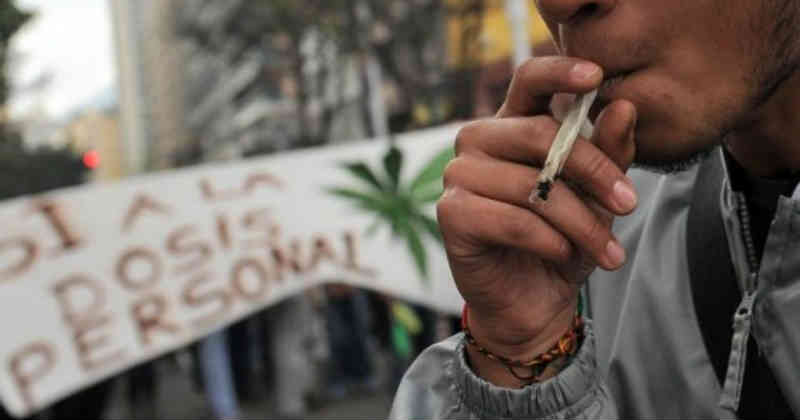
Colombian lawmakers from the major opposition parties have joined forces in drafting a bill to legalize recreational cannabis. The country is already a continental hub for production medical cannabis, but the current government has adopted a reactionary stance as far as recreational use is concerned.
A slap in the face to the government
The Colombian Constitution stipulates that drug use must be treated as a public health issue rather than a criminal justice issue. The country has, in fact, decriminalized drug use in 1994 (less than 20 grams for cannabis). This measure had been challenged by the current president, Ivan Duque, who has been in office since last August. Through a presidential decree, he authorized the police to seize any amount of drugs, thereby ending the policy of tolerance for the possession of small quantities.
This legalization initiative is therefore a response to the government’s increasingly repressive policies. It was proposed by Gustavo Bolivar, an opposition senator and leading author of the «narcogenero»—a literary genre centered on drug trafficking. It will be co-sponsored by a dozen members of Congress from other opposition parties: the Liberal Party, the Radical Change Party, and the U Party. These three parties are the second, third, and fourth political forces in the Colombian Congress.
President Duque’s Democratic Center Party is the largest political force in Congress, but it does not hold a parliamentary majority. Under these circumstances, it is possible that the proposal could be approved despite the president’s opposition. It remains to be seen whether the legalization of recreational cannabis has unanimous support among opposition lawmakers. The 12 co-sponsors working on the proposal plan to introduce it on July 20.
An Ineffective War on Drugs
The authors note that between 2000 and 2015, the government spent $140 million to combat illegal cannabis and coca cultivation, but that these crops have continued to increase, as noted in the 2018 UNODC report. Furthermore, the criminalization of drugs and the associated repressive policies have cost the lives of 25,000 civilians and 7,000 law enforcement officers according to the press.
In addition, President Ivan Duque has been criticized by Trump for failing to curb drug trafficking from Colombia. «He hasn’t done anything for us. There are more drugs coming from Colombia now than before he became president,», the U.S. president had said. Colombian Foreign Minister Carlos Holmes Trujillo was then forced to release statistics that do indeed show a decline in drug seizures.
















«Vincy Gold»: Humboldt Seed Company on the Hunt for Saint Vincent Sativas

Cronos Completes the Acquisition of CanAdelaar for 57.5 million euros

Cannabis with a "bloody" twist: Discover Sensi True Blood and Sensi Sangria, the two new strains from Sensi Seeds

Hemp: The Council of the EU Takes a Stand on New Production and Marketing Rules

Missouri's legal cannabis market accounts for 93 % of consumer spending

THC Gummies: How to Read a Certificate of Analysis Before Buying

British patients now have access to THCV-rich cannabis flowers

Spain: Medical Cannabis Is Coming to About 50 Hospitals

JIHE 2026: Japan’s Largest Trade Show Dedicated to Hemp and CBD Returns to Tokyo with More Than 100 Industry Players

New Caledonia: The Courts Clear the Way for the Return of CBD
-
 Business3 weeks ago
The legal cannabis market in New York exceeds 4 billion $ in revenue
-

 Cannabis in France4 weeks ago
Which countries legalized medical cannabis before France?
-
Cannabis in France1 week ago
France already has 3,000 cannabis retail outlets. None of them are legal.
-
Business4 weeks ago
South Korea is preparing to begin local production of medical cannabis to meet rising demand
-
Cannabis in the U.S.1 week ago
A DEA report confirms that there are no fatal cannabis overdoses
-
Cannabis in Thailand4 weeks ago
From the boom in dispensaries to a purely medical approach: Thailand is revising its cannabis policy
-
Cannabis and driving4 weeks ago
Medical Cannabis and Driving: New South Wales Ends Automatic Penalties for THC
-
Cannabis in France3 weeks ago
France’s Drug Policy Chief Defends Cannabis Prohibition... and Runs Into the Facts
















You must be logged in to post a comment Login