
Illinois legalizes recreational cannabis

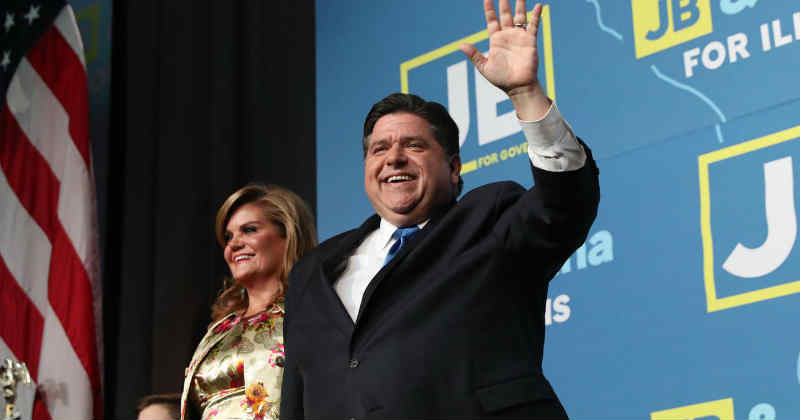
Lawmakers in the U.S. state of Illinois have just approved a bill to legalize recreational cannabis. The bill has been sent to Governor J. B. Pritzker, who is expected to sign it, as he made the legalization of cannabis a campaign promise. In other words, Illinois will soon become the 11th U.S. state to legalize recreational cannabis use.
An emphasis on social justice and equity
Following a Senate vote Last Wednesday, by a vote of 38 to 17, the State House of Representatives approved the bill on Friday by a vote of 66 to 47. «I look forward to signing this historic legislation for equity and criminal justice reform,» Pritzker said. Elected governor of Illinois last November, during the midterms, Pritzker had promised swift legalization through a program intended to «right the wrongs of the war on drugs.».
Due to negotiations with lawmakers, legalization took longer than expected, but provisions intended to ensure social justice and equity have indeed been included. Criminal records of individuals arrested for possession of less than 30 grams of cannabis will be expunged. Those who were arrested for possession of a larger amount—but less than 500 grams—may file a petition in court to request a pardon.
Access to the industry will be made easier for people who were criminalized under prohibition or who live in an area heavily impacted by prohibition. These individuals will be able to apply for a license as a « social equity applicants«. This status will give them an advantage in the selection process and exempt them from certain fees. At the same time, a $30 million fund will be set aside for a scholarship program to cover the startup costs of low-income individuals.”.
Legalization from the top down
The governor welcomes the passage of this law. In his view, it represents legalization «with the most equity-focused approach in the entire country.» He is not the only one celebrating: «The Illinois legislature has set the bar very high with this law, and other states looking to legalize should follow its example.» said Steve Hawkins, Executive Director of Marijuana Policy Project. Dan Linn, executive director of NORML Illinois, took a more measured tone: «This law is a step in the right direction toward righting past wrongs, but it is by no means the end of the conversation.».
This will have a transformational impact on our state, creating opportunities in the communities that need them most and giving so many people a second chance. I commend the bipartisan members of the General Assembly for their vote on this legislation.
- Governor JB Pritzker (@GovPritzker) May 31, 2019
This is the first time that lawmakers have laid the groundwork for the future legal cannabis industry. In other states, the legalization of recreational cannabis stemmed from a citizens’ initiative—with the exception of Vermont, where commercial sales are not permitted. Other states have embarked on the same path but have yet to see tangible results.
This is the case in New York State and New Jersey. Their respective governors have promised imminent legalization but have not reached an agreement with lawmakers on the details. In New Jersey, the governor has been unable to garner enough support in the legislature and withdrew his bill in March. In New York, after a period of stagnation, the governor reaffirmed its commitment to make the legalization of recreational cannabis a priority.
Details of the law
Cannabis sales will be subject to a tax of 10% for products containing less than 35% of THC, 25% for products containing more, and 20% for infused products. A state tax of 6.25% will be applied, along with an additional but optional municipal tax of 3.5%. Analysts have estimated that that potential tax revenue was estimated at $500 million for the first year. These taxes will be used to cover administrative costs and to fund certain social programs, police operations, and addiction treatment centers.
The passage of this law also expands the state’s medical cannabis program by allowing patients to grow up to five cannabis plants. People who are not medically eligible will not be allowed to grow their own cannabis—as was the case in an earlier version of the bill—but personal cultivation will be decriminalized. In fact, it will be punishable only by a fine of $100 to $200 and will no longer result in jail time.
The law is set to take effect next year, on January 1. When it comes to licensing, priority will be given to existing medical cannabis dispensaries. Licenses for new dispensaries will be awarded in May 2020.









China's Yongji Health Takes Control of Tasmanian Botanics

Autism and Cannabis: Results from the First Placebo-Controlled Trial of NTI164

Which countries legalized medical cannabis before France?

From the boom in dispensaries to a purely medical approach: Thailand is revising its cannabis policy

South Korea is preparing to begin local production of medical cannabis to meet rising demand

In the United States, cannabis use among high school students has reached an all-time low

Medical cannabis use surges by 64 % in Denmark

Canopy Growth Enters the U.K. Market with Four Canadian Strains

CBD: Full-Spectrum Extracts Under Threat in Greece

Medical Cannabis and Back Pain: Opioid Use Has Dropped by 90 % in 10 Years
-
 Cannabis and driving2 weeks ago
Cannabis and CBD: French Drivers Can Now Lose Their License Even Without a Positive Test Result
-
Cannabis in France3 weeks ago
Cannabis Legalization: The LFI Bill Has a Major Problem—THC
-

 Cannabis in France22 hours ago
Which countries legalized medical cannabis before France?
-
Cannabis in the Netherlands2 weeks ago
One year after the launch of the Dutch cannabis experiment, the first trends are emerging
-
Cannabis in France2 weeks ago
French medical cannabis remains stalled at the Ministry of Health
-
Cannabis in Argentina1 week ago
Argentina Opens Its Market to Hemp Flowers Containing 1% of THC
-
Business2 weeks ago
The United Kingdom Is Moving Closer to a Regulated CBD Market
-
Cannabis in France1 week ago
Rima Hassan: When «Drugs» Become a Political Weapon
















You must be logged in to post a comment Login