Colombia: new measures to regulate the medical cannabis industry

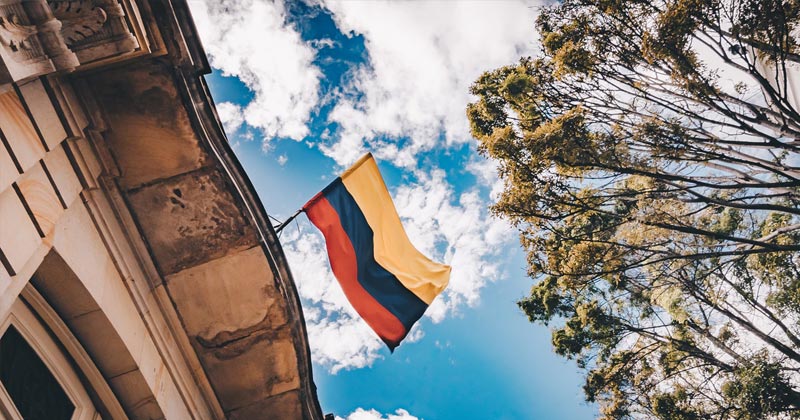
The Colombian government is planning to change the regulations surrounding the production of medical cannabis. The Ministry of Health has made the first version of the project public in May 2019, but the implementation date remains unknown for the time being.
Facilitating the circulation of cannabis
The project would make it possible to export cannabis to free-trade zones to be packaged, representing an interesting opportunity for companies that don't have the means to process it locally. For the time being, moving the flower, even within Colombian territory, is considered exporting. As Juan Felipe Mejia, representative of medical cannabis company THCG, points out, «most of the manufacturing equipment has to be imported, which means that import taxes are normally applied (plus a value-added tax) of 19%. This won't be a burden in free trade zones.»
Foliumed CEO Diego Navarro is also convinced of the merits of free-trade zones. «It should be possible to move manufacturing facilities into a free-trade zone,» he says, as this would enable Colombian companies to compete more effectively on the international market.
The issue of licensing was also addressed in the project. At present, the law allows growers with a license to produce non-intoxicating cannabis (i.e. with a level of THC less than 1%) and with at least 1 registered cultivar not to apply for a packaging license, and not to report on their production quotas. The new measures would require companies applying for a production license to also apply for a packaging license.
«The purpose of also applying for a manufacturing license for the production of non-intoxicating extracts is to provide the National Narcotics Fund (FNE) with tools to control residual THC in the production process,» explains Andres Lopez, former director of the National Narcotics Fund.
Integrating local communities
Among the measures proposed, there is also an effort to integrate local communities, which grew cannabis in the past and have not been able to integrate into the therapeutic cannabis market. Although the law currently requires licensed companies to obtain at least 10% of their cannabis from small or medium-sized producers, this is not always respected. Companies applying for a license after the law is in place will therefore have to certify that there are no ethnic communities around where they would like to set up that they could harm.
New controls will also be introduced: for example, companies will have to declare shareholders who own more than 20%.
The time required to obtain a license will also be extended, and it will no longer be possible to apply for both the production and processing licenses at the same time. Checks on documentation provided by companies will also be more rigorous.
For the time being, the Colombia has over 100 licensed companies, However, only 3 of them have registered a cultivar, which is one of the prerequisites for growing cannabis for commercial purposes in Colombia.





















Medical Cannabis in Germany: THC Prices Vary by a Factor of 12

France already has 3,000 cannabis retail outlets. None of them are legal.

Morocco's exports of legal cannabis have expanded to 15 countries

Aurora Cannabis Doubles Its Production Capacity in Germany

Tilray is accelerating its operations in Europe thanks to a license in Portugal

Boston will host the 10th annual State of the Cannabis Industry Conference on October 26

A DEA report confirms that there are no fatal cannabis overdoses

A British patient is challenging the NHS's refusal to reimburse medical cannabis

October 2026 CBD Highlights: 10 Strains and Hash to Discover from 5 French Producers

CBD in France: Traceability, Retail Stores, THC and Driving… What the New Bill Proposes
-
 Business2 weeks ago
The legal cannabis market in New York exceeds 4 billion $ in revenue
-

 Cannabis in France3 weeks ago
Which countries legalized medical cannabis before France?
-
Business3 weeks ago
South Korea is preparing to begin local production of medical cannabis to meet rising demand
-
Cannabis in Thailand3 weeks ago
From the boom in dispensaries to a purely medical approach: Thailand is revising its cannabis policy
-
Cannabis and driving3 weeks ago
Medical Cannabis and Driving: New South Wales Ends Automatic Penalties for THC
-
Cannabis in Argentina4 weeks ago
Argentina Opens Its Market to Hemp Flowers Containing 1% of THC
-
Autism3 weeks ago
Autism and Cannabis: Results from the First Placebo-Controlled Trial of NTI164
-
Cannabis in France2 weeks ago
France’s Drug Policy Chief Defends Cannabis Prohibition... and Runs Into the Facts

















You must be logged in to post a comment Login