Canadian companies vie for leadership of Latin American cannabis market

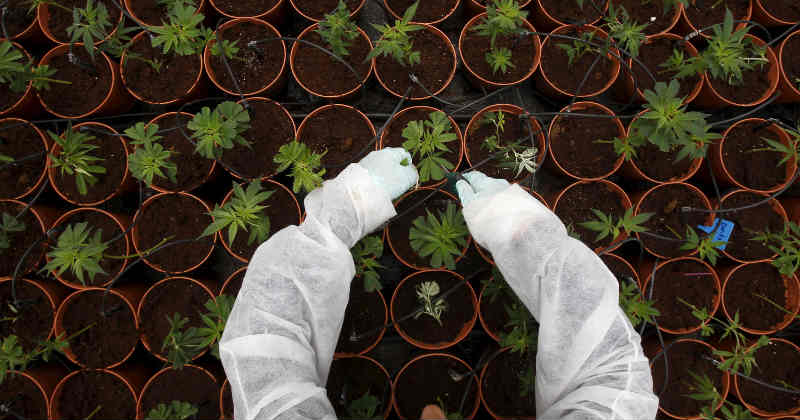
Latin America is an attractive region for the cannabis industry. Firstly, in terms of agricultural production, the region has a climate conducive to cannabis cultivation. In its regional report, Prohibition Partners estimates that the region has the potential to become a global production center, Firstly, because of its climate, but also because of certain social factors such as the lower cost of labor and regulations. Secondly, because the consumer market is estimated at over 600 million inhabitants, and legislation on medical cannabis is opening up. Against this backdrop, Canadian industry leaders are very active in the region, seeking to secure a leadership position in emerging Latin American markets.
Colombia, Regional hub
Colombia legalized medical cannabis in 2015 with the ambition of welcoming the industry to its territory. It has obtained authorization to produce 40.5 tonnes of medical cannabis in 2018, i.e. 44% of the authorized global quota by the International Narcotics Control Board. Last July, there were 67 companies laid off by the Ministry of Justice for cannabis cultivation. Among these companies are Canadian multinationals that produce locally and then distribute their products on the national and regional markets. The first Canadian company to set up in Colombia and obtain all the necessary licenses for the production, distribution and export of medical cannabis (THC and CBD) is Khiron Science.
Unlike other Canadian companies, Khiron Science focuses exclusively on the Latin American market. The company's main operations are based in Colombia, where it has a production capacity of 8 tonnes which, according to the company's expansion plans, is to be extended to almost 100 tonnes. It also has signed a letter of intent for the acquisition of one of the country's major healthcare networks, the Latin American Institute of Neurology and the Nervous System, which serves over 100,000 patients.
The Latin American market is also attracting the interest of Canadian giant Canopy Growth, which has set up a regional subsidiary, Canopy LATAM. The latter established itself in Colombia through the acquisition of Colombian Cannabis (now Spectrum Cannabis) which holds all the necessary licenses for the production, processing and export of cannabis and its derivatives. Located in the agricultural region of Huila, with 280 days of sunshine a year, Spectrum Cannabis Colombia is to act as a hub for the production of medical cannabis, which will then be redistributed to other Latin American markets. Recently, the subsidiary obtained the necessary licenses to produce cannabis on the farm's 126 arable hectares (previously its licenses only covered some 40 hectares).
Competition is fierce, however, in the Colombian market, where Aurora Cannabis has also taken root. Through the acquisition of ICC Labs, another Canadian specializing in the Latin American market, the company has obtained production licenses for THC and CBD cannabis and has a 124,000 m² greenhouse production facility. June 2018, ICC Labs announced a sale agreement with Hlessing Industries a leader in pharmaceutical distribution in Colombia. Another Canadian, Aphria, has established itself on the Colombian market through its acquisition from 90% of the shares of Colcanna, a local player which is fully licensed to grow, process, export, research and market medical cannabis. Colcanna already owns 34 acres of arable land and is in the process of obtaining eight more. With six harvests a year, annual production is estimated at between 30,000 and 50,000 kilos of cannabis.
Argentina, the preserve of Aphria?
Argentina's medical cannabis industry is experiencing developmental delays, production has not yet begun and patients demand authorization for self-cultivation. It is in this complex landscape that Aphria operates through its subsidiary APB, which was the first company to be granted a license to import cannabis-based pharmaceutical products by the Argentine Ministry of Health. APB will distribute its products via a wide network of distributors, pharmacies, clinics and hospitals. In October, Aphria completed its first shipment of cannabis oil in Argentina, which was destined for the Garrahan Pediatric Hospital for a clinical trial on refractory epilepsy in children. APB also has agreements with all 20 of Argentina's insurance companies, guaranteeing it a certain visibility with patients whose healthcare costs are covered by the national health system.
Aphria is now studying the possibility of producing in Argentina. Last month, the company announced that its subsidiary had signed a letter of intent with the JuJuy provincial government company, Cannabis Avatãra Sociedad del Estado (“CANNAVA“), for a cooperation agreement concerning the cultivation of cannabis. Under this agreement, ABP will be able to set up a production site in the province for the cultivation and processing of cannabis and its derivatives. Although its main competitors Canopy and Aurora are not based in Argentina, Aphria is not alone in its desire to produce medical cannabis in the country. Canadian group Wayland had announced the purchase of a total of 819 hectares of farmland in the Province of San Juan for the development of a medical cannabis production project. In addition to Argentina, Aphria is also present in in Paraguay and in Jamaica. It has secured its Latin American assets through an agreement with Scythian Biosciences Corp “SOL”.
Aurora leads the Uruguayan market
Uruguay was the pioneer of recreational cannabis legalization but, unlike in Canada, the market is not open and remains strictly controlled by the government, particularly in terms of production. For the time being, there are only two producers with fixed production contracts. This situation guarantees stable sales and the absence of competition. By acquiring ICC Labs, Aurora has got its hands on a market share corresponding to 70% of the Uruguayan consumer market. Nevertheless, the government recently announced its intention to put five new production licenses up for grabs. This market share is therefore likely to decrease. With its operations in Colombia, the company now accounts for over 840 acres of production land in both countries, and is in the process of building Latin America's first oxygen-based CBD extraction laboratory.
Aurora is also in negotiation for the acquisition of Mexican distributor Farmacias Magistrales. The latter is the first and so far only company to have obtained a license from the Mexican government to import cannabis containing more than 1% of THC. And what's more, Farmacias Magistrales has a well-established distribution network with 80,000 retail outlets for CBD products and 500 pharmacies and hospitals for THC products. With this forthcoming agreement, Aurora has secured a prime position in one of Latin America's largest markets (130 million consumers). The Mexican market is likely to explode, as, in addition to medical cannabis, the government authorized the first CBD products for sale and is currently working on the legalization of recreational cannabis which we know will include private sales.
New markets
Some Latin American markets are not yet developed, but have definite potential. This is the case in Brazil, which already authorizes the importation of certain cannabis medicines, but through a special procedure at patients' expense. For the time being, no local industrial production is possible (the question of self-cultivation for medicinal purposes is still under discussion). currently being debated in Parliament). When and if it does, Brazil's market of 200 million people is sure to attract the interest of Canadian leaders. What's more, Brazil is a world leader in agriculture and has a strong pharmaceutical industry, two advantages that Canadian companies are sure to capitalize on.
In Paraguay and in Peru, medical cannabis has been legalized, but national programs are slow to get off the ground due to a lack of political will. In Peru, however, according to the director of the Peruvian Cannabis Institute, According to Juan José García, pharmacies and laboratories should be able to obtain official trade licenses within a year or so. Canopy is already on site via Spectrum Cannabis Peru which is currently only conducting educational campaigns to prepare healthcare professionals and strategic patient groups for the introduction of medical cannabis. The company has also been present in Brazil since 2016 through’a joint venture with the laboratory Surroundings and the company Bedrocan Bresil.















CBD in France: Traceability, Retail Stores, THC and Driving… What the New Bill Proposes

Organigram Enters the Race for Aurora Cannabis

Medical Cannabis: Augur Associates’ latest report provides an update ahead of the publication of the decrees

Golden Buds is relaunching its Nova High vape pens with a cannabinoid formula that’s out of the ordinary

Cannabis is now Canada's fifth-largest commercial crop

Bedrocan Finally Declared Bankrupt

After CBD, Can Wellness Exist Without Cannabinoids?

Uganda Launches a Cooperative Dedicated to Medical Cannabis

Ukraine: First Cancer Patient Prescribed Medical Cannabis

Cannabis Oil and Endometriosis: A Promising Study for Pain Relief
-
 Business1 week ago
The legal cannabis market in New York exceeds 4 billion $ in revenue
-

 Cannabis in France3 weeks ago
Which countries legalized medical cannabis before France?
-
Business3 weeks ago
South Korea is preparing to begin local production of medical cannabis to meet rising demand
-
Cannabis in the Netherlands4 weeks ago
One year after the launch of the Dutch cannabis experiment, the first trends are emerging
-
Cannabis in Thailand3 weeks ago
From the boom in dispensaries to a purely medical approach: Thailand is revising its cannabis policy
-
Cannabis and driving3 weeks ago
Medical Cannabis and Driving: New South Wales Ends Automatic Penalties for THC
-
Cannabis in Argentina4 weeks ago
Argentina Opens Its Market to Hemp Flowers Containing 1% of THC
-
Autism3 weeks ago
Autism and Cannabis: Results from the First Placebo-Controlled Trial of NTI164

















You must be logged in to post a comment Login