Colombia in the midst of a contradiction between a return to prohibition and a boom in medical cannabis

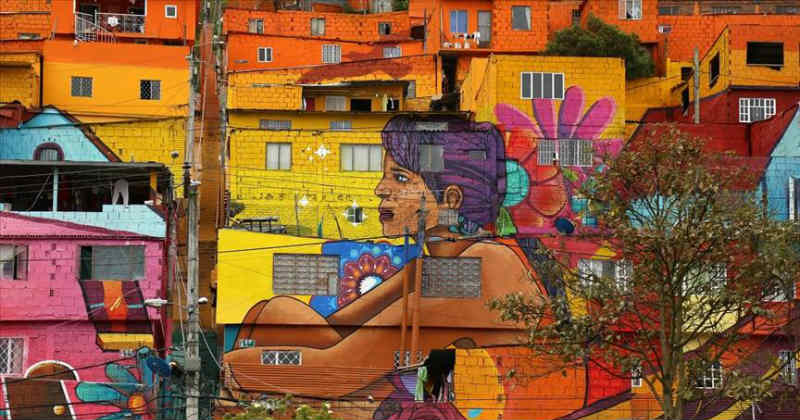
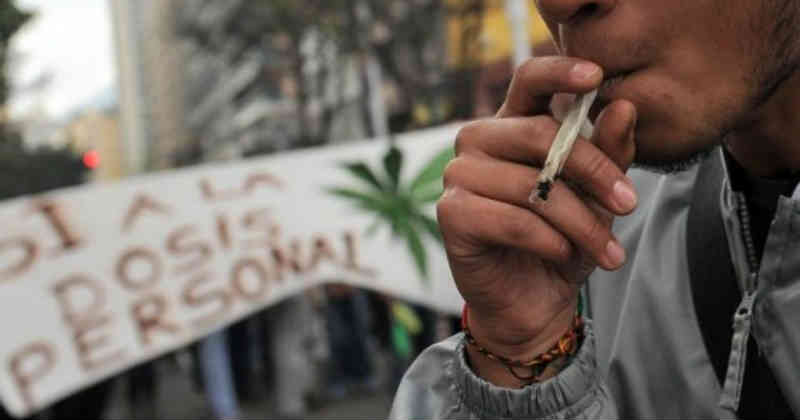
Since President Ivan Duque came to power, Colombia has been in a state of contradiction. At a time when the country is becoming a major player in the medical cannabis revolution, the government has declared a new war on drugs. Although Colombia had embarked on a progressive path by initiating a peace process with the guerrillas and legalizing medical cannabis by presidential decree in 2015. Today, another presidential decree undermines this momentum by once again penalizing the consumption and possession of small quantities of drugs. These had been decriminalized in 1994 by the Supreme Court's decision to establish a right to a «personal dose».
Back to the past
The new government has introduced the Integral Intervention Strategy against Narcotrafficking (EICON). Its objectives are to reduce the areas affected by illicit cultivation, to affect the nuclei of production and to attack the new players in the problem by adopting «a multidimensional approach» and coordinating national and regional authorities. To destroy cultivation areas, the government has found nothing better than to relaunch a «fumigation» program, which involves spraying them with glyphosate, a herbicide suspended since 2015 in Colombia because of the health risks it poses. The strategy for affecting production cores is equally perplexing: it involves attacking the consumer directly to reduce demand and micro-trafficking. The vast majority of drugs produced in Colombia are destined for foreign markets.
Decree 1844 orders the police to confiscate and destroy any quantity of drugs, including the personal dose, and to impose a fine of 208,000 pesos, or 58 euros. According to the newspaper El Colombiano which reports official government figures, after nine days of application, law enforcement agencies issued 8,012 fines, made 718 arrests and confiscated over seven tons of illegal substances, mostly cannabis. Newspaper Semana sees this decree as a return to the war on drugs.
A few days before the decree was issued, the Colombian president met Donald Trump at the UN General Assembly and took part in the the president's informal meeting« A global call to action« . Trump's support a Duque in fact evokes a return to repressive practices: «One of the reasons I was so happy to see the president's victory is his stance on drugs,» said Trump.
Medical cannabis flourishes in Colombia
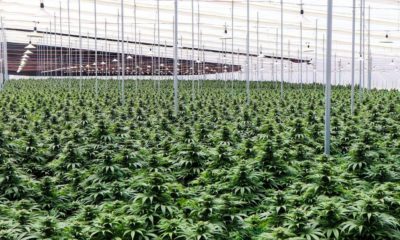
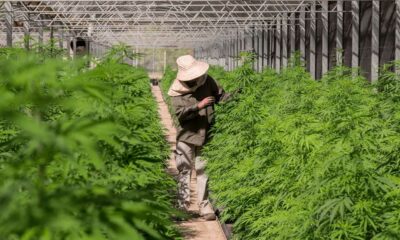
This return to reactionary anti-drug practices is, however, in line with the development of Colombia's medical cannabis industry. The sector is booming and attracting foreign investors and entrepreneurs. Colombia has already granted over142 licenses for psychoactive and non-psychoactive medical cannabis, for drug production, trade or research. Canadian producers in particular, attracted by the favorable climate for cannabis cultivation, are planning to relocate their operations in order to produce at lower cost and export on a massive scale. A strategy that is likely to become commonplace in Latin America. according to Prohibition Partners, a British think tank specializing in cannabis.
A conference on medical cannabis is being held this week in Medellín. MedeWeed presents news and advances in medical cannabis research, as well as expert advice on setting up a cannabis business. The conference also addresses issues of gender, respect for human rights and the stigma surrounding cannabis, a perspective that contrasts with the President's policy. The latter goes completely against the grain of the global movement, statistics and the desire of civil society. A recent report the’International Drug Policy Consortium which describes the war on drugs as a costly failure, was co-written by Colombian human rights lawyer Isabel Pereira Arana. She also launched the organization Dejusticia which documents the abuses of Colombia's anti-drug policies.











Medical Cannabis in Germany: THC Prices Vary by a Factor of 12

France already has 3,000 cannabis retail outlets. None of them are legal.

Morocco's exports of legal cannabis have expanded to 15 countries

Aurora Cannabis Doubles Its Production Capacity in Germany

Tilray is accelerating its operations in Europe thanks to a license in Portugal

Boston will host the 10th annual State of the Cannabis Industry Conference on October 26

A DEA report confirms that there are no fatal cannabis overdoses

A British patient is challenging the NHS's refusal to reimburse medical cannabis

October 2026 CBD Highlights: 10 Strains and Hash to Discover from 5 French Producers

CBD in France: Traceability, Retail Stores, THC and Driving… What the New Bill Proposes
-
 Business2 weeks ago
The legal cannabis market in New York exceeds 4 billion $ in revenue
-

 Cannabis in France3 weeks ago
Which countries legalized medical cannabis before France?
-
Business3 weeks ago
South Korea is preparing to begin local production of medical cannabis to meet rising demand
-
Cannabis in Thailand3 weeks ago
From the boom in dispensaries to a purely medical approach: Thailand is revising its cannabis policy
-
Cannabis and driving3 weeks ago
Medical Cannabis and Driving: New South Wales Ends Automatic Penalties for THC
-
Cannabis in Argentina4 weeks ago
Argentina Opens Its Market to Hemp Flowers Containing 1% of THC
-
Autism3 weeks ago
Autism and Cannabis: Results from the First Placebo-Controlled Trial of NTI164
-
Cannabis in France2 weeks ago
France’s Drug Policy Chief Defends Cannabis Prohibition... and Runs Into the Facts
















You must be logged in to post a comment Login