Colombia: drug decriminalization called into question

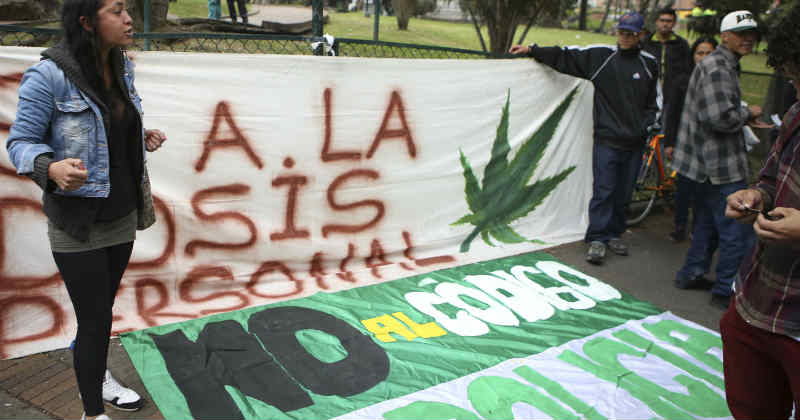
Ivan Duque, Colombia's new president since August 7, signed a decree on October 1 granting new powers to the police in the fight against drug trafficking. The police can now seize any quantity of drugs on the street, putting an end to the current policy of tolerance towards drug users. Since 1994, drug consumption has been decriminalized in Colombia, up to a maximum dose of 1 gram for cocaine and 20 grams for cannabis.
Under this decree, anyone caught in possession of less than the minimum dose is liable to a fine in addition to confiscation of the product (the rest depends on penal measures). Drug addicts must prove that their addiction is pathological in order to recover the confiscated product, although the government has given no further details of the procedure. For many organizations with expertise in the field, the decree is considered ineffective and unfair.
https://twitter.com/IvanDuque/status/1046825726824120320
What the figures say
This initiative stems from the failure of the fight against drug trafficking: drug production in Colombia reached record levels in 2017, with 171,000 hectares in production according to UN figures. The government's justification is an increase in internal trafficking and consumption among young people. For the decree's author, it's a question of «destroying drugs in the streets of our cities» and on the "street". tweet of the president, the hashtag «Our children come first». The measure aims to combat micro-trafficking, which «feeds and strengthens criminal organizations» by dissuading consumers, who are considered the «weak links» in the chain. The logic is therefore to reduce demand in order to reduce supply.
A study by the National University of Colombia shows that the production of narcotics, and cocaine in particular, is mainly destined for foreign markets. Colombia accounts for around 70% of the world's cocaine supply. On the other hand, the United States accounts for a third of demand, and Western Europe and Latin America each 22 %. In Latin America, Colombia ranks 5th in terms of demand.
This measure will therefore not affect production. The study concludes that talk of exponential growth in demand and internal traffic is in fact a distortion of reality.
A poorly received measure
According to the organizations DeJusticia and el Colectivo de Estudios Drogas y Derecho (CEDD), this measure is «ineffective and costly, and does not contribute to a solution to the drug problem; on the contrary, it promotes discrimination and stigmatization of users». For Isabel Pereira, coordinator at CEDD, the measure «will increase police abuse and corruption». What's more, the measure will not differentiate between problematic users and occasional, recreational users». The two organizations have sent a joint letter to the government calling for the decree to be scrapped.
#PresidentNoFirm Dejusticia y @drogasyderecho enviamos una carta a @IvanDuque pidiéndole que no expida el decreto para regular la dosis mínima y explicándole por qué la medida es una idea costosa y además estigmatiza a los usuarios de drogas: https://t.co/Lvecf5ZK0O pic.twitter.com/wi0vbRoc7Q
- Dejusticia (@Dejusticia) September 28, 2018
ADVERTISING
In this letter, they list the reasons why they condemn the decree:
- The decree adds nothing new, as the destruction of the product was already a de facto police prerogative.
- the measure is ineffective against micro-trafficking, and police resources should be redirected towards prosecuting the leaders of criminal organizations and the intermediaries through whom they launder money.
- the decree is discriminatory, since it is often young, poor men who are arrested, whereas trafficking floods all social strata. Among other things, it entails risks of abuse and lack of respect for privacy.
- the emergency is a public health policy for problem users, who contrary to public discourse are not the norm but the exception, representing only 0.4 % of the world's population according to thehe United Nations figures.
Unhappy consumers
Law 30 of 1986 had introduced the minimum dose in the name of defending the free development of personality and therefore on the basis of individual rights. The new decree, on the other hand, is based on article 140 of the Police Code, which deals with «behavior contrary to the respect and integrity of the public space», and on legislative act 02 of 2009, which prohibits the possession and consumption of drugs. For some consumer associations, this measure is unjustified and fails to recognize the existence of responsible consumption.
«We're fundamentally opposed to the hypocritical state and society's pretence of legislating responsible consumption that doesn't bother anyone. If I don't make waves, if I don't cause trouble and I don't sell anything, if I don't contaminate, if I manage not to be a problematic factor for my environment, then I've earned the right not to have my vices interfered with», says Eduardo Vélez, leader of the “yes to personal dose” collective.
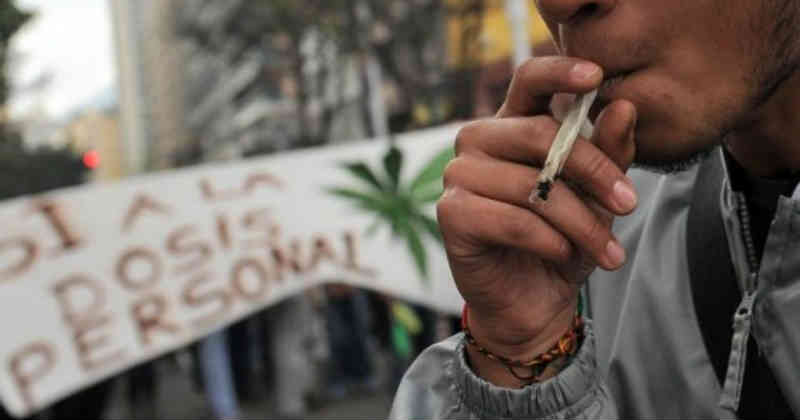
In anticipation of the signing of the decree, consumer collectives organized an event on September 5, a ‘fumaton’, a peaceful demonstration where they publicly consume cannabis. The aim of the demonstration is “to get together, smoke cannabis and talk about society and our idea of what socially responsible consumption that asserts the independence of the individual can be”, explains Eduardo Vélez. He sees the decree as a mistake and an absurdity, which would have the effect of turning the police into “a kind of street judge” and sending a contradictory message to the public: “a person can consume but cannot have it on them”.












«Vincy Gold»: Humboldt Seed Company on the Hunt for Saint Vincent Sativas

Cronos Completes the Acquisition of CanAdelaar for 57.5 million euros

Cannabis with a "bloody" twist: Discover Sensi True Blood and Sensi Sangria, the two new strains from Sensi Seeds

Hemp: The Council of the EU Takes a Stand on New Production and Marketing Rules

Missouri's legal cannabis market accounts for 93 % of consumer spending

THC Gummies: How to Read a Certificate of Analysis Before Buying

British patients now have access to THCV-rich cannabis flowers

Spain: Medical Cannabis Is Coming to About 50 Hospitals

JIHE 2026: Japan’s Largest Trade Show Dedicated to Hemp and CBD Returns to Tokyo with More Than 100 Industry Players

New Caledonia: The Courts Clear the Way for the Return of CBD
-
 Business3 weeks ago
The legal cannabis market in New York exceeds 4 billion $ in revenue
-

 Cannabis in France4 weeks ago
Which countries legalized medical cannabis before France?
-
Cannabis in France1 week ago
France already has 3,000 cannabis retail outlets. None of them are legal.
-
Cannabis in the U.S.1 week ago
A DEA report confirms that there are no fatal cannabis overdoses
-
Cannabis in Thailand4 weeks ago
From the boom in dispensaries to a purely medical approach: Thailand is revising its cannabis policy
-
Cannabis and driving4 weeks ago
Medical Cannabis and Driving: New South Wales Ends Automatic Penalties for THC
-
Cannabis in France3 weeks ago
France’s Drug Policy Chief Defends Cannabis Prohibition... and Runs Into the Facts
-
Studies on cannabis2 weeks ago
Cannabis Oil and Endometriosis: A Promising Study for Pain Relief
















You must be logged in to post a comment Login