From pharmacies to clubs, Uruguay's legal cannabis market expands

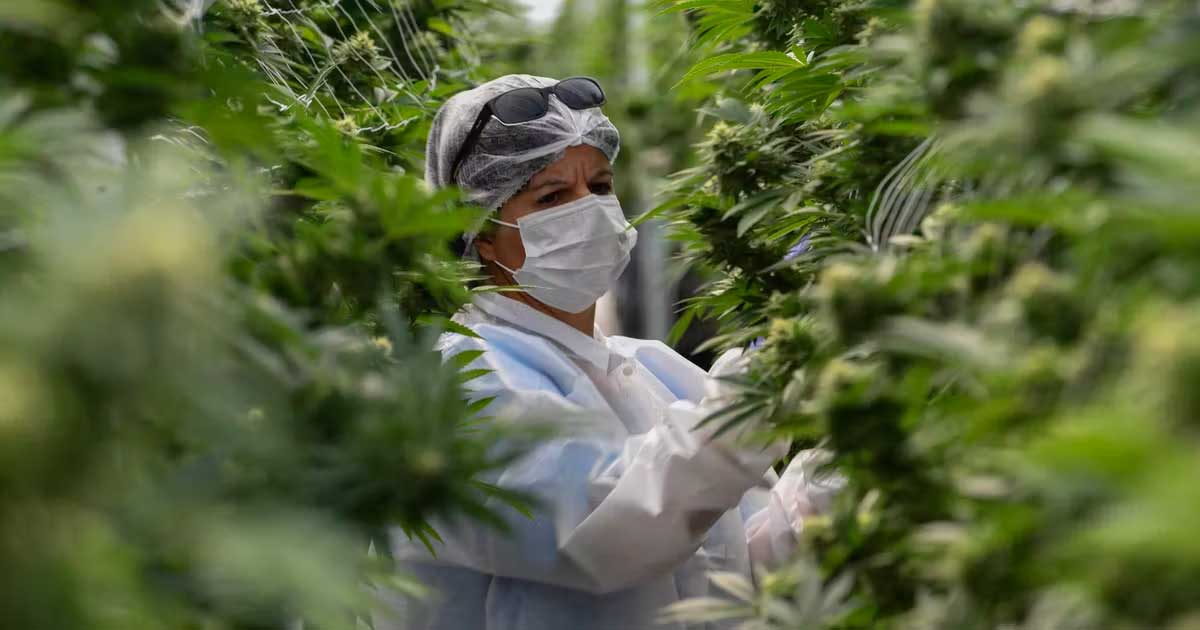
13 years after the legalization of cannabis, the legal market in Uruguay is still trying to structure itself. The latest figures for the year 2025 are proof of this. According to’Institute for Cannabis Regulation and Control (IRCCA) consulted by El País, the country sold more than 9 tons of legal cannabis for adult use last year, the largest quantity since the sales start in 2017.
The most striking figure concerns pharmacy sales. Registered consumers bought 4,290 kilograms of cannabis in pharmacies in 2025, an increase of more than one tonne on 2024 and well above 2023 levels.
Pharmacies drive growth in the regulated market
The production for pharmacies also reached an all-time high. State-approved companies cultivated 4,658 kilograms of cannabis by 2025, the highest volume since regulated sales began in 2017. Prior to 2022, annual production rarely exceeded 2 tonnes.
The number of authorized pharmacies rose from 40 in 2024 to 55 in 2025, now covering 13 of Uruguay's 19 departments. Montevideo, Canelones and Maldonado concentrate the greatest number of sales outlets, with demand peaking between October and December.
At the same time, the number of registered buyers in pharmacies rose to 83,567 people, That's around 9,000 more than a year ago, and over 20,000 more than in 2022. Simply put, more people are participating in the legal system, and there are more points of sale.
Evolving consumer demand
Not all legal cannabis products are equally popular. The THC content has clearly become a key demand factor.
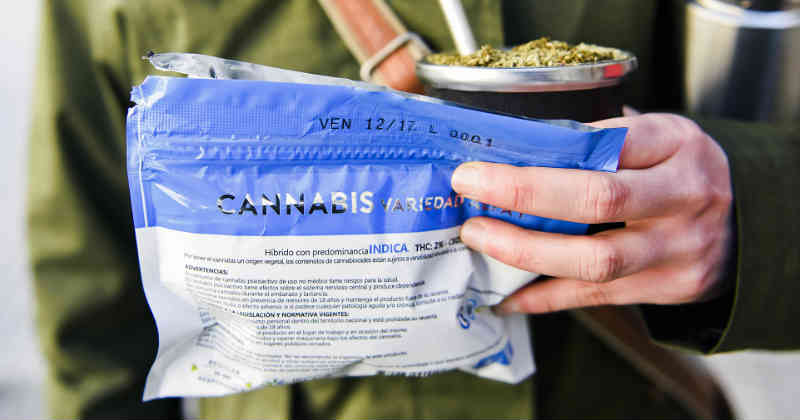
Among the four varieties sold in pharmacies (alpha, beta, gamma and epsilon), the epsilon variety, with a THC content of up to 20%, dominated sales.
By 2025, the’epsilon accounted for 75% of total pharmacy sales, with 3,250 kilograms sold. In comparison, the gamma variety (≤ 15% THC) reached 670 kilograms, while the beta and alpha varieties (≤ 9% THC) together accounted for only 4% of sales. Despite this imbalance, IRCCA has chosen to maintain production of low-THC varieties, recognizing that part of the public continues to prefer products with a lighter effect.
Prices also vary according to potency, with five-gram packs ranging from €10 for alpha to €12 for epsilon.
Cannabis Clubs expand alongside pharmacies
Pharmacies have not been the only channel to develop. The Cannabis Clubs also expanded significantly in 2025. The number of registered clubs rose from 460 à 557, while the number of members reached 19,589 people.
Club production reached 5,801 kilograms, and 4,778 kilograms were distributed to members, two all-time records.
Production remains concentrated in Montevideo, Canelones and Maldonado, and deliveries increased significantly in the second half.
Combined with pharmacy sales, the clubs played a major role in exceeding the 9-tonne mark for total legal distribution.
Home cultivation and increased surveillance
Domestic cultivation followed a different trend. The number of registered home growers fell to 10 392, 11,597 in 2024. However, IRCCA estimates that the real figure is closer to 13 000, The fact that many registrations have expired does not necessarily mean that cultivation has ceased.
As the market has developed, surveillance has intensified. In 2025, the authorities carried out 1,798 inspections, the highest number to date, and have committed 92 disciplinary proceedings, This reflects a parallel strengthening of control mechanisms as legal access expands. This reflects a parallel strengthening of control mechanisms as legal access expands.
More legal access, but not necessarily greater consumption
According to official estimates, the regulated market now reaches around 40% of cannabis users in Uruguay.
However, regulators and public health officials warn against equating the increase in legal sales with an increase in overall consumption. As stated by Héctor Suárez, coordinator of’Uruguayan Drug Observatory (OUD), to the newspaper El País «More people are consuming it because it's available and of good quality.»
Data from the latest national drug survey show nuanced trends: while lifetime use has increased over the long term, past-year use has decreased slightly compared to 2018, and use among teenagers has fallen sharply.
Overall, the figures for 2025 suggest that Uruguay's cannabis policy is aimed less at expanding consumption than at channelling it into regulated, controlled channels.





















JIHE 2026: Japan’s Largest Trade Show Dedicated to Hemp and CBD Returns to Tokyo with More Than 100 Industry Players

New Caledonia: The Courts Clear the Way for the Return of CBD

The Brazilian medical cannabis market continues to grow

Morocco: Three Cannabis-Based Medications Approved for the Treatment of Epilepsy

Canopy Growth Receives New EU-GMP Certification to Strengthen Its Presence in Europe

Three years after legalizing medical cannabis, Albania continues to establish regulations for it

The first plant-based medical THC spray arrives in the United Kingdom

Medical Cannabis in Germany: THC Prices Vary by a Factor of 12

France already has 3,000 cannabis retail outlets. None of them are legal.

Morocco's exports of legal cannabis have expanded to 15 countries
-
 Business2 weeks ago
The legal cannabis market in New York exceeds 4 billion $ in revenue
-

 Cannabis in France4 weeks ago
Which countries legalized medical cannabis before France?
-
Business4 weeks ago
South Korea is preparing to begin local production of medical cannabis to meet rising demand
-
Cannabis in France4 days ago
France already has 3,000 cannabis retail outlets. None of them are legal.
-
Cannabis in Thailand4 weeks ago
From the boom in dispensaries to a purely medical approach: Thailand is revising its cannabis policy
-
Cannabis in the U.S.5 days ago
A DEA report confirms that there are no fatal cannabis overdoses
-
Cannabis and driving3 weeks ago
Medical Cannabis and Driving: New South Wales Ends Automatic Penalties for THC
-
Cannabis in France3 weeks ago
France’s Drug Policy Chief Defends Cannabis Prohibition... and Runs Into the Facts

















cbdtech
January 27, 2026 at 21 h 52 min
Uruguay is a fascinating example of the transition from a black market to a regulated system. Thirteen years on, we can see that legalization is not an explosion in consumption, but a successful transfer to legality.
There are two key points in this 2025 report:
Transparency and quality: The fact that 40 % of consumers now prefer pharmacies and clubs proves that access to a controlled, traced product is a major expectation.
Diverse needs: while demand is moving towards higher THC levels (Epsilon), the maintenance of lighter varieties (Alpha/Beta) shows the maturity of the market, which knows how to respond to all profiles, without necessarily pushing for potency.
This is concrete proof that strict government supervision can stabilize consumption among young people, while at the same time permanently weakening illegal channels. It's a public health model that could serve as a model for many other nations as they move away from a repressive approach. Fabien from CBDtech