Cannabis in Paraguay
In brief In detail Cannabis NewsParaguay is one of South America’s largest cannabis producers, but recreational use remains illegal there, although possession of 10 grams or less has been tolerated since 1988. Medical cannabis has been legal since the 2017 law: production licenses have been available without any limit on the number since 2022, and a national registry regulates patient access. Find all the latest news and laws on cannabis in Paraguay here.
Legal Status of Cannabis in Paraguay
-
Recreational cannabis:
Illegal
Recreational cannabis is illegal in Paraguay.
-
Medical cannabis:
Legal under certain conditions
Paraguay legalized medical cannabis in 2017. Use is limited to oil and imported products. Production licenses have been granted to grow, manufacture, and distribute medical cannabis, subject to strict safety requirements and an initial THC limit of 0.5%.
-
CBD:
Legal under certain conditions
Paraguay legalized medical cannabis in 2017, allowing the importation of CBD oil and the controlled production of cannabis and its derivatives. Patients must register with the Ministry of Public Health to receive CBD oil free of charge as part of a research program.
-
Possession:
Decriminalized
Possession of less than 10 grams of cannabis has been decriminalized since 1988.
-
Personal interests:
Illegal
Growing cannabis for personal use remains illegal in Paraguay, although local cultivation is taking place to meet the needs of patients.
Last checked: October 8, 2026
Where in the world is cannabis legal?Do you have a question about cannabis in Paraguay?
✨ Newsweed AI is based on our articles and verified data.
History of Cannabis in Paraguay
Paraguay is one of the continent’s leading cannabis producers and the second-largest in Latin America after Mexico, according to Wikipedia. Its fertile red soil provides excellent growing conditions for the plant, sometimes yielding multiple harvests per year. Production, which is largely illegal, supplies the markets in Brazil, Argentina, Uruguay, and Chile. It is often sold as marijuana compressed into «bricks» (brick), mixed with adhesives to mask the odor at the borders.
The 1988 law (Law No. 1340, Article 30) exempts from punishment anyone in possession of up to 10 grams of marijuana for personal use, which remained the only measure of leniency for nearly thirty years. In December 2014, a member of Congress proposed decriminalizing possession and use, as well as the possession of up to 30 plants, and in 2015, Senator Blas Llano, one of the country’s most prominent political figures, expressed his support for legalization.
The turning point is the Law No. 6007 of 2017, signed by President Horacio Cartes, which establishes the National Program for Medical and Scientific Study and Research on the Medicinal Use of Cannabis (PROINCUMEC). The first production licenses were issued in 2019: five initially, then ten in early 2020, and finally twelve, granted to pharmaceutical companies. A 2018 decree, amended in 2021 and 2022, specifies the conditions for the production, import, export, and distribution of medical cannabis.
Cannabis Legislation in Paraguay
Recreational cannabis: illegal, with a tolerance of 10 grams
Recreational cannabis is illegal in Paraguay. Possession of 10 grams or less Personal use has been exempt from penalties since the 1988 law, but cultivation and sale remain offenses, and personal cultivation for one’s own use is not permitted. A reform bill aimed at legalizing the sale of cannabis for adult use in regulated dispensaries was scheduled to be put to a vote in the Senate in 2025, but as of our last update, it had not been passed.
Medical cannabis: an ambitious framework, but access remains limited
The framework is based on the 2017 law and its implementing decrees. The DINAVISA (National Health Surveillance Agency) issues production and manufacturing licenses, authorizes research, and maintains the national registry of users of cannabis-derived products. Licenses are specific to each entity, non-transferable, and renewable every five years. Since 2022, there have been no limits on the number of licenses or geographic restrictions, which opens the market to any interested company. Medical cannabis must not exceed 0.5 % of THC. Private laboratories must also provide at least 2 % of their production to the government to ensure free treatment for patients listed in the registry.
However, patient access remains very limited. As of the end of 2025, the registry included 107 patients and 10 doctors, including 103 patients with refractory epilepsy and four with multiple sclerosis, who have free access to medical cannabis oil. The prescription system distinguishes between CBD-based medications (simple prescription), products containing both CBD and up to 0.5 % of THC (a single prescription kept on file), and products containing more than 0.5 % of THC (a prescription in quadruplicate, issued only by physicians enrolled in the program). Many families continue to rely on imported products, which they purchase at high prices.
CBD and Hemp
CBD is used in the medical products described above. A regulatory framework for industrial hemp also exists, with a THC limit that industry stakeholders are seeking to raise. The country has also exported hemp flowers to Switzerland and is negotiating contracts with Swiss and German companies.
News and Outlook
Paraguay plays a central role in the region’s illegal production while also having one of the most open medical frameworks in Latin America, particularly since the cap on the number of licenses was lifted. Key areas to watch include the practical implementation of patient access, the expansion of domestic production, and reform proposals regarding adult use. Follow our Cannabis News in Paraguay See below for updates to the law.
Related searches
Cannabis in BrazilCannabis in ChileCannabis in Costa RicaCannabis in MexicoCannabis in PanamaCannabis in PeruCannabis in ArgentinaCannabis in ColombiaCannabis in UruguayLatest news on Cannabis in Paraguay
-
 Cannabis in Paraguay2 years ago
Paraguay to vote on cannabis legalization in March
The Paraguayan Senate is expected to vote on a reform that could legalize the sale of cannabis for adult use in regulated dispensaries according to El...
-
 Business2 years ago
Paraguay seeks to raise THC limit for hemp production
The Paraguayan Chamber of Industrial Cannabis (CCIP) has proposed raising the THC limit in hemp to make it easier to export raw materials and products to...
-

 Cannabis in Paraguay2 years ago
Paraguay discusses regulation of medical, industrial and recreational cannabis: are changes afoot?
Last week, the Senate debated the future of cannabis in Paraguay. The political leaders, convened by the Commission for the Prevention, Fight against...
-
 Cannabis in Paraguay4 years ago
Paraguay: Presentation of the draft law on cannabis for medical and adult use
Late last week, a bill to decriminalize the use and cultivation of cannabis was presented to the National Congress. The bill...
-
 Cannabis in Paraguay6 years ago
Paraguay: Forest fires fueled by rising demand for cannabis
Cannabis is illegal in Paraguay, where possession has been decriminalized under 10g since 1988, but the country is one of the world's largest producers of cannabis, the...
-
 Cannabis in Paraguay7 years ago
Paraguay issues 12 medical cannabis production licenses
Paraguay has granted its first 12 medical cannabis production licenses. Selected companies can now import seeds, grow, manufacture and distribute medical...
-
 Cannabis in Paraguay7 years ago
Paraguay to open applications for medical cannabis production licenses in October
Paraguay will begin accepting applications for the production of cannabis for medical and research purposes next month, according to an announcement made by the...
-
 Business7 years ago
Paraguay to grant five medical cannabis production licenses
As it struggles to combat organized crime and international drug trafficking, Paraguay, the Latin American state bordered by Argentina, Brazil and...
-
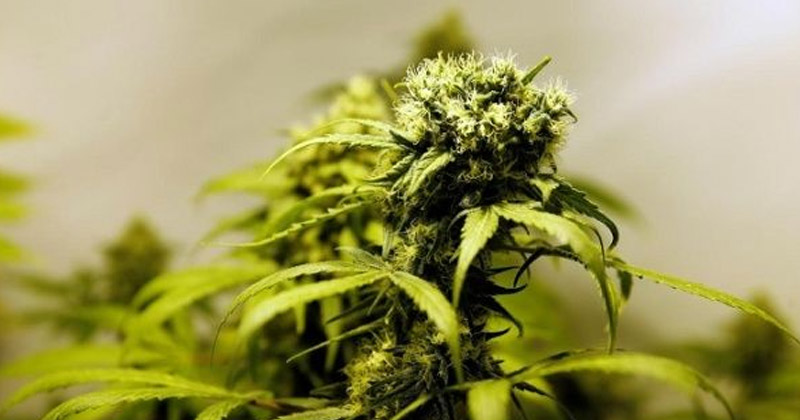 Cannabis in Paraguay9 years ago
Paraguay: the President signs the legalization of medical cannabis
Paraguay, one of South America's biggest cannabis producers, has officially legalized cannabis for recreational and research use. President...
-
 Cannabis in Paraguay9 years ago
Paraguay legalizes the cultivation of medical cannabis
Paraguay is set to join its South American neighbors after the Paraguayan Senate approved the cultivation of medical cannabis on Tuesday. The country had already...
-
 Cannabis in Paraguay9 years ago
Cannabis oil now available in Paraguay
Cannabis oil is now legally available in Paraguay. The oil, imported from the USA in mid-June, is currently available in a single...




Boston will host the 10th annual State of the Cannabis Industry Conference on October 26

A DEA report confirms that there are no fatal cannabis overdoses

A British patient is challenging the NHS's refusal to reimburse medical cannabis

October 2026 CBD Highlights: 10 Strains and Hash to Discover from 5 French Producers

CBD in France: Traceability, Retail Stores, THC and Driving… What the New Bill Proposes

Organigram Enters the Race for Aurora Cannabis

Medical Cannabis: Augur Associates’ latest report provides an update ahead of the publication of the decrees

Golden Buds is relaunching its Nova High vape pens with a cannabinoid formula that’s out of the ordinary

Cannabis is now Canada's fifth-largest commercial crop
