Cannabis in Brazil
In Brazil, cannabis remains illegal, but possession for personal use (up to 40 g or 6 female plants) is no longer a criminal offense following the Supreme Court’s 2024 ruling. Medical cannabis and CBD are available by prescription, and in 2026, ANVISA paved the way for nationwide cultivation for medical purposes. Find all the latest news and laws on cannabis in Brazil here.
Legal Status of Cannabis in Brazil
-
Recreational cannabis:
Illegal
Recreational cannabis use is prohibited in Brazil.
-
Medical cannabis:
For Medical Use Only
Medical cannabis is legal in Brazil, but its cultivation is generally permitted only by court order. Medical cannabis products may be imported and sold in pharmacies with a prescription. Cultivation for medical purposes is currently being regulated, with individual authorizations granted by the courts.
-
CBD:
For Medical Use Only
CBD is legal in Brazil only for medical use and is dispensed at pharmacies.
-
Possession:
Decriminalized
The Brazilian Supreme Court has decriminalized the possession of cannabis.
-
Personal interests:
For Medical Use Only
The Brazilian Superior Court of Justice has ruled that patients may grow their own cannabis for medical purposes. This ruling allows patients to grow cannabis for medical treatment.
Last checked: September 25, 2026
Where in the world is cannabis legal?Do you have a question about cannabis in Brazil?
✨ Newsweed AI is based on our articles and verified data.
The History of Cannabis in Brazil
The history of cannabis in Brazil has been intertwined with the country’s history since the arrival of the first Portuguese caravels in 1500, whose sails and ropes were made of hemp fiber. The Portuguese word marijuana is, in fact, an anagram of cânhamo, hemp. The plant itself is not native to Brazil: it is believed to have been introduced there by African slaves, probably as early as the 16th century, which explains one of its former names, Angolan fumo.
In the 18th century, the Portuguese Crown even encouraged the cultivation of hemp. In 1785, the viceroy recommended planting it in the captaincy of São Paulo and had sacks of seeds shipped from the port of Santos. Non-medical use then spread among slaves and later among indigenous populations, who began cultivating it for their own consumption. Its use remained confined to the poorest classes and attracted little attention from the elites.
In the second half of the 19th century, cannabis was included in the pharmacopoeia. Influenced by the work of French physician Jean-Jacques Moreau, it was prescribed for asthma, insomnia, and catarrh. Grimault «Indian cigarettes,» imported from France, were still being advertised in the Brazilian medical press in 1905, and pharmaceutical compendia from the 1930s still listed liquid cannabis extract.
Prohibition took hold in the 20th century. In 1924, at the Second International Opium Conference in Geneva, the Brazilian delegate Pernambuco Filho asserted that maconha was «more dangerous than opium.» In the 1930s, police crackdowns became routine: the first arrests took place in Rio in 1933, followed by campaigns in several states. Decree-Law 891 of 1938 completely banned the planting, cultivation, harvesting, and use of the plant. Brazil, a signatory to the 1961 Single Convention on Narcotic Drugs, continued to maintain a repressive policy for decades. Law 6,368 of 1976 provided for a prison sentence for any possession, even for personal use.
Cannabis Legislation in Brazil
Personal use: decriminalized, but not legalized
Cannabis is not legal in Brazil. The 2006 Narcotics Law had already eliminated prison sentences for possession for personal use, but it still classified it as a criminal offense, punishable by warnings, community service, or rehabilitation programs. In June 2024, the Federal Supreme Court (STF) took it a step further: possession of cannabis for personal use is no longer a criminal offense. The Court set the threshold at 40 grams or 6 female plants to distinguish between users and traffickers. Below this threshold, the offense is subject to administrative sanctions (warning, prevention program). Above this threshold, or if there is evidence of sale, criminal prosecution for trafficking remains possible. The law has not been repealed: the STF’s decision takes precedence over the law, but a proposed constitutional amendment (PEC) introduced by Congress in response to this decision remains under discussion in the Chamber of Deputies.
The sale, purchase, and cultivation of cannabis outside of a medical context remain prohibited. Decree 9.761 of 2019 prohibits the planting, cultivation, and importation of plants associated with illicit drugs, unless expressly authorized by the Union.
Medical cannabis
Brazil authorizes the import, manufacture, and sale of cannabis-based medicines, under the supervision of the health agency ANVISA. Products are dispensed at pharmacies only with a doctor’s prescription. Manufacturers must obtain a certificate of good manufacturing practices, an operating license, and provide the technical documentation required by ANVISA. Patients may also import certain products directly with authorization. Since the framework was established in 2019 (Resolution RDC 327), several dozen cannabis-based products have been registered with ANVISA and are available in pharmacies.
In 2026, ANVISA revised this framework. It issued Resolution RDC 1.015/2026, which replaces RDC 327 and expands access to the products. Following a November 2024 decision by the Superior Court of Justice (STJ) ordering the government to regulate cultivation, ANVISA also adopted resolutions in January 2026 authorizing the cultivation of cannabis on Brazilian soil for medical and pharmaceutical purposes. Until then, all cultivation had been prohibited, forcing industry players to import the finished product or extract.
CBD
The use of CBD is not prohibited in Brazil, but it remains regulated and monitored by ANVISA. A patient must have a medical prescription justifying this treatment, which is generally intended for serious conditions for which there are no satisfactory alternative treatments. Since CBD has historically been imported, its prices remain high, a situation that the launch of domestic production should help to alleviate.
Industrial hemp
Brazilian law does not distinguish between industrial hemp and the rest of the cannabis genus: planting, cultivating, or importing the plant—even for industrial purposes—is prohibited. It is still possible to import finished products manufactured abroad, such as clothing. For products containing cannabinoids, the concentration of CBD and THC was limited to 30 mg/ml by Ministry of Health regulations (Ordinance 344/98).
News and Outlook
Brazil is one of the Latin American countries where the legal framework is changing the fastest, amid court rulings, new ANVISA regulations, and reactions from Congress. The next steps are the implementation of the national medical culture and the future of the proposed constitutional amendment, which could overturn the STF’s decision. Follow our News about cannabis in Brazil See below for updates to the law.
Related searches
Cannabis in ChileCannabis in Costa RicaCannabis in MexicoCannabis in PanamaCannabis in ParaguayCannabis in PeruCannabis in ArgentinaCannabis in ColombiaCannabis in UruguayLatest news on Cannabis in Brazil
-
 Business4 days ago
The Brazilian medical cannabis market continues to grow
The Brazilian medical cannabis market continues to grow, driven by an increase in the number of patients, a steady rise in imports, and the gradual evolution of...
-

 Hemp4 months ago
Brazilian researchers are studying hemp fibers to strengthen recycled paper
Researchers at the Federal University of Viçosa (UFV) in Brazil are studying whether hemp fibers could help improve the quality and shelf life of...
-
 Business5 months ago
Brazil debates 1% THC limit for hemp
In Brazil, a coalition of researchers and industry stakeholders is challenging the current 0.3% THC limit for industrial hemp, arguing that it...
-

 Medical cannabis9 months ago
Brazil authorizes the cultivation of medical cannabis by patient associations
On January 28, the collegiate council of Anvisa, the country's national health monitoring agency, approved a series of regulatory changes that extend access to...
-
 Medical cannabis11 months ago
Brazilian agricultural agency gets green light for cannabis research
Brazil's agricultural research agency, Embrapa, has received authorization from the Anvisa health agency to conduct research on Cannabis. The agency hopes to create its first-ever cannabis bank...
-

 Medical cannabis1 year ago
Brazil struggles to define its rules for the cultivation of medical cannabis
Almost a year after Brazil's Superior Court of Justice (STJ) ordered the government to regulate the cultivation of cannabis for medicinal purposes, the...
-

 Cannabinoids1 year ago
New device identifies synthetic cannabinoids in seconds
Brazilian researchers have unveiled a new portable sensor designed to detect synthetic cannabinoids in vaping fluids and biological samples (e.g....
-

 Recreational cannabis2 years ago
What model will Brazil use to decriminalize cannabis?
In a decision handed down on February 14, 2025, Brazil's Federal Supreme Court (STF) unanimously decriminalized the possession of cannabis for personal use...
-
 Medical cannabis2 years ago
More than 672,000 patients to be treated with medical cannabis in Brazil by 2024
The number of people benefiting from cannabis-based treatment rose sharply in Brazil in 2024, with more than 672,000 patients, an...
-
 Medical cannabis2 years ago
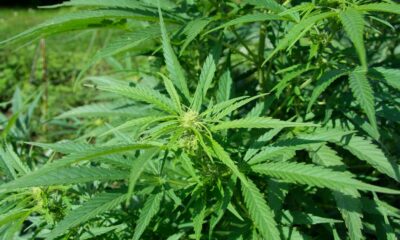
Brazil's Supreme Court legalizes the cultivation, processing and sale of hemp for medical purposes
Brazil's Superior Court of Justice (STJ) has approved the planting, cultivation, processing and sale of hemp for medicinal purposes in...
-

 Justice2 years ago
Brazil's Supreme Court decriminalizes cannabis possession
Brazil's Supreme Court has taken an important step towards decriminalizing the possession of cannabis for personal use, placing the country on the...
-

 Medical cannabis3 years ago
Judge orders Anvisa to allow medical cannabis products into Brazil
Since 2015, two cannabinoids, tetrahydrocannabinol (THC) and cannabidiol (CBD), have been authorized for medical use by the regulations of ANVISA, the Brazilian regulatory agency...
-
 Cannabis in Canada3 years ago
Quick Hit August 2023: what we've missed in recent weeks
As regular Newsweed consumers will have noticed, we've been on hiatus for the past 2 weeks. But since there's no news to wait for us, here's a...
-

 Medical cannabis3 years ago
Brazil wants to regulate the cultivation of medical cannabis
The government of Brazilian President Lula has pledged to regulate the cultivation of cannabis for medical purposes, in particular to replace cannabis imports. Currently,...
-
 Cannabinoids3 years ago
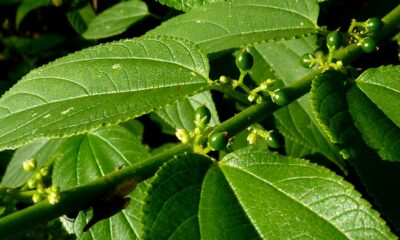
Researchers find CBD in a South American shrub
After the CBG-producing plant in South Africa and the THC-producing moss, scientists have found a shrub in South America that produces...
-

 Medical cannabis4 years ago
Legal cannabis cultivation on the horizon in Brazil?
According to information reported by Reuters, Brazil's Superior Court of Justice (STJ), which acts as the supreme court of appeal for non-constitutional cases,...
-
 Business4 years ago
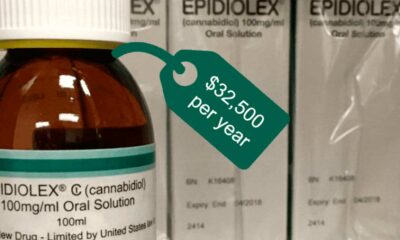
Is GW Pharmaceuticals - now Jazz Pharmaceuticals - trying to bury the CBD industry?
With Europe's CBD sector booming, despite a regulatory quagmire, hundreds of industry players on both sides of the Atlantic are facing the challenge of...
-

 Business4 years ago
Brazil's first subscription service for medical cannabis
Innovation driving access to medical cannabis? In Brazil, the first subscription service focusing on cannabis-based therapies has just been launched....
-

 Medical cannabis4 years ago
Brazilian Superior Court of Justice approves self-cultivation of cannabis for medical purposes
On Tuesday, Brazil's Superior Court of Justice authorized three patients to cultivate cannabis for medical purposes, a decision that should be applied...
-

 Medical cannabis5 years ago
Brazil: the bill authorizing the cultivation of medical cannabis makes headway in Congress
On Tuesday, a committee of Brazil's Chamber of Deputies approved a plan to legalize the cultivation of cannabis for medicinal purposes and...





«Vincy Gold»: Humboldt Seed Company on the Hunt for Saint Vincent Sativas

Cronos Completes the Acquisition of CanAdelaar for 57.5 million euros

Cannabis with a "bloody" twist: Discover Sensi True Blood and Sensi Sangria, the two new strains from Sensi Seeds

Hemp: The Council of the EU Takes a Stand on New Production and Marketing Rules

Missouri's legal cannabis market accounts for 93 % of consumer spending

THC Gummies: How to Read a Certificate of Analysis Before Buying

British patients now have access to THCV-rich cannabis flowers

Spain: Medical Cannabis Is Coming to About 50 Hospitals

JIHE 2026: Japan’s Largest Trade Show Dedicated to Hemp and CBD Returns to Tokyo with More Than 100 Industry Players
