
Uruguay Wants to Integrate Medical Cannabis into Its Healthcare System


Uruguay was the first country in the world to establish a legal framework for the entire cannabis industry.
Yet, ten years later, medical cannabis still has not found its place in the healthcare system. Its exclusion from the Therapeutic Drug Formulary limits access to it, while the lack of training among healthcare professionals and the cost of treatment are hindering its development.
A system that is still awaiting full integration
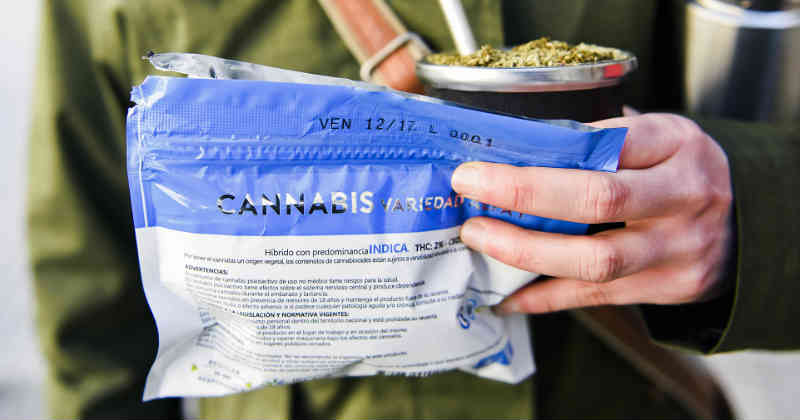
Despite a regulatory framework that has been in place for ten years, cannabis-based medications are still not covered by the Uruguayan healthcare system. Their price generally ranges from 5,000 to 9,000 Uruguayan pesos (200 euros), a cost that remains prohibitive for some patients.
While some public institutions, such as the Pereira Rossell Hospital and the BPS (Banco de Previsión Social), offer free treatment, most patients in the private sector must cover all or part of the costs.
Only two private insurers (Casmu and the Asociación Española) offer clinics specializing in cannabis-based therapies, although even in this case, patients are still required to contribute toward the costs.
At the same time, unregulated products have become a widespread alternative. These products are significantly cheaper, but are not subject to any dosage controls, do not meet any quality standards, and have not been officially approved by the Ministry of Public Health, raising concerns among experts about their safety and effectiveness.
Clinical Evidence and Practical Application
Despite these structural limitations, the therapeutic use of cannabis is supported by a growing body of clinical evidence. The strongest evidence supports its use for refractory epilepsy, chemotherapy-induced nausea and vomiting, spasticity associated with multiple sclerosis, and certain forms of neuropathic pain.
In practice, chronic pain accounts for the majority of patient consultations. Conditions such as fibromyalgia, osteoarticular pain, migraines, and persistent headaches account for a significant portion of these consultations.
A 2023 study published in Uruguayan Medical Journal revealed that cannabinoid-based treatments improved the quality of life for patients suffering from chronic non-cancer pain. It also found a 15.7% reduction in opioid use, with 8.3% of patients having completely stopped their opioid treatment, as well as a 23.2% decrease in NSAID use.
“Often, these are people who are taking several medications and still can’t find enough relief,” Galzerano explained, referring to the patients who see him most frequently.
Cancer patients and those in need of palliative care constitute the second largest group of users; they often turn to cannabis-based treatments when conventional options prove insufficient.
Institutional inertia
The Technical Advisory Committee on Medical Cannabis recently submitted a third request to include these treatments in the Therapeutic Drug Formulary (FTM). The two previous requests had been denied by the Ministry of Public Health.
In reality, access to medical cannabis remains largely dependent on patients’ financial resources and the availability of doctors trained to prescribe it.
Another obstacle cited by experts is the lack of training among physicians. Of the approximately 7,300 physicians in the country, only a few dozen have formal expertise in cannabinoid-based therapies, particularly within the Uruguayan Society of Endocannabinoidology (SUEN).
As Julia Galzerano, an internist and leading expert in this field, explains: “We doctors have the same biases as the general public. We were taught to believe that cannabis is a substance prone to abuse, not a therapeutic tool,”
To address this gap, the Uruguayan Medical Association recently launched an online training course on medical cannabis. Demand far exceeded expectations: 110 applications were submitted for only 50 available spots, highlighting both the interest among professionals and the lack of structured training.
Julia Galzerano notes that progress remains slow due to a number of factors: inadequate academic training, limited commitment on the part of pharmaceutical companies, and the lack of systematic dissemination of treatment protocols.
Without formal integration into the public health care system, access will likely remain unequal.



















Newsweed Launches Its Own AI
A new tax of 0.5% could disrupt the hemp industry in Canada

Medical Cannabis and Driving: New South Wales Ends Automatic Penalties for THC

China's Yongji Health Takes Control of Tasmanian Botanics

Autism and Cannabis: Results from the First Placebo-Controlled Trial of NTI164

Which countries legalized medical cannabis before France?

From the boom in dispensaries to a purely medical approach: Thailand is revising its cannabis policy

South Korea is preparing to begin local production of medical cannabis to meet rising demand

In the United States, cannabis use among high school students has reached an all-time low

Medical cannabis use surges by 64 % in Denmark
-
 Cannabis and driving3 weeks ago
Cannabis and CBD: French Drivers Can Now Lose Their License Even Without a Positive Test Result
-

 Cannabis in France3 days ago
Which countries legalized medical cannabis before France?
-
Cannabis in France3 weeks ago
Cannabis Legalization: The LFI Bill Has a Major Problem—THC
-
Cannabis in the Netherlands2 weeks ago
One year after the launch of the Dutch cannabis experiment, the first trends are emerging
-
Business3 days ago
South Korea is preparing to begin local production of medical cannabis to meet rising demand
-
Cannabis in France2 weeks ago
French medical cannabis remains stalled at the Ministry of Health
-
Cannabis in Argentina1 week ago
Argentina Opens Its Market to Hemp Flowers Containing 1% of THC
-
Business2 weeks ago
The United Kingdom Is Moving Closer to a Regulated CBD Market















You must be logged in to post a comment Login