Legal cannabis in Uruguay: a regulatory model that may be too strict


Uruguay's cannabis legalization model, once considered a groundbreaking global experiment, is entering a new phase.
More than a decade after becoming the first country to legalize Cannabis for recreational use for adults in 2013, thanks to Law No. 19.172, has yielded concrete results for the country: a net reduction in the illicit market, improved product traceability, and a decrease in the criminalization of consumers.
However, the system also shows limitations that are becoming increasingly difficult to ignore. According to an analysis published by El Planteo, the debate in Uruguay no longer concerns whether legalization is working, but rather how to adapt a rigid framework to new realities without compromising its initial objectives.
A public policy model designed for control, not growth
When Uruguay passed its cannabis law, the goal was not to create a commercial industry or attract tourists. The reform was primarily designed as a public policy response to drug trafficking and the failure of prohibition.
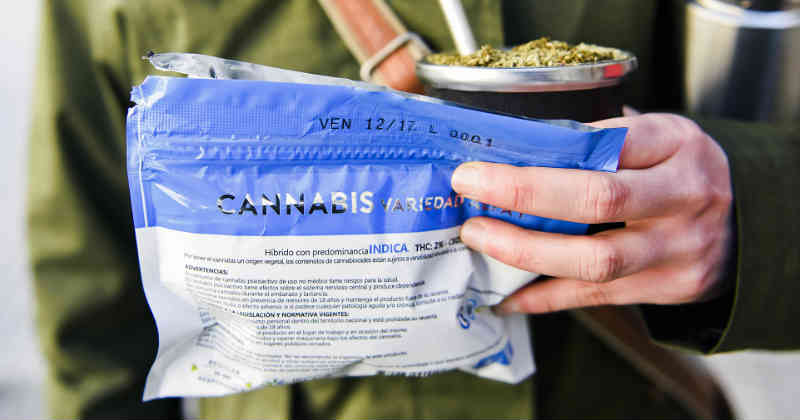
At the time, the law was passed amidst high political tensions, widespread public opposition, and international scrutiny. This context led to a cautious model focused on state control rather than market growth. Uruguay established a highly regulated system where access is only possible through three mutually exclusive channels: pharmacy purchase, home cultivation, or membership in cannabis clubs.
All consumers must register, quantity limits are strict, advertising is prohibited, packaging is neutral, and the state supervises the entire supply chain.
The illicit market has collapsed, but the "gray market" persists
Regarding the central objective of reducing illegal supply, Uruguay has achieved impressive results. Government assessments cited by El Planteo show that «compressed cannabis,» once the dominant form of illegal cannabis in the country, has almost disappeared.
In 2014, it was the main source of cannabis, but by 2024, it accounted for only 6.7% of the market. This indicates that legal access, price stability, and improved perceptions of quality and safety have supplanted much of the traditional illicit trade.
However, the illegal market has not completely disappeared. Instead, it has taken on a new form that is harder to measure and regulate. Rather than large-scale trafficking networks, Uruguay now faces what is described as a «gray market,» based on informal trade, undeclared production, and parallel distribution channels operating outside the official framework.
This gray market is not necessarily linked to the violence associated with organized crime, but it nonetheless represents a major obstacle to Uruguay’s goal of fully controlling the market.
The existence of this gray market can be explained in part by the very design of the Uruguayan model. Registration requirements, strict purchase limits, residency restrictions, and periodic shortages in the legal supply have created loopholes. Consumers who find the legal system too restrictive or unreliable often turn to informal alternatives.
This creates a paradox: even though Uruguay has proven legalization can weaken traditional illicit markets, its strict regulations also create unmet demand. And just like traditional drug trafficking, grey market activity cannot be eliminated by police action alone.
It requires structural reforms, improved access, and possibly a relaxation of some of the system’s most restrictive rules.
Cannabis clubs are becoming a central pillar of the system
Another major development is the growing role of cannabis clubs. When the system was first established, the Pharmacies were supposed to be the heart of the legal market. By distributing cannabis through pharmacies, the government could directly control prices, potency, product quality, and the national supply. The clubs were initially conceived as a complementary option for more organized consumers, with limited production and strict oversight. But over time, the clubs have largely outgrown this secondary role.
In practice, cannabis clubs have become one of the strongest pillars of Uruguay’s legal system. Although they account for far fewer consumers than the pharmacy channel, their share of production and distribution is comparable to—and sometimes exceeds—pharmacy sales. This development reveals an imbalance in the original framework: the channel designed to dominate never fully stabilized, while the one intended to remain marginal has become essential.
Pharmacies faced significant challenges from the outset. The program was slow to get off the ground, launching only in 2017, and faced low participation from retailers, as well as recurring supply shortages and international financial barriers. Consumers have also criticized the low potency and limited variety of strains available in pharmacies. As a result, access to pharmacies has remained inconsistent in some regions and at certain times, thus reinforcing consumers' reliance on alternative sources.
Cannabis clubs, on the other hand, have proven to be more flexible. They are decentralized, manage their own cultivation, and can better adapt production to member demand. They also tend to concentrate regular consumers, meaning consumption per member is much higher than among pharmacy buyers.
According to the National Congress of Uruguayan Cannabis Clubs, clubs do not encourage increased consumption, but rather offer a structured environment for regular users while helping to reduce illegal purchases through regulated and traceable production.
The Clubs have also developed a strong territorial and social presence. Spread throughout the country, they generate jobs and operate under the direct supervision of their members, which strengthens their legitimacy. Yet, despite their growing importance, the clubs claim they remain underrepresented in policymaking. They continue to advocate for more recognition and influence, asserting that their role is not fully taken into account in official evaluations.
A rigid system struggles to meet demand
The system’s overall rigidity is increasingly seen as its main weakness. This strict framework was initially designed to reassure domestic and international critics by assuring them that legalization would not lead to uncontrolled growth in consumption.
But as demand evolves and the cannabis ecosystem matures, these same restrictions now limit the system's ability to fully absorb the market. Uruguay has tens of thousands of registered consumers: over 70,000 pharmacy buyers, over 15,000 club members, and thousands of amateur growers.
However, registration does not guarantee active participation. In the pharmacy sector, only 20 to 40 percent of registered consumers make monthly purchases, highlighting a disconnect between the design of the legal framework and actual consumer behavior.
Although more than 15 tons of cannabis have been sold since sales began in pharmacies, officials acknowledge that the legal market could be significantly larger if supply and distribution bottlenecks were resolved.
According to official estimates cited by El Planteo, only about 46% of consumers currently have access to cannabis through legal channels, while the rest continue to turn to the gray market or informal sources. This suggests that the system has succeeded in reducing the most harmful aspects of illegality, but has not yet managed to capture the entire market.
Cannabis tourism is back in the spotlight
One of the most politically sensitive debates that is resurfacing at the moment relates to cannabis tourism. From the outset, Uruguay has restricted legal access to cannabis to citizens and residents, in line with its public policy approach. The system was not designed as an economic venture or a tourist attraction.
But this rule has created a paradox: tourists visit a country known for its legal cannabis, yet they cannot buy it legally. Many therefore turn to informal sellers, thereby fueling the gray market that Uruguay is trying to eliminate.
Proposals are currently being discussed to expand legal access to tourists, international students, and temporary workers. Supporters of this measure argue that including non-residents could strengthen the legal market, expand its reach, and reduce informal activity.
Critics, however, see this as a fundamental shift from Uruguay’s original philosophy, one that could transform cannabis from a tool for harm reduction into a broader economic opportunity.
Uruguay's challenge: evolving without losing its identity
Ultimately, Uruguay's situation reflects a wider tension. The country built its cannabis model prioritizing control and public health, not commercial growth. This strategy has been successful, but the global cannabis landscape has changed.
Many other countries have taken more market-oriented approaches, while cannabis tourism has become a significant economic phenomenon. Uruguay now faces a difficult challenge: to continue reducing informality and ensure safe access, it may need to expand and modernize its system. But this expansion will require revisiting the restrictions that once defined its identity.
Twelve years after legalization, Uruguay remains a global benchmark. However, its next challenge is no longer to prove that legalization works. It is to demonstrate that its model can evolve, adapt, and grow without losing the strict control that initially made this model effective.





















Kentucky now has 26 medical cannabis dispensaries

«Vincy Gold»: Humboldt Seed Company on the Hunt for Saint Vincent Sativas

Cronos Completes the Acquisition of CanAdelaar for 57.5 million euros

Cannabis with a "bloody" twist: Discover Sensi True Blood and Sensi Sangria, the two new strains from Sensi Seeds

Hemp: The Council of the EU Takes a Stand on New Production and Marketing Rules

Missouri's legal cannabis market accounts for 93 % of consumer spending

THC Gummies: How to Read a Certificate of Analysis Before Buying

British patients now have access to THCV-rich cannabis flowers

Spain: Medical Cannabis Is Coming to About 50 Hospitals

JIHE 2026: Japan’s Largest Trade Show Dedicated to Hemp and CBD Returns to Tokyo with More Than 100 Industry Players
-
 Business3 weeks ago
The legal cannabis market in New York exceeds 4 billion $ in revenue
-
Cannabis in France1 week ago
France already has 3,000 cannabis retail outlets. None of them are legal.
-
Cannabis in the U.S.2 weeks ago
A DEA report confirms that there are no fatal cannabis overdoses
-
Cannabis in France4 weeks ago
France’s Drug Policy Chief Defends Cannabis Prohibition... and Runs Into the Facts
-
Studies on cannabis2 weeks ago
Cannabis Oil and Endometriosis: A Promising Study for Pain Relief
-
CBD3 weeks ago
In Brazil, researchers are developing an innovative CBD eye drop
-
Business2 weeks ago
Tilray is accelerating its operations in Europe thanks to a license in Portugal
-
Cannabis in France2 weeks ago
CBD in France: Traceability, Retail Stores, THC and Driving… What the New Bill Proposes

















You must be logged in to post a comment Login