


CBD and drug testing: what saliva, urine and blood tests really detect
CBD is legal in France. Yet every year, thousands of consumers ask themselves the same question: can they test positive after consuming a CBD product? The short answer is: it depends on the product and the type of test. The full answer is more nuanced, and several French court cases have shown this to their cost.
This guide takes a look at each type of screening test, what it actually detects, and what it means in practical terms for CBD consumers in France.
What screening tests do and don't look for
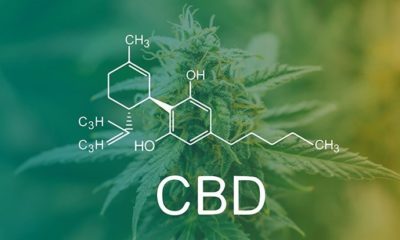
Essential starting point: no common screening test detects CBD. Cannabidiol is not a narcotic, it is not classified on the list of controlled substances in France, and roadside, urine or blood tests are not designed to detect it.
What the tests are looking for is the THC, more specifically its metabolites, notably THC-COOH in urine, or the presence of THC active in saliva or blood.
The problem for CBD consumers lies here: some CBD products contain traces of THC. Legal (less than 0.3% in France), but potentially detectable depending on the type of test, the dose consumed and the product used.
Saliva roadside testing in France
What it detects
The saliva test used by French law enforcement agencies, mainly the DrugWipe, looks for the presence of active THC (delta-9-THC) in saliva. It does not detect CBD.
The positivity threshold used in France is 0.1 ng/ml THC in saliva. This is a low threshold, designed to detect recent cannabis use. In the event of a positive saliva test, a confirmatory blood sample is taken.
Detection window
Active THC is detectable in saliva for a relatively short window after consumption: generally 1 to 4 hours for occasional use. This window can extend to 8 to 12 hours for regular cannabis users.
The risk with CBD products
A certified-quality CBD isolate with no trace of THC cannot trigger a positive saliva test. THC is simply absent from the product.
The risk exists with :
- The CBD flowers They legally contain up to 0.3% of THC. When smoked or vaporized, they introduce active THC into saliva and blood. The risk of a positive test is real, even if the THC content of the product is legal.
- The full-spectrum oils (full spectrum): they contain traces of THC. At usual doses, the risk of triggering a positive salivary test is low but not zero, especially at higher doses or with mislabeled products whose actual THC content exceeds the declared 0.3%.
- The CBD resins and extracts flowers: same logic as flowers, with a potentially higher concentration of residual THC.
The broad spectrum oils (broad spectrum) and CBD isolates contain no measurable THC and do not present any risk on a saliva test.
The Cour de Cassation case
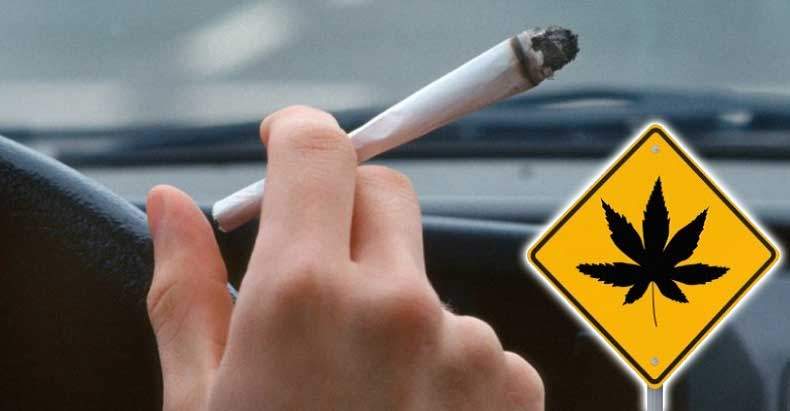
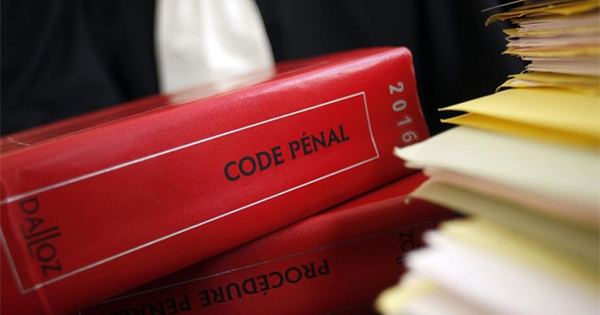
In June 2023, several French media headlined « banning CBD behind the wheel »This was an inaccurate reading of the decision. This was an inaccurate reading of the decision, but it illustrates perfectly the confusion that reigns on this subject.
Here's what really happened. In January 2021, a motorist stopped for speeding tested positive for THC in his saliva. He had claimed that he had only consumed CBD, probably hemp flowers whose THC content was below the legal limit of 0.2% in force at the time. The Rouen Court of Appeal ruled in his favor in September 2022.
But the Court of Cassation overturned this ruling. Its position: the offence of driving under the influence of narcotics is established. «if it is established that the accused drove a vehicle after using a substance classified as a narcotic, regardless of the dose absorbed».». As THC is classified as a narcotic, any detectable trace is sufficient to constitute an offence, even if it comes from a legal product.
What this ruling says: driving after consuming a CBD product containing THC may constitute an offence, whatever the dose. What it doesn't say: CBD itself is prohibited when driving.
The distinction is fundamental. The CBD molecule poses no legal problem when driving. It's the residual THC present in some CBD products that creates the legal risk.
Urine test
What it detects and when
The urine test does not detect active THC but its main metabolite: the THC-COOH, produced by the liver when THC is broken down. This metabolite is lipophilic: it is stored in fatty tissue and eliminated slowly.
Common detection thresholds are 50 ng/ml for immunological rapid screening tests, and 15 ng/ml for confirmation tests by chromatography (GC-MS). The threshold used for anti-doping in sport is different: 150 ng/ml according to WADA.
The detection window is much longer than for saliva:
- Occasional consumer : 3 to 7 days
- Regular consumer : 2 to 4 weeks
- Very regular consumer or heavier build: up to 30 days or more
Who is affected in France
The urine test is used in several contexts outside sport:
In the workplace Testing: some employers may impose tests under strict conditions, particularly for so-called «safety» positions (public transport drivers, operators of dangerous machinery, workers at height). The legal framework is governed by the French Labor Code and the company's internal regulations - a positive test may justify a precautionary measure, but not automatic dismissal without procedure.
In the medical field Urine tests may be requested as part of withdrawal follow-up or certain medical treatments.
In custody Testing: after a personal injury accident, a test may be ordered by the police.
The risk with CBD products
Same reasoning as for the saliva test, but with a longer risk window. Heavy consumption of full-spectrum CBD products, particularly flowers, can, over time, accumulate enough THC-COOH to exceed the 50 ng/ml threshold on a urine test.
A study by Spindle et al (2020) published in the Journal of Analytical Toxicology showed that the consumption of legal CBD flowers could indeed trigger positive THC-COOH urine tests in some participants, at repeated doses. It's not systematic, but it's real.
For broad spectrum oils and isolates, The risk to urine testing is considered negligible at usual doses.
The blood test
What it detects
The blood test can detect both active THC (delta-9-THC) and its metabolites (THC-COOH). It is more accurate than the saliva test, but also more invasive: it is rarely used as the first line of defence in roadside checks, but is systematically used in the event of an accident or as confirmation after a positive saliva test.
Active THC is detectable in the blood during 2 to 6 hours after one-off consumption. THC-COOH can remain detectable for several days in regular users.
The risk with CBD products
Identical to the saliva test for active THC. CBD flowers and full spectrum products represent the only real risk. Isolates and broad spectrum do not present any measurable risk on blood tests.
Summary: risk by product
| CBD product | Saliva test | Urine test | Blood test |
|---|---|---|---|
| CBD isolate | ✓ No risk | ✓ No risk | ✓ No risk |
| Broad spectrum (0% THC certified) | ✓ No risk | ✓ No risk | ✓ No risk |
| Full spectrum oil | ⚠ Low risk | ⚠ Low risk | ⚠ Low risk |
| CBD flowers | ⚠ Real risk | ⚠ Real risk | ⚠ Real risk |
| CBD resins | ⚠ Real risk | ⚠ Real risk | ⚠ Real risk |
| CBD E-liquids (distillate) | ⚠ Low risk | ⚠ Low risk | ⚠ Low risk |
Practical advice
If you drive regularly and consume CBD: prefer broad spectrum oils or isolates with a COA (certificate of analysis) from an accredited laboratory confirming the absence of THC. Avoid smoking or vaporizing CBD flowers if you can be controlled within a few hours.
If you undergo professional urine testing CBD flowers and full spectrum products represent a risk over a window of several days. Isolate and certified broad spectrum are the only risk-free options.
If you are a competitive sportsman See our article on CBD and sport, WADA's urinary anti-doping threshold (150 ng/ml THC-COOH) is higher than the standard threshold, but the principle remains the same.
In all cases Keep the certificates of analysis (COA) for your CBD products. In the event of a contentious positive test, the traceability of the product consumed is the only factual argument available - as the Cour de Cassation case showed.
Frequently asked questions
Is CBD banned for driving in France? No. Cannabidiol itself is not classified as a narcotic and is not prohibited for driving. On the other hand, some CBD products contain THC, which is prohibited. A positive saliva test for THC, even from a legal CBD product, may constitute an offence under French Supreme Court case law (2023).
Do saliva tests detect CBD? No. The DrugWipe tests used in France look for active THC, not CBD. A consumer of pure CBD isolate cannot test positive in a saliva test.
How long does THC remain detectable after CBD flowers are consumed? In saliva: 1 to 12 hours, depending on frequency of consumption. In urine: 3 to 7 days for occasional consumption, up to 30 days for very regular consumption.
Can you lose your licence after testing positive for THC from legal CBD? Yes, that's the legal risk illustrated by the Cour de Cassation 2023 case. French law makes no distinction between THC from illicit cannabis and residual THC from a legal CBD product, so any detectable trace technically constitutes an offence.
Which CBD oil is right for you? A CBD isolate or broad spectrum oil with a COA certifying 0% THC. Avoid all full spectrum products and CBD flowers if you are likely to be controlled.
Can in-house screening tests detect CBD? No, they detect urinary THC-COOH, not CBD. The question is the same: a certified isolate or broad spectrum presents no risk. Flowers and full spectrum products present a risk over a window of several days.
This article is based on French legal, scientific and regulatory data. It does not constitute legal advice. In the event of a dispute, consult a lawyer specializing in criminal road traffic law or labor law, depending on your situation.
{
« @context»: «https://schema.org»,
« @type»: «FAQPage»,
«mainEntity: [
{
« @type»: «Question»,
«name»: «Is CBD banned for driving in France?»,
«acceptedAnswer»: {
« @type»: «Answer»,
«text»: «No, cannabidiol itself is not classified as a narcotic and is not prohibited for driving. On the other hand, some CBD products contain THC, which is prohibited. According to a 2023 French Supreme Court ruling, a positive saliva test for THC - even from a legal CBD product containing less than 0.3% THC - can constitute a criminal offence for driving under the influence of narcotics.»
}
},
{
« @type»: «Question»,
«name»: «Do saliva tests detect CBD?»,
«acceptedAnswer»: {
« @type»: «Answer»,
«text: »No. The DrugWipe tests used by law enforcement agencies in France look for active THC (delta-9-THC), not CBD. A consumer of pure CBD isolate, with no trace of THC, cannot test positive on a saliva roadside test.«
}
},
{
« @type»: «Question»,
«name»: «How long does THC remain detectable after CBD flowers are consumed?»,
«acceptedAnswer»: {
« @type»: «Answer»,
«In saliva: between 1 and 12 hours, depending on frequency of use. In urine: 3 to 7 days for occasional use, up to 30 days for very regular use, due to storage of THC-COOH in fatty tissue. In blood: 2 to 6 hours for active THC, several days for its metabolites».«
}
},
{
« @type»: «Question»,
«name»: «Can you lose your license after testing positive for THC from a legal CBD product?»,
«acceptedAnswer»: {
« @type»: «Answer»,
«text»: «Yes, this is the risk illustrated by a case brought before the Cour de Cassation in 2023. French law does not distinguish between THC from illicit cannabis and residual THC from a legal CBD product: any detectable trace of THC technically constitutes an offence of driving under the influence of narcotics, regardless of the dose absorbed.»
}
},
{
« @type»: «Question»,
«name»: «Which CBD oil to choose to avoid any risk of positive control?»,
«acceptedAnswer»: {
« @type»: «Answer»,
«text»: «A CBD isolate or broad spectrum oil accompanied by a certificate of analysis (COA) from an accredited laboratory certifying the total absence of THC. Full spectrum products and CBD flowers contain residual THC and present a real risk on saliva, urine and blood tests. It is advisable to keep the COA of your products in case of contentious controls. »
}
},
{
« @type»: «Question»,
«name»: «Can in-house screening tests detect CBD?»,
«acceptedAnswer»: {
« @type»: «Answer»,
«text: »No. Professional urine tests detect THC-COOH, the urinary metabolite of THC, not CBD. A CBD isolate or a broad spectrum certified 0% THC presents no risk on these tests. CBD flowers and full spectrum products, on the other hand, present a detectable risk over a window of several days to several weeks, depending on the frequency of consumption.«
}
}
]
}










CBD is said to promote athletic recovery, without improving performance

294 cannabis clubs in Chile: a booming movement with uneven distribution

Chronic Sciatica: New York Approves First Clinical Trial of a THC-Based Medication

United States: The DEA is accelerating the integration of medical cannabis at the federal level

Florida is nearing one million patients using medical cannabis

Uruguay Revives Its Plan to Allow Tourists to Legally Access Cannabis

In Brazil, researchers are developing an innovative CBD eye drop

Autism: Medical Cannabis Is Linked to Reduced Anxiety

The $28 billion U.S. hemp market remains under threat

