Mexican cannabis production declines as U.S. legalization proceeds

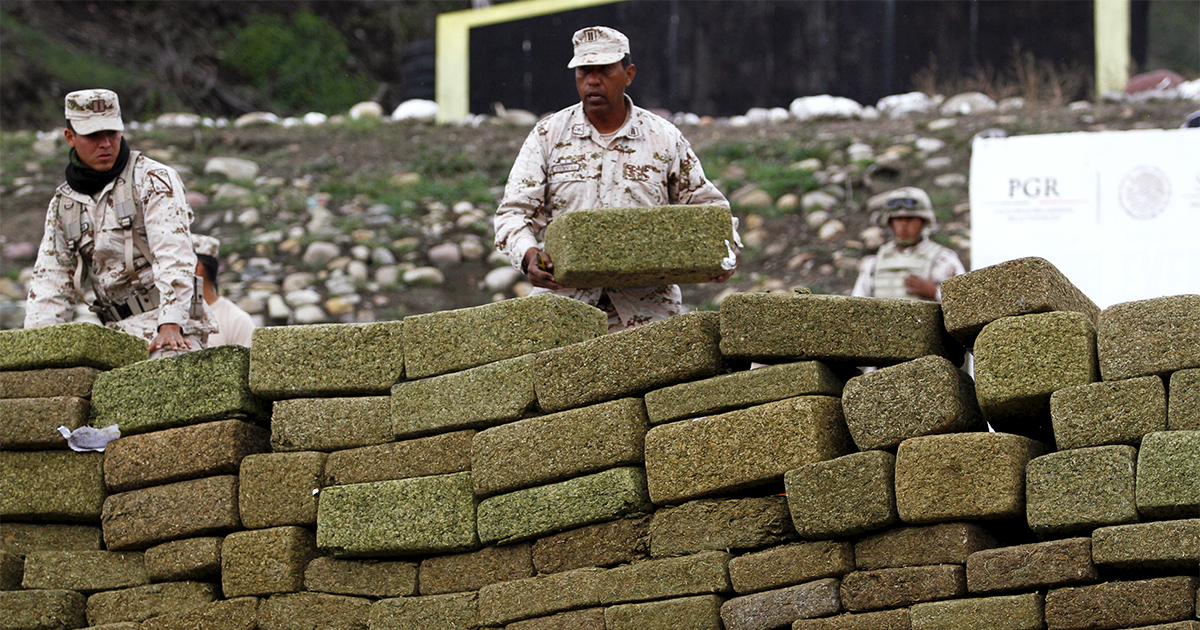
One of the most important arguments put forward by campaigners for a cannabis legalization, is the’eradicating the black marketA regulated cannabis market would take illegal cannabis, often grown outside the country's borders, off the streets and replace it with state-supervised, taxed production. In the United States, most illegal cannabis comes from Mexico. In Uruguay, from Paraguay. And in France, from Spain, Morocco, the Netherlands and Albania.
2 years after the first recreational legalization in the United States, Is the system working? While it's impossible to calculate the exact size of the black market, newly reported data by the Los Angeles Times suggest that Mexican cannabis production is in decline, confirming rumors that Mexican farmers are withdrawing from marijuana cultivation because of financial losses due to the various legalizations north of their border.
This trend is also accompanied by signs from the Mexican and American governments. The Mexican government is now destroying fewer illegal cannabis plantations than before Colorado, Washington and other states legalized recreational cannabis: 5,000 hectares in 2015 versus 18,000 in 2010.
The volume of cannabis seized at the Mexico-US border also fell by 30% in 2014, from 1,500 tonnes a year to 1,085 tonnes, even though seizures represent only a small fraction of the cannabis that manages to cross the border.
The number of arrests US arrests linked to foreign-grown cannabis halved between 2010 and 2014, from 4,519 in 2010 to 2,367 in 2014, according to the DEA. Arrests linked to illegal cultivation on US soil, meanwhile, have not budged, with an average of 1,500 arrests per year.
The L.A. Times article quotes Mexican farmers who say that this harvest will be their last, or that the middleman who used to buy their produce from them is almost non-existent. The price per kilo has also fallen sharply, from 100$ to 30$ per kilo.
Reducing trafficking, arrests and illegal crops: what else?








«Vincy Gold»: Humboldt Seed Company on the Hunt for Saint Vincent Sativas

Cronos Completes the Acquisition of CanAdelaar for 57.5 million euros

Cannabis with a "bloody" twist: Discover Sensi True Blood and Sensi Sangria, the two new strains from Sensi Seeds

Hemp: The Council of the EU Takes a Stand on New Production and Marketing Rules

Missouri's legal cannabis market accounts for 93 % of consumer spending

THC Gummies: How to Read a Certificate of Analysis Before Buying

British patients now have access to THCV-rich cannabis flowers

Spain: Medical Cannabis Is Coming to About 50 Hospitals

JIHE 2026: Japan’s Largest Trade Show Dedicated to Hemp and CBD Returns to Tokyo with More Than 100 Industry Players

New Caledonia: The Courts Clear the Way for the Return of CBD
-
 Business3 weeks ago
The legal cannabis market in New York exceeds 4 billion $ in revenue
-

 Cannabis in France4 weeks ago
Which countries legalized medical cannabis before France?
-
Cannabis in France1 week ago
France already has 3,000 cannabis retail outlets. None of them are legal.
-
Business4 weeks ago
South Korea is preparing to begin local production of medical cannabis to meet rising demand
-
Cannabis in the U.S.1 week ago
A DEA report confirms that there are no fatal cannabis overdoses
-
Cannabis in Thailand4 weeks ago
From the boom in dispensaries to a purely medical approach: Thailand is revising its cannabis policy
-
Cannabis and driving4 weeks ago
Medical Cannabis and Driving: New South Wales Ends Automatic Penalties for THC
-
Cannabis in France3 weeks ago
France’s Drug Policy Chief Defends Cannabis Prohibition... and Runs Into the Facts















Juan
February 4, 2016 at 18 h 23 min
A complete joke, the black market is still very much present, even more so than in the days when Mexicans supplied the USA with weed, because given the prohibitive prices that dispensaries charge, a large number of Us growers are simply supplying the black market with better quality weed. As for the Mexican growers who no longer sell their cannabis, they've simply started growing poppies so that the cartels can flood their American neighbors with cheap heroin. All this has done is «solve» one problem and create a worse one.
whatever we do: the black market still has a long way to go