
Kofi Annan calls for global legalization of cannabis

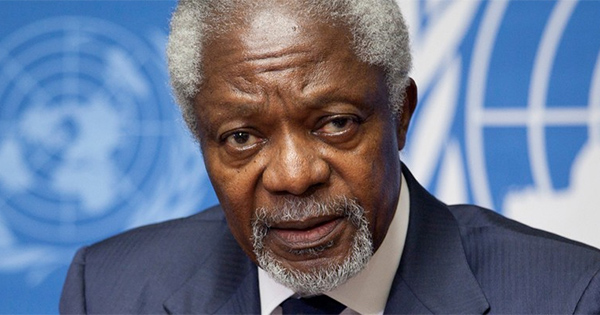
One of the major obstacles to the legalization of cannabis in France is our country’s commitment to comply with the United Nations drug treaties, in particular the 1961 Single Convention on Narcotic Drugs and the 1971 Convention on Psychotropic Substances.
With the 59th session of the United Nations Commission on Narcotic Drugs approaching, proponents of legalization may have found a powerful ally in Kofi Annan. In a published essay On February 22, in the German magazine *Der Spiegel*, Kofi Annan, former Secretary-General of the United Nations from 1997 to 2006, called for the widespread legalization of cannabis to combat the problem of drug abuse and illegal trafficking.
And Kofi Annan knows what he's talking about: he was Secretary-General of the United Nations during the last session of the United Nations Commission on Narcotic Drugs in 1998. His position is therefore both an admission of failure and a proposal for moving forward. Here are 5 interesting points from his essay.
Drug laws pose a greater threat to citizens than drugs do
According to Annan, repression and ideology do more harm to people than drugs:
«Drugs are dangerous, but current drug policies pose an even greater threat because law enforcement has taken precedence over individual rights and health. It is time to put everyone’s life and safety at the heart of our laws. A policy based on consensus and public sentiment can become a recipe for misguided policies and ill-advised interventions. Nowhere is the disconnect between rhetoric and reality more evident than in the formulation of global drug policies, where all too often emotions and ideology have taken precedence over facts.»
Annan illustrates his point by arguing that the The prohibition of cannabis has been influenced by, while attempts to deter opioid abuse through incarceration have failed.
«Looking closely at the United States, we now know that the legalization of medical cannabis use has not—contrary to the fears of its opponents—led to an increase in use among young people. On the other hand, deaths from heroin overdoses tripled between 2010 and 2013, even though the law and the penalties remained unchanged.»
The war on drugs is a war against people
The Prohibition failed to do what it was supposed to do, according to Annan:
«Prohibition has had little impact on the supply and demand for drugs. When law enforcement is effective in one area, drug production shifts to another region or country, trafficking routes change, and users switch to different drugs. Prohibition has also failed to reduce drug use. Studies have consistently failed to establish a link between the strictness of a country’s laws and the level of drug use. Widespread criminalization and the crackdown on drug users, along with overcrowded prisons, mean that the war on drugs is, to a significant extent, a war against consumers, against people.»
Prison is more harmful than recreational drug use
Annan argues that incarceration prevents people from accessing treatment and ruins the lives of young people:
«The trend in many parts of the world to stigmatize and incarcerate drug users has prevented many users from accessing medical treatment. In what other areas of public health are patients who need help being penalized? Punitive measures have sent many people to prison, where their drug use has worsened. »A criminal record with a history of drug use for a young person can pose a greater threat to their well-being than recreational drug use.”
It's time to revise the drug treaties
Drug treaties are not meeting their stated objectives, Annan says:
«The original goal of drug policy, according to the United Nations Convention on Psychotropic Substances, was to protect the «health and well-being of humanity.» We must refocus national and international policies on this key objective.»
To that end, Annan calls on countries to follow four fundamental steps to improve drug laws (the fourth one will surprise you!):
- Decriminalize recreational drugs : «Drug use is harmful, and reducing its harm must be a public health issue, not a criminal justice issue. This must go hand in hand with strengthening healthcare services, particularly in less developed and developing countries.»
- Focus on harm reduction, not on eliminating drugs : «We must accept that a drug-free world is an illusion. Instead, we must focus on ensuring that drugs cause as little harm as possible.»
- Regulate and Educate : «We need to focus on regulation and education rather than drug prohibition, which doesn’t work. The successful measures taken to reduce tobacco use show what can be achieved. It is regulation and education—not the threat of prison—that has reduced the number of smokers in many countries.»
- Legalize cannabis : «Initial trends show us that where cannabis has been legalized, there has been no surge in drug use or drug-related crime. The size of the black market has been reduced, and hundreds of young people have been spared a criminal record. But a regulated market is not a free market. We must carefully consider what needs to be regulated—and what does not. While most cannabis use is occasional, moderate, and not associated with significant problems, it is nevertheless precisely because of its potential risks that it needs to be regulated.»
The United Nations Can Lead a Global Shift This Spring
Finally, Annan calls on world leaders to support a global change in drug laws:
«This year, from April 19 to 21, the United Nations General Assembly will hold a special session on drugs, and the world will have a chance to bring about change. As we approach this event, we must ask ourselves whether our policy holds up. More specifically, how should we address what the Office on Drugs and Crime has called the «unintended consequences» of the policies of the past 50 years, which have helped, among other things, to create an international organized crime market that fuels violence, corruption, and instability?»
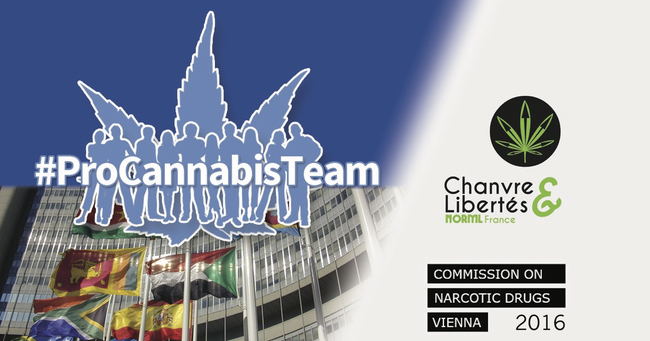
This is an opportunity for us to remind you that a team from France will be attending this event and has launched a crowdfunding campaign to fund their presence on the ground.








Federal Cannabis Reform Once Again on Hold in the United States

Contest: Win a trip to Quebec to experience the hemp harvest firsthand

Bedrocan on Hold Amid Uncertainty Over Medical Cannabis

Newsweed Launches Its Own AI
A new tax of 0.5% could disrupt the hemp industry in Canada

Medical Cannabis and Driving: New South Wales Ends Automatic Penalties for THC

China's Yongji Health Takes Control of Tasmanian Botanics

Autism and Cannabis: Results from the First Placebo-Controlled Trial of NTI164

Which countries legalized medical cannabis before France?

From the boom in dispensaries to a purely medical approach: Thailand is revising its cannabis policy
-
 Cannabis and driving3 weeks ago
Cannabis and CBD: French Drivers Can Now Lose Their License Even Without a Positive Test Result
-

 Cannabis in France6 days ago
Which countries legalized medical cannabis before France?
-
Cannabis in France3 weeks ago
Cannabis Legalization: The LFI Bill Has a Major Problem—THC
-
Cannabis in the Netherlands2 weeks ago
One year after the launch of the Dutch cannabis experiment, the first trends are emerging
-
Business6 days ago
South Korea is preparing to begin local production of medical cannabis to meet rising demand
-
Cannabis in Thailand6 days ago
From the boom in dispensaries to a purely medical approach: Thailand is revising its cannabis policy
-
Cannabis in Argentina2 weeks ago
Argentina Opens Its Market to Hemp Flowers Containing 1% of THC
-
Cannabis in France2 weeks ago
French medical cannabis remains stalled at the Ministry of Health















You must be logged in to post a comment Login