Why does cannabis make you feel high and good?


For a long time, it was thought that effects of cannabis were due to a THC-induced massive influx of dopamine into the brain. This scientific theory, based on animal models, is, for example on the from National Institute on Drug Abuse (NIDA):
«THC, through cannabinoid receptors, also activates the brain's reward system, which includes areas that govern the response to pleasurable behaviors such as sex or a good meal. Like most other drugs THC stimulates the neurons of the reward system to release dopamine at levels higher than those usually observed following natural stimuli. This influx of dopamine contributes to the pleasant « high »that recreational cannabis consumers are looking for».
Yet numerous studies on humans suggest that cannabis consumption, unlike other drugs such as cocaine or amphetamines, produces only a modest amount of dopamine, far from the 5 to 10 times higher levels claimed.
In 2015, researchers at King's College London, conducted a systematic review of 25 people to ultimately conclude that «there is little direct evidence to suggest that cannabis use affects acute striatal dopamine release or affects chronic dopamine receptor status in healthy human volunteers.»
If not dopamine, what is responsible for the effects on our pleasure system?
In the 1990s, Dr. Raphaël Mechoulam, the first to identify and synthesize THC, discovered a neurotransmitter present in our body called anandamide. Producing a heightened sense of joy and happiness, anandamide has been dubbed the «happiness molecule» (ananda in Sanskrit means happiness).
It then turned out that anandamide is responsible for much more than just this feeling of happiness. It plays an important role in memory, motivation, movement, pain, appetite, fertility and could potentially inhibit cancer cell proliferation. But it's thanks to his role in the neurogenesis (the formation of new nerve cells) that anandamide is also an anti-stress and anti-depressant agent. Anandamide disappears rapidly from the body, so its effect is not infinite.
Anandamide is an endocannabinoid (a cannabinoid naturally present and produced in the body) with a phytocannabinoid twin, THC. Both cannabinoids have a strong affinity for binding to the receptors of the endocannabinoid system, CB1 and CB2. And it's by binding to CB1 receptors that the euphoric effects are produced.
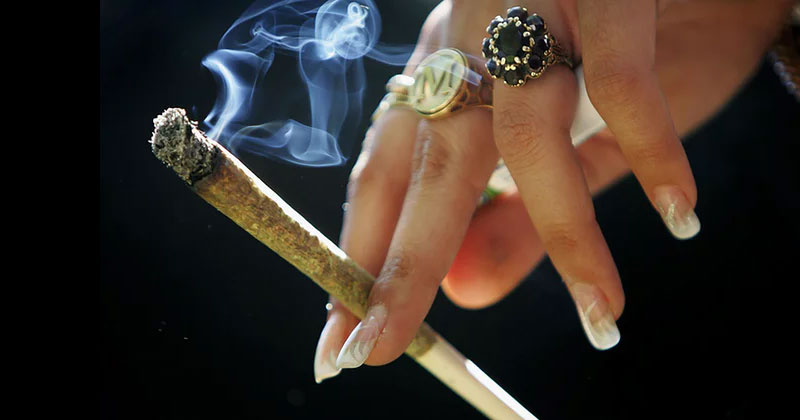
This sharing of properties means that consuming cannabis produces similar effects. When cannabis is consumed, THC affects the neurons, binds to the appropriate receptors, which send a signal producing that «happy» feeling. Chocolate, yoga or running also affect anandamide, and some runners may experience euphoria during or at the end of the race.
Some people will potentially have different reactions, These include anxiety or paranoia after smoking. Both the smoking environment and the person's general state of health can affect these sensations. An enzyme, a fatty acid amide hydrolase,is also suspected of disarming anandamide.
THC also has a biphasic effect. Low and high doses can have opposite effects. Patients who take medical cannabis in countries where it is legal are generally monitored by their doctors to find the right dose that will be effective for their condition, while retaining effects that are more euphoric than stressful. The use of weed with a high CBD content is also increasingly recommended for specific ailments.






JIHE 2026: Japan’s Largest Trade Show Dedicated to Hemp and CBD Returns to Tokyo with More Than 100 Industry Players
New Caledonia: The Courts Clear the Way for the Return of CBD

The Brazilian medical cannabis market continues to grow

Morocco: Three Cannabis-Based Medications Approved for the Treatment of Epilepsy

Canopy Growth Receives New EU-GMP Certification to Strengthen Its Presence in Europe

Three years after legalizing medical cannabis, Albania continues to establish regulations for it

The first plant-based medical THC spray arrives in the United Kingdom

Medical Cannabis in Germany: THC Prices Vary by a Factor of 12

France already has 3,000 cannabis retail outlets. None of them are legal.

Morocco's exports of legal cannabis have expanded to 15 countries
-
 Business2 weeks ago
The legal cannabis market in New York exceeds 4 billion $ in revenue
-

 Cannabis in France4 weeks ago
Which countries legalized medical cannabis before France?
-
Business4 weeks ago
South Korea is preparing to begin local production of medical cannabis to meet rising demand
-
Cannabis in France4 days ago
France already has 3,000 cannabis retail outlets. None of them are legal.
-
Cannabis in Thailand4 weeks ago
From the boom in dispensaries to a purely medical approach: Thailand is revising its cannabis policy
-
Cannabis in the U.S.5 days ago
A DEA report confirms that there are no fatal cannabis overdoses
-
Cannabis and driving3 weeks ago
Medical Cannabis and Driving: New South Wales Ends Automatic Penalties for THC
-
Cannabis in France3 weeks ago
France’s Drug Policy Chief Defends Cannabis Prohibition... and Runs Into the Facts
















You must be logged in to post a comment Login