Argentine patients demand authorization for self-cultivation

The legalization of therapeutic use of cannabis in Argentina is fairly recent, having been passed in March last year. The law was passed unanimously by the Argentine Congress and provided for the registration of patients on a national register, so that they could eventually benefit from free medication via the public health system.
To achieve this, Argentina had to produce cannabis and then transform it into medicine in laboratories. However, given the delays in the program and the slowness of production, patients are becoming impatient and are demanding authorization for self-cultivation, which was not originally provided for by law.
A late program
A year and a half after its adoption, the application of the law has still not progressed. The Institut National de l'Agriculture Technologique, the body supposed to be in charge of national cultivation, has still not begun production, for lack of resources.
Last week, a public-private agreement between the province of JuJuy and the Chilean laboratory Knop provided for the production of three hectares of cannabis crops, which would then be transformed into medicinal products, notably cannabis oil, in the partner laboratory and then remarketed in Argentina. This initiative, while commendable, is not considered sufficient in view of the small production area and reliance on exports, although in the long term the governor has announced his intention to bring all stages of production together within his province, including the creation of a laboratory for the production of the medicine.
What's more, numerous legal constraints are further delaying the project, which still has no launch date. Laboratories had to be inspected, the project presented to the Ministry of Health, the Secretary of Social Affairs and Governance, and all the controls in force had to be carried out to ensure compliance with standards and the legal regime. The Minister of Health specified that the aim was to ensure «the safety and efficacy of the medicine, so that patients do not have to resort to the black market and to a product of dubious origin and quality». He presented the project as the first step towards nationwide production, but for many this initiative comes a little late.
The current situation
For the moment, the program has only validated one disease, epilepsy, and national production, which was supposed to cultivate cannabis in sufficient quantities for the production of medicines and for research, is at a standstill. The national bodies - INTA for cultivation and Conicet (the National Council for Technical and Scientific Research) - point out that they have still not received the necessary funds and resources.
Patients, who had been promised free medicines, are currently obliged to buy their supplies on the black market or through imports, at their own expense. They are not allowed to grow their own plants. It is this situation that the Buenos Aires Office of People's Defenders intends to change. It recently petitioned the Ministry of Health to give patients access to self-cultivation.
Board member Guido Lorenzino commented: «We made this request in response to complaints from several members of the National Program for the Study and Investigation of the Medicinal Use of Cannabis Plants, for whom the program's health card does not offer access to these products, which are essential for their health.
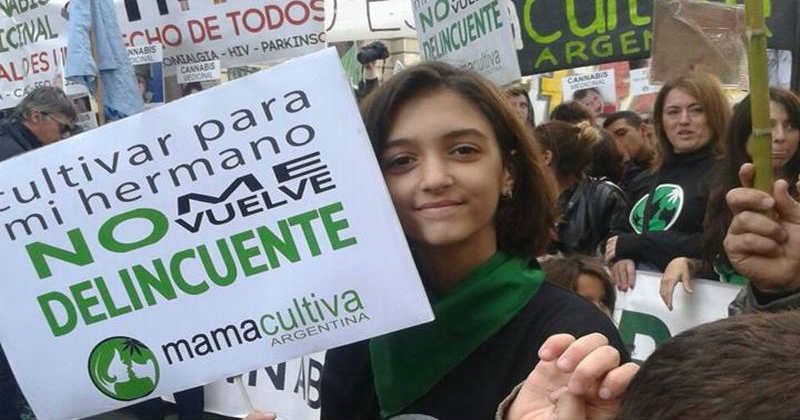
According to the Bureau representative, this request follows meetings with the’NGO Mamá Cultiva Argentina who has initiated research into alternative herbal therapies: «We believe that the law must have a much deeper and more compassionate scope for the suffering of others, so that patients with serious pathologies and their families can have access to these products».
Justice as the last resort for patients
Last month, the family of a seven-year-old boy suffering from Tourette's syndrome won their case before the courts and were granted the right to grow cannabis, with no restrictions on quantity, to produce the child's medicine themselves. The verdict was handed down by Rio Negro federal judge Mirta Filipuzzi, and authorizes the child's family, his mother and grandparents, who had defended themselves against the impossibility of having legal access to cannabis oil, to produce the medicine themselves.
Back in March, a similar case took place in Salta and the courts authorized a woman to grow 12 mature plants and 40 immature plants to treat her son's neurological disorders.
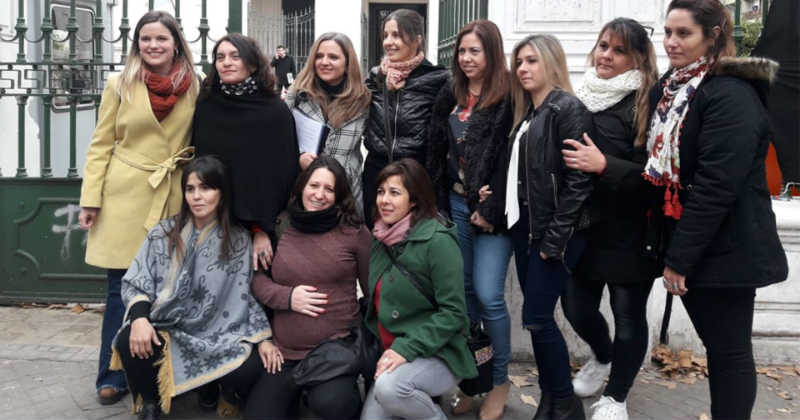
These cases are not isolated, and the Fondation Mama Cultiva We are in contact with all the NGOs in the country and we know that this (the Rio Negro case) has activated the petitions already underway at federal level«. In particular, this case inspired eight Rosario mothers to present a joint action to obtain permission for self-cultivation within the confines of their homes for the treatment of their respective sons» pathologies.
The resolution of the case was based on a 2006 ruling by the National Supreme Court declaring the unconstitutionality of article 23.737, which punishes the possession of cannabis for personal use. The verdict received the approval of various ministries, and it now remains to be seen whether, in the face of legal pressure, the government will authorize self-cultivation or speed up the implementation of its protocol.











«Vincy Gold»: Humboldt Seed Company on the Hunt for Saint Vincent Sativas

Cronos Completes the Acquisition of CanAdelaar for 57.5 million euros

Cannabis with a "bloody" twist: Discover Sensi True Blood and Sensi Sangria, the two new strains from Sensi Seeds

Hemp: The Council of the EU Takes a Stand on New Production and Marketing Rules

Missouri's legal cannabis market accounts for 93 % of consumer spending

THC Gummies: How to Read a Certificate of Analysis Before Buying

British patients now have access to THCV-rich cannabis flowers

Spain: Medical Cannabis Is Coming to About 50 Hospitals

JIHE 2026: Japan’s Largest Trade Show Dedicated to Hemp and CBD Returns to Tokyo with More Than 100 Industry Players

New Caledonia: The Courts Clear the Way for the Return of CBD
-
 Business3 weeks ago
The legal cannabis market in New York exceeds 4 billion $ in revenue
-

 Cannabis in France4 weeks ago
Which countries legalized medical cannabis before France?
-
Cannabis in France1 week ago
France already has 3,000 cannabis retail outlets. None of them are legal.
-
Cannabis in the U.S.1 week ago
A DEA report confirms that there are no fatal cannabis overdoses
-
Cannabis in Thailand4 weeks ago
From the boom in dispensaries to a purely medical approach: Thailand is revising its cannabis policy
-
Cannabis and driving4 weeks ago
Medical Cannabis and Driving: New South Wales Ends Automatic Penalties for THC
-
Cannabis in France3 weeks ago
France’s Drug Policy Chief Defends Cannabis Prohibition... and Runs Into the Facts
-
Studies on cannabis2 weeks ago
Cannabis Oil and Endometriosis: A Promising Study for Pain Relief
















You must be logged in to post a comment Login