Argentine government called to order over medical cannabis program


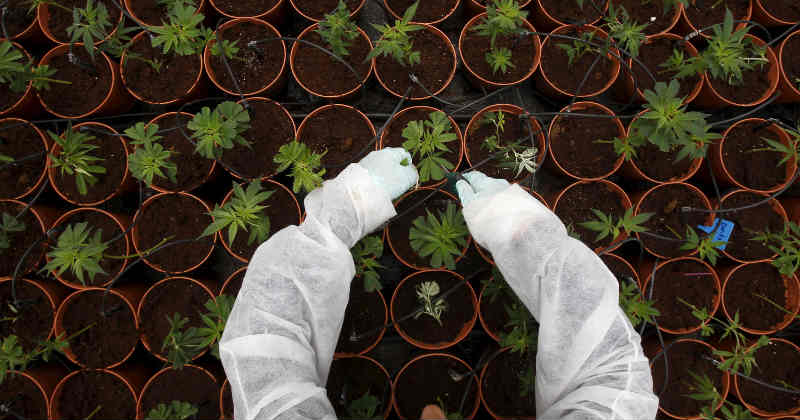
Argentina legalized the medical use of cannabis last year and was supposed to begin local production in order to distribute the drug free of charge through its national healthcare system. However, the slow pace of government action is leading more and more patients to take legal action. In March and August of this year, the mother of a boy with fibromatosis and the family of another little boy People with Tourette syndrome had been granted permission to grow cannabis plants and produce medicinal oil at home.
Today, six mothers appeared before a federal judge in the province of Rosario and were granted permission to grow cannabis at home to treat their children. This is the first class-action case and the third of its kind to succeed in the country. However, many similar appeals are pending, as it appears that going through the courts is, for now, the only way for patients to obtain their medication.
Self-cultivation as a last resort
For now, local production of the plant has not begun, and the production of medications has not started at all. Import permits are available only to patients with epilepsy, the only condition currently included in the program. In the meantime, patients suffering from other conditions still cannot access the medication, and those who grow it themselves are still considered criminals under the law and face penalties of up to 15 years in prison.
The mothers of Rosario were represented by lawyers from the local party of City of the Future and have thus succeeded in obtaining legal protection that prevents them from being considered drug traffickers, at least until the government provides them with the medication. They have also received assistance from the Association of Users and Professionals for the Approach to Cannabis (AUPAC) and the Faculty of Biochemical and Pharmaceutical Sciences at the National University of Rosario, which is testing their oil.
The Argentine government is guilty
In light of the growing number of lawsuits, Judge Sylvia Raquel Aramberri ordered the government to implement its legal cannabis program within the next six months. The ruling effectively mandates “the immediate fulfillment of the duty to cultivate, harvest, and process the cannabis plant and its derivatives in order to provide medical oil free of charge and on an uninterrupted basis to eligible patients in the variety and composition prescribed by the competent medical authority.” This decision will benefit all other patients in similar situations.
The judge also concluded that the actions of the mothers in Rosario were justified given the government’s failure to fulfill its legal obligations. She condemned a situation of “failure on the part of the State to comply with an explicit mandate clearly established by Law 27,350 on the medicinal use of cannabis.”.



















Kentucky now has 26 medical cannabis dispensaries

«Vincy Gold»: Humboldt Seed Company on the Hunt for Saint Vincent Sativas

Cronos Completes the Acquisition of CanAdelaar for 57.5 million euros

Cannabis with a "bloody" twist: Discover Sensi True Blood and Sensi Sangria, the two new strains from Sensi Seeds

Hemp: The Council of the EU Takes a Stand on New Production and Marketing Rules

Missouri's legal cannabis market accounts for 93 % of consumer spending

THC Gummies: How to Read a Certificate of Analysis Before Buying

British patients now have access to THCV-rich cannabis flowers

Spain: Medical Cannabis Is Coming to About 50 Hospitals

JIHE 2026: Japan’s Largest Trade Show Dedicated to Hemp and CBD Returns to Tokyo with More Than 100 Industry Players
-
 Business3 weeks ago
The legal cannabis market in New York exceeds 4 billion $ in revenue
-
Cannabis in France1 week ago
France already has 3,000 cannabis retail outlets. None of them are legal.
-
Cannabis in the U.S.2 weeks ago
A DEA report confirms that there are no fatal cannabis overdoses
-
Cannabis in France4 weeks ago
France’s Drug Policy Chief Defends Cannabis Prohibition... and Runs Into the Facts
-
Studies on cannabis2 weeks ago
Cannabis Oil and Endometriosis: A Promising Study for Pain Relief
-
CBD3 weeks ago
In Brazil, researchers are developing an innovative CBD eye drop
-
Business2 weeks ago
Tilray is accelerating its operations in Europe thanks to a license in Portugal
-
Cannabis in France2 weeks ago
CBD in France: Traceability, Retail Stores, THC and Driving… What the New Bill Proposes

















You must be logged in to post a comment Login