Latin America, the world's future cannabis supplier?

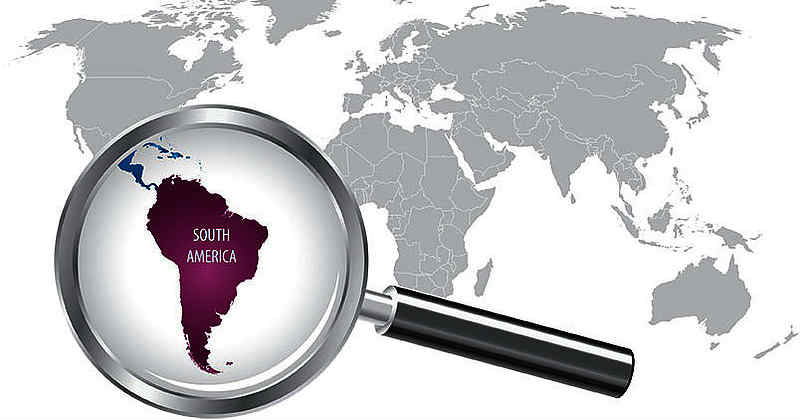
The latest report from Prohibition Partners, a British think tank, believes that Latin America has every chance of becoming the world's future cannabis supplier.
The report takes stock of cannabis legislation and regulations in 11 Latin American countries (Argentina, Brazil, Cayman Islands, Chile, Colombia, Jamaica, Panama, Uruguay, Mexico, Peru, Paraguay). Gathering information on the markets of these countries, their political propensity to accept cannabis and the state of international pressure, the report speculates on the future state of the regional cannabis market and the place these countries will occupy in the globalized market.
The main conclusion of the report is that, because of its history, climate and social and commercial structures, the region is likely to become the world's leading cannabis supplier. In other words, as soon as cannabis is globally accepted and the industry globalized, international cannabis production and processing is likely to relocate to Latin America.
The current state of legalization in the region
Originally, most Latin American countries criminalized cannabis to comply with international treaties. This trend is now being reversed on a global scale. Uruguay was a pioneer in this field since it was the first country in the world to legalize recreational and medical cannabis back in 2013. Today, many countries are following suit, with the emergence of a global cannabis market currently focused on its therapeutic value.
Medical cannabis is already legal in most Latin American countries, or will be within the next three years. CBD oil is widely accepted as a medicine. Recreational cannabis, on the other hand, is largely illegal, but the tide is turning, with a moderate probability that it will be legalized in several countries in the region within 5 years. Industrial cannabis, known as hemp, is partially legal, although the industry is underdeveloped.
Chances are, however, that once cannabis is legal in the US at federal level and reclassified at UN level, Latin American states will again follow suit and legalize. The report estimates that within 5 to 10 years, medical and recreational cannabis will be legal throughout the region. Consequently, it estimates its value at $12 billion by 2028.
Market estimates
Assuming a legal and regulated cannabis market, the report makes the following market estimates for the year 2028.
Medical cannabis
The medical market is estimated at $8.5 million. This relatively low value is due to the fact that public health spending is still relatively low compared to the size of the population. However, the report notes that social health systems covering patients' medical expenses are being developed across the region.
Recreational cannabis
The recreational market is estimated at $4.2 billion. Based on OECD data, the report estimates the number of potential consumers at 5.4 % of the total population. This rather low percentage is the result of a prohibitionist political context, and it's a safe bet that it would increase in a legalized context. If the value of this market is relatively low compared to markets in Europe and North America, it's also due to very low prices, sometimes as low as 0.50$ per gram. The cannabis currently in circulation is generally home-grown and of poor quality, but the commercialization and regulation of cannabis could increase prices, and therefore the overall value of the market.
Industrial hemp
This market is estimated at 13 million dollars, with the Chilean market estimated at 5 million. Chile already has legal provisions for hemp cultivation. Hemp farms are not yet very present, but are likely to develop significantly in line with international demand. Next comes the Mexican market, which could account for 13 % of this total, and potentially Uruguay, given its avant-garde position and the current existence of production structures. The global hemp market is estimated at $1 billion.
In all, the regional market will be worth $12 billion by 2028. The size of the market is contrasted by very low selling prices compared to European and North American markets, but in terms of production costs, it is unbeatable. As part of a global strategy, it will therefore be worthwhile to produce in Latin America and then export to consumer markets in the North.
Latin America as a global cannabis supplier?
With ideal climatic conditions, cheap labor, high availability of arable land and less stringent regulations, Latin America could well become a «China of cannabis production and manufacturing», according to expert Triston Thompson. Indeed, the region offers an incomparable commercial advantage for global cannabis companies.
Compared to indoor production, high energy consumption, Unlike most northern countries, Latin America's natural weather conditions offer up to two outdoor harvests a year, which represents a considerable saving in resources. Costs associated with the construction of production facilities are estimated to be 80 % lower than in North America and Europe. Added to this are cheap labor and fewer regulations.
It's a safe bet that the globalization of cannabis will make Latin America the world's leading cannabis supplier. Colombia has already embarked on this path, granting 142 licenses for the cultivation and export of cannabis, including several to foreign companies. Uruguay already exports cannabis oil in Mexico and Canada.
The region's commercial advantage is not just in production and processing, but also in export structures. Countries such as Brazil, Chile and Argentina are already major exporters of agricultural products, and already possess the infrastructure needed to produce, process and transport agricultural products. Nevertheless, only Brazil and Mexico feature in the list of the world's top 25 exporters.
Despite these advantages, there are barriers to this development, notably in terms of export trade regulations, access to capital and banking options for companies, although these difficulties are not unique to Latin America. More specifically, this development will depend on the political will of states to enter the global cannabis export market.
This situation may represent a boon for the region's states, which can create wealth through import taxes. On the other hand, the integration of world markets and the presence of free trade agreements suggest that this will not be the case. Uruguay and Colombia have already established such agreements with Canada and Europe concerning the cannabis trade. On this point, the region may represent a danger for Northern producers, since as Latin America penetrates the global market, prices will fall and Northern producers will have to adjust their prices to remain competitive.










Medical Cannabis in Germany: THC Prices Vary by a Factor of 12

France already has 3,000 cannabis retail outlets. None of them are legal.

Morocco's exports of legal cannabis have expanded to 15 countries

Aurora Cannabis Doubles Its Production Capacity in Germany

Tilray is accelerating its operations in Europe thanks to a license in Portugal

Boston will host the 10th annual State of the Cannabis Industry Conference on October 26

A DEA report confirms that there are no fatal cannabis overdoses

A British patient is challenging the NHS's refusal to reimburse medical cannabis

October 2026 CBD Highlights: 10 Strains and Hash to Discover from 5 French Producers

CBD in France: Traceability, Retail Stores, THC and Driving… What the New Bill Proposes
-
 Business2 weeks ago
The legal cannabis market in New York exceeds 4 billion $ in revenue
-

 Cannabis in France3 weeks ago
Which countries legalized medical cannabis before France?
-
Business3 weeks ago
South Korea is preparing to begin local production of medical cannabis to meet rising demand
-
Cannabis in Thailand3 weeks ago
From the boom in dispensaries to a purely medical approach: Thailand is revising its cannabis policy
-
Cannabis and driving3 weeks ago
Medical Cannabis and Driving: New South Wales Ends Automatic Penalties for THC
-
Cannabis in Argentina4 weeks ago
Argentina Opens Its Market to Hemp Flowers Containing 1% of THC
-
Autism3 weeks ago
Autism and Cannabis: Results from the First Placebo-Controlled Trial of NTI164
-
Cannabis in France2 weeks ago
France’s Drug Policy Chief Defends Cannabis Prohibition... and Runs Into the Facts

















You must be logged in to post a comment Login