
New device identifies synthetic cannabinoids in seconds


Brazilian researchers unveiled a new portable sensor designed to detect synthetic cannabinoids in e-liquids and biological samples (such as hemp flowers).
Growing Risks Associated with Synthetic Cannabinoids in E-Cigarettes
Even without illegal substances, the liquid used in e-cigarettes can cause serious health problems. In many cases, the nicotine concentration is several times higher than that of traditional cigarettes, leading to rapid addiction. The situation is particularly alarming in the Brazil, where electronic cigarettes are banned by the National Health Agency Anvisa, since the devices are still being sold, but without any quality control.
«Some of these liquids contain up to 100 times more nicotine than a regular cigarette,» he explained Luciano Arantes, a researcher at the’National Institute of Science and Technology on Psychoactive Substances (INCT-SP), in an interview with the FAPESP news agency. He also pointed out the presence of additives such as the’vitamin E acetate, linked to deaths and severe lung damage in the United States.
The problem is getting worse due to the illegal use of synthetic cannabinoids. Created in a laboratory to mimic the THC, the main psychotropic compound In cannabis, these molecules are often much more potent, sometimes leading to seizures, psychotic episodes, and even fatal overdoses.
«What we're witnessing is a chemical race. The underground groups produce drugs »to increasingly powerful substances that require only minimal doses," Arantes warned.
A portable sensor for rapid detection
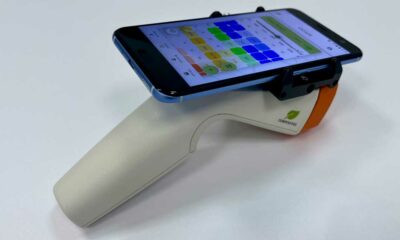
In response to these risks, scientists at the’Unicamp and other institutions, through international collaboration, have developed a portable electrochemical sensor capable of identifying these substances. The device uses a boron-doped diamond electrode connected to a portable potentiostat, which can in turn be connected to a smartphone via USB or Bluetooth.
«We have developed an electrochemical method that identifies various synthetic cannabinoid molecules with high selectivity and sensitivity,» explains Larissa Magalhães de Almeida Melo, lead author of the study published in Talanta.
«The analysis can be performed anywhere, using a small sample, and the sensor responds with a characteristic electrochemical signal.»
The tests conducted with the’AB-Chminaca and the MDMB-4 in Pinaca, two of the most common synthetic cannabinoids in Brazil, demonstrated that the sensor could detect concentrations as low as 0.2 µM, even when nicotine levels are high.
«The great advantage of our system is its selectivity. Even with the complexity of the samples, we were able to focus solely on the substances we were interested in,» he added Wallans Torres Pio dos Santos, a professor at the Federal University of Vale do Jequitinhonha and Mucuri and the study’s coordinator.
Applications in the fields of health and risk reduction
Beyond its forensic applications, the sensor could become an essential tool in emergency care in cases of overdose and in harm reduction initiatives. The system is already being tested as part of the BACO Project, a partnership between Unicamp and the Ministry of Justice and Public Safety, which analyzes saliva samples to monitor the use of new psychoactive substances at parties and festivals.
«These synthetic cannabinoids are constantly evolving. New variants are constantly emerging, and many of them are extremely potent and dangerous,» Melo points out. «Our goal is to develop technologies that can be used in the field. We want the consumers know what they are consuming »and make an informed decision. This can prevent serious cases of poisoning and even save lives."
According to Santos, investigations indicate that 63% of consumers do not know what substance they are consuming, believing it to be one thing when in reality it may be a much more powerful and dangerous compound. The ability to identify substances on the spot could therefore represent a turning point in the risk prevention.
Expand detection to other substances
The technology's adaptability is another advantage. The Researchers are already expanding the method in the detection of LSD analogs, cathinones, and phenylethylamines, with the goal of incorporating even more convenient features, such as colorimetric reagents for easy visual interpretation.
As Arantes summarized for the FAPESP news agency: «The goal is to bring science to where it can have a direct impact. Experts, doctors, and healthcare professionals need accessible, fast, and reliable tools to address the challenges posed by the new drugs. »What we're offering is a practical, portable, and scalable solution."




















CBD is said to promote athletic recovery, without improving performance

294 cannabis clubs in Chile: a booming movement with uneven distribution

Chronic Sciatica: New York Approves First Clinical Trial of a THC-Based Medication

United States: The DEA is accelerating the integration of medical cannabis at the federal level

Florida is nearing one million patients using medical cannabis

Uruguay Revives Its Plan to Allow Tourists to Legally Access Cannabis

In Brazil, researchers are developing an innovative CBD eye drop

Autism: Medical Cannabis Is Linked to Reduced Anxiety

The $28 billion U.S. hemp market remains under threat

Jamaica Eases Small Farmers' Access to the Cannabis Market
-
 Business6 days ago
The legal cannabis market in New York exceeds 4 billion $ in revenue
-

 Cannabis in France2 weeks ago
Which countries legalized medical cannabis before France?
-
Business2 weeks ago
South Korea is preparing to begin local production of medical cannabis to meet rising demand
-
Cannabis in the Netherlands4 weeks ago
One year after the launch of the Dutch cannabis experiment, the first trends are emerging
-
Cannabis in Thailand2 weeks ago
From the boom in dispensaries to a purely medical approach: Thailand is revising its cannabis policy
-
Cannabis in France4 weeks ago
French medical cannabis remains stalled at the Ministry of Health
-
Cannabis in Argentina3 weeks ago
Argentina Opens Its Market to Hemp Flowers Containing 1% of THC
-
Cannabis and driving2 weeks ago
Medical Cannabis and Driving: New South Wales Ends Automatic Penalties for THC

















You must be logged in to post a comment Login