New scanner predicts THC levels weeks before harvesting

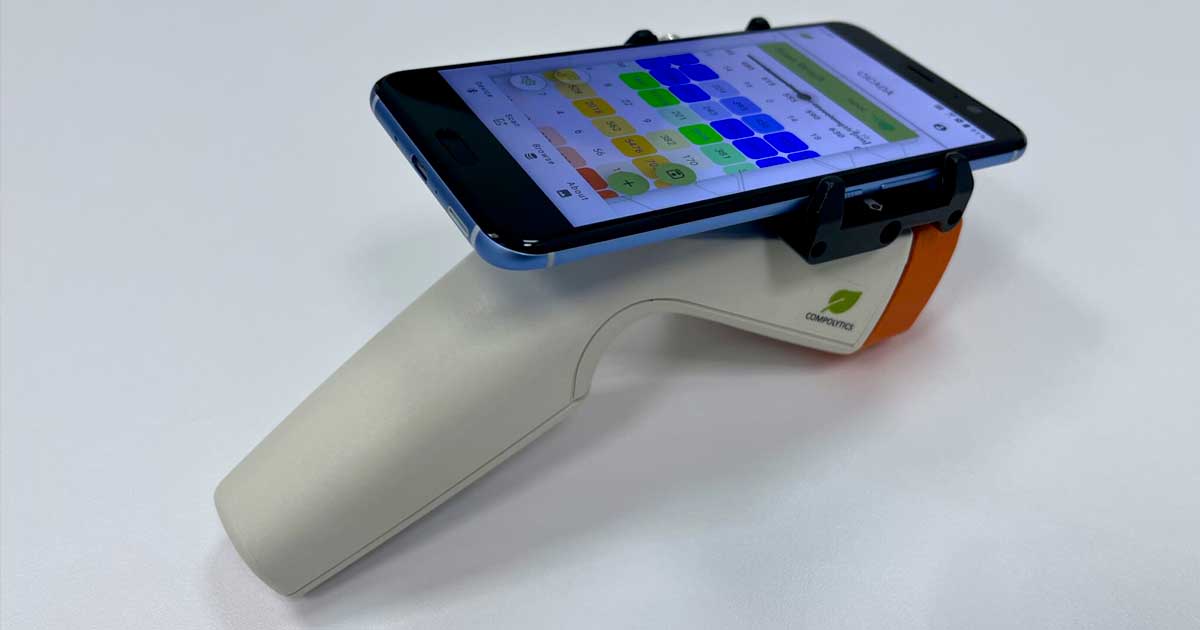
Scientists from’University of Adelaide (Australia), in collaboration with the German technology company Compolytics, have developed a non-destructive scanning technique capable of predicting the profile of the cannabinoid of a plant several weeks before harvesting.
A predictive tool for cannabinoid profiles
The method, known as hyperspectral fan-leaf reflectance (FLHR), involves scanning intact leaves to capture their light reflection patterns over hundreds of wavelength bands. These «spectral signatures» are then interpreted using machine learning models to estimate the final cannabinoid concentrations in mature flowers.
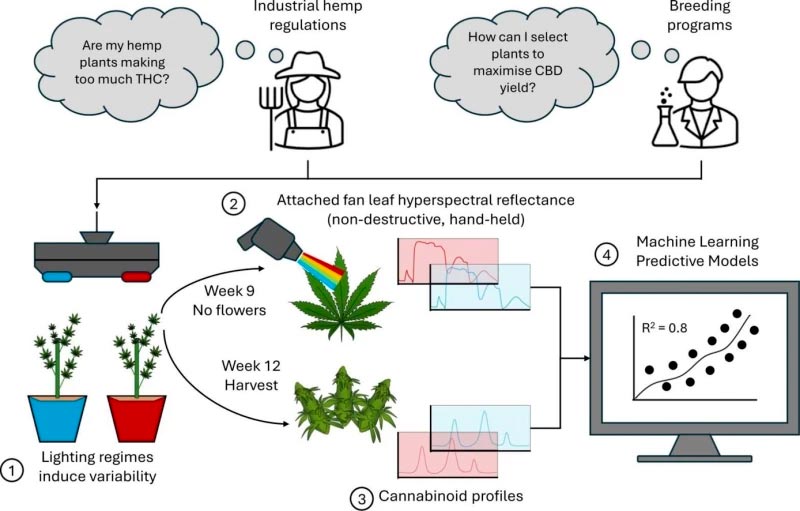
This diagram shows how the FLHR method developed by the researchers can facilitate cannabis cultivation processes.
Traditional cannabinoid testing methods, such as liquid or gas chromatography, These require sample destruction, chemical reagents, expensive equipment and specialized laboratories. In contrast, FLHR provides instant readings directly in the culture room or in the field.
«This measurement technique was superimposed on machine learning models trained on FLHR spectra and achieved high predictive accuracy that outperformed previous approaches,» explains Dr Aaron Phillips of the University of Adelaide, who led the study published in Industrial Crops & Products. The technique is based on a portable hyperspectral device, enabling rapid, in situ assessments to be made without cutting plants or sending samples to a laboratory.
«The ability to predict cannabinoid profiles weeks before harvest has important implications for cannabis production, enabling growers and breeders to improve product quality, reduce costs and ensure regulatory compliance,» explains Dr Phillips.
Growers can thus identify plants likely to exceed legal THC limits, avoiding costly crop destruction, and give priority to plants with high potential. The tool also speeds up selection cycles, enabling growers to optimize harvest timing according to expected potency, rather than relying on guesswork or repeated laboratory analysis.
The benefits go beyond compliance. As independent reports cited by the study explain, this technology helps growers avoid allocating resources to plants with low cannabinoid potential. It also offers researchers a powerful means of classifying cultivars and selecting optimal breeding plants earlier in the growth cycle, reducing the need for time-consuming phenotyping.
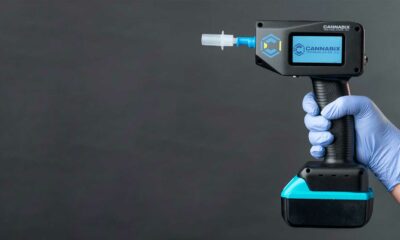
Although today's scanning equipment is cumbersome, Compolytics is working on a compact version similar to a supermarket barcode scanner, designed for everyday use by growers.
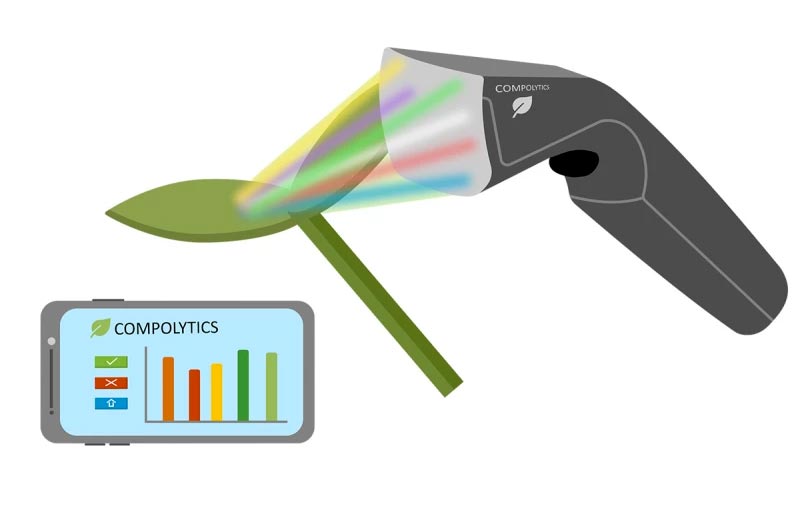
The future scanner imagined by Compolytics
The research team also aims to push back the boundaries of how accurately FLHR can predict cannabinoid levels early in the growth cycle. Surprisingly, early results suggest that scans taken at the start of flowering can sometimes perform better than measurements taken later.
For the future, Dr. Phillips envisions larger-scale applications: «We'd also like to test our approach with drones capable of scanning hemp fields to spot plants that exceed legal THC thresholds.»
Such a system could automate compliance monitoring for large outdoor farms, representing an unprecedented level of agricultural precision in the Cannabis industry.




















«Vincy Gold»: Humboldt Seed Company on the Hunt for Saint Vincent Sativas

Cronos Completes the Acquisition of CanAdelaar for 57.5 million euros

Cannabis with a "bloody" twist: Discover Sensi True Blood and Sensi Sangria, the two new strains from Sensi Seeds

Hemp: The Council of the EU Takes a Stand on New Production and Marketing Rules

Missouri's legal cannabis market accounts for 93 % of consumer spending

THC Gummies: How to Read a Certificate of Analysis Before Buying

British patients now have access to THCV-rich cannabis flowers

Spain: Medical Cannabis Is Coming to About 50 Hospitals

JIHE 2026: Japan’s Largest Trade Show Dedicated to Hemp and CBD Returns to Tokyo with More Than 100 Industry Players

New Caledonia: The Courts Clear the Way for the Return of CBD
-
 Business3 weeks ago
The legal cannabis market in New York exceeds 4 billion $ in revenue
-

 Cannabis in France4 weeks ago
Which countries legalized medical cannabis before France?
-
Cannabis in France1 week ago
France already has 3,000 cannabis retail outlets. None of them are legal.
-
Business4 weeks ago
South Korea is preparing to begin local production of medical cannabis to meet rising demand
-
Cannabis in the U.S.1 week ago
A DEA report confirms that there are no fatal cannabis overdoses
-
Cannabis in Thailand4 weeks ago
From the boom in dispensaries to a purely medical approach: Thailand is revising its cannabis policy
-
Cannabis and driving4 weeks ago
Medical Cannabis and Driving: New South Wales Ends Automatic Penalties for THC
-
Cannabis in France3 weeks ago
France’s Drug Policy Chief Defends Cannabis Prohibition... and Runs Into the Facts
















You must be logged in to post a comment Login