
«Turbo cannabis»: the Israeli promise that multiplies harvests by 17


The company RCK, based in the Israeli kibbutz of Rouhama In the western Negev, the company claims to have developed a hybrid seed technology that dramatically increases cannabis production while improving crop stability.
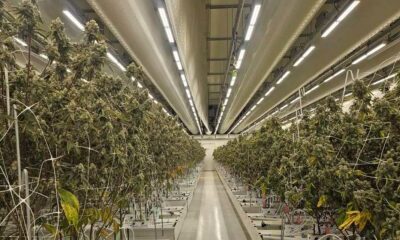
Hailed as a major breakthrough for the industry, this technology, nicknamed « turbo cannabis », is reportedly already capable of increasing the production of 17.5 times, with a reduction of approximately 70% losses during the manufacturing process. This could provide a significant advantage in a global market where demand for medical cannabis continues to grow.
Hybrid seeds inspired by field crops
At the heart of this innovation are hybrid seeds produced by crossing different cannabis varieties. According to RCK, these seeds result in a more uniform crop, with greater disease resistance and significantly higher yields. The company emphasizes that this approach, already standard in other agricultural sectors, has long been considered difficult to apply to cannabis.
The researcher leading the project, Dr. Silit Lazare, explains: «Most industrial crops use hybrid seeds, such as tomatoes and peppers, but the cannabis genome is very different. People used to make fun of us and tell us it was impossible to create hybrid cannabis seeds.»
The research program would have required seven years of development, before leading to a commercial-scale seed production system.
RCK claims today to be part of a very select group of companies capable of producing these hybrid seeds on an industrial scale. Dr. Lazare even points out that the company is one of only four in the world operating in this niche, and that it already has international partnerships.
«It was a bit like reinventing the wheel, because almost no one produces hybrid cannabis seeds,» she explains. «We’re one of only four companies in the world doing this, and one of them has even signed an agreement with us to have us produce seeds on its behalf. We’re now in the commercial pilot phase and shipping seeds to customers all over the world.»
Another major benefit of this technology lies in logistics: seeds have a longer shelf life than cuttings or seedlings, making them easier for growers to transport and store.
A Strategic Issue for Israel and Beyond
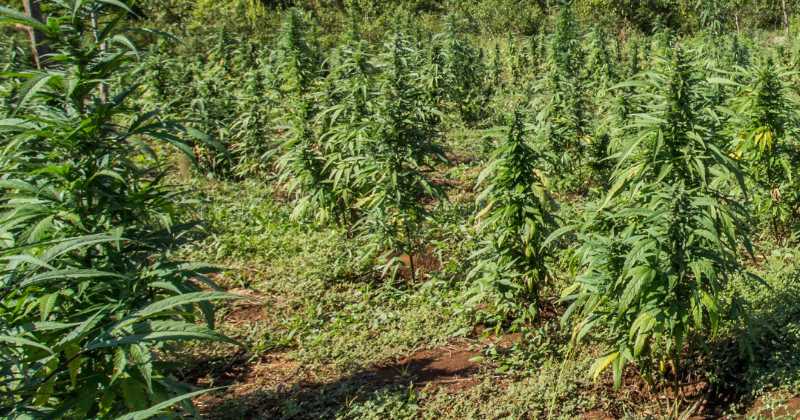
This development could have a significant impact on the sector, particularly in a country where available land is limited. According to figures from the Israeli Ministry of Agriculture, Israel has only about 35 hectaresdedicated to the cultivation of medical cannabis, broken down into 33 producers.
In this context, improving yields has become a strategic lever. In fact, Israeli authorities recently authorized, for the first time, the use of foreign workers at medical cannabis farms to address labor shortages.
RCK now hopes that its technology will help meet rising global demand while boosting agricultural efficiency in an industry seeking standardization.



















France’s Drug Policy Chief Defends Cannabis Prohibition... and Runs Into the Facts

Cannabis and the Adolescent Brain: French Scientists Make a Key Discovery

EFSA Gives Initial Approval for Synthetic CBD; Natural Extracts Still Pending

Federal Cannabis Reform Once Again on Hold in the United States

Contest: Win a trip to Quebec to experience the hemp harvest firsthand

Bedrocan on Hold Amid Uncertainty Over Medical Cannabis

Newsweed Launches Its Own AI
A new tax of 0.5% could disrupt the hemp industry in Canada

Medical Cannabis and Driving: New South Wales Ends Automatic Penalties for THC

China's Yongji Health Takes Control of Tasmanian Botanics
-
 Cannabis and driving3 weeks ago
Cannabis and CBD: French Drivers Can Now Lose Their License Even Without a Positive Test Result
-

 Cannabis in France1 week ago
Which countries legalized medical cannabis before France?
-
Cannabis in France4 weeks ago
Cannabis Legalization: The LFI Bill Has a Major Problem—THC
-
Cannabis in the Netherlands3 weeks ago
One year after the launch of the Dutch cannabis experiment, the first trends are emerging
-
Business1 week ago
South Korea is preparing to begin local production of medical cannabis to meet rising demand
-
Cannabis in Thailand1 week ago
From the boom in dispensaries to a purely medical approach: Thailand is revising its cannabis policy
-
Cannabis in Argentina2 weeks ago
Argentina Opens Its Market to Hemp Flowers Containing 1% of THC
-
Cannabis in France3 weeks ago
French medical cannabis remains stalled at the Ministry of Health















You must be logged in to post a comment Login