THCP, a new cannabinoid 30 times «more potent than THC» (but extremely rare)

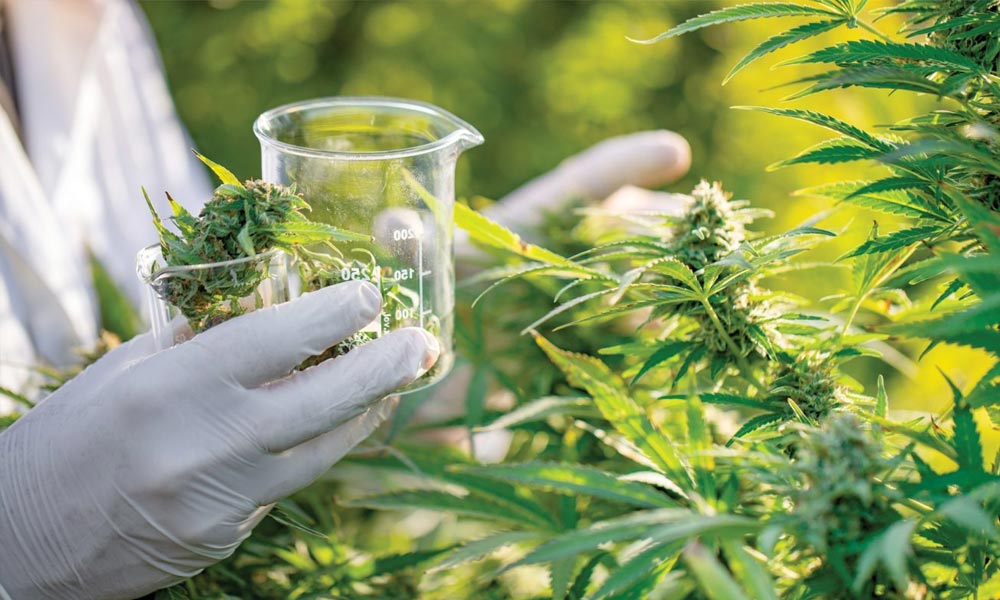
A recent study published in Nature reveals the discovery of two previously unknown cannabinoids, called THCP and CBDP.
When tested on mice, the researchers discovered that Δ9-THCP, for tetrahydrocannabiphorol, showed »an affinity for the CB1 receptor more than thirty times higher than that reported for THC».
Although researchers have so far identified about 150 cannabinoids in cannabis, the majority of studies have focused on the two present in greatest concentration: the CBD and THC. The emergence of equally strong or stronger cannabinoids will undoubtedly lead to further studies, particularly on medical effects of cannabis.
«A number of clinical trials and a growing number of publications provide tangible evidence of the pharmacological potential of cannabis and cannabinoids on a wide range of disorders from sleep to anxiety, multiple sclerosis, autism and neuropathic pain,» the researchers said. «In particular, being the most potent psychotropic cannabinoid, the THC is the main objective of these studies.»
«THCP has an even higher binding affinity for the CB1 receptor and greater cannabimimetic activity than THC itself.»
Say Hello to a new Natural Cannabinoid named THCP.
More potent than THC.
Can we just grow hemp with gobs of THCP?https://t.co/SfVQ9EGw72 pic.twitter.com/LVD8TQnePW- Kevin McKernan (@Kevin_McKernan) December 30, 2019
L’study was performed on an Italian variety, FM2, sourced from the Italian army and measured at 5.6% CBD and 3.9% THC. Ethanol extraction recovered 243µg/g CBDP and 29µg/g THCP.
The discovery of THCP could also help explain the specific pharmacological properties of certain cannabis varieties that previously could not be attributed to the presence of THC alone, the researchers said.
«In our opinion, this compound should be included in the list of main phytocannabinoids to be determined for a proper evaluation of the pharmacological effect of cannabis extracts administered to patients.»
As for CBDP, the researchers stated that the cannabinoid's low capacity to bind to CB1 or CB2 receptors made it a low priority to explore its cannabimimetic activity.

















JIHE 2026: Japan’s Largest Trade Show Dedicated to Hemp and CBD Returns to Tokyo with More Than 100 Industry Players
New Caledonia: The Courts Clear the Way for the Return of CBD

The Brazilian medical cannabis market continues to grow

Morocco: Three Cannabis-Based Medications Approved for the Treatment of Epilepsy

Canopy Growth Receives New EU-GMP Certification to Strengthen Its Presence in Europe

Three years after legalizing medical cannabis, Albania continues to establish regulations for it

The first plant-based medical THC spray arrives in the United Kingdom

Medical Cannabis in Germany: THC Prices Vary by a Factor of 12

France already has 3,000 cannabis retail outlets. None of them are legal.

Morocco's exports of legal cannabis have expanded to 15 countries
-
 Business2 weeks ago
The legal cannabis market in New York exceeds 4 billion $ in revenue
-

 Cannabis in France4 weeks ago
Which countries legalized medical cannabis before France?
-
Business4 weeks ago
South Korea is preparing to begin local production of medical cannabis to meet rising demand
-
Cannabis in France4 days ago
France already has 3,000 cannabis retail outlets. None of them are legal.
-
Cannabis in Thailand4 weeks ago
From the boom in dispensaries to a purely medical approach: Thailand is revising its cannabis policy
-
Cannabis in the U.S.5 days ago
A DEA report confirms that there are no fatal cannabis overdoses
-
Cannabis and driving3 weeks ago
Medical Cannabis and Driving: New South Wales Ends Automatic Penalties for THC
-
Cannabis in France3 weeks ago
France’s Drug Policy Chief Defends Cannabis Prohibition... and Runs Into the Facts















You must be logged in to post a comment Login