Why the legalization of cannabis in Uruguay is not a resounding success

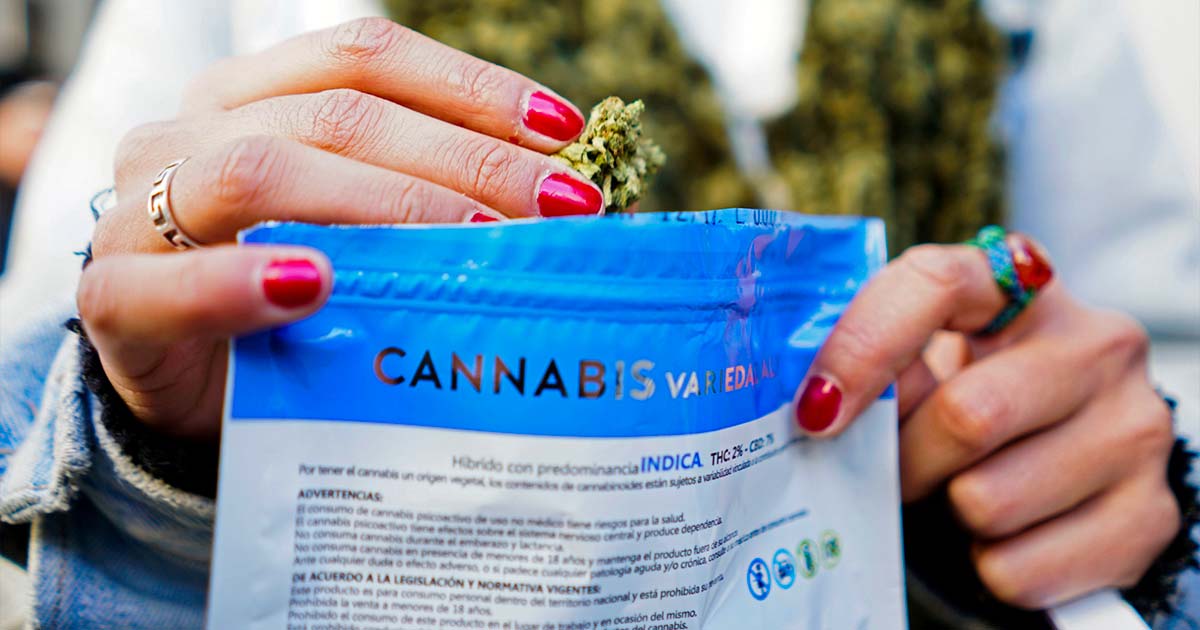
According to 2021 data published by the Uruguayan Institute for the Regulation and Control of Cannabis (IRCCA), the Legalization of cannabis in Uruguay helped drive drug traffickers out of the market.
However, the legal supply of cannabis remains insufficient, and only 27% of cannabis users purchase it legally. This percentage rises to 39% when we take into account that some buyers share the product with their friends and acquaintances, a a percentage that is struggling to rise since legalization took effect.
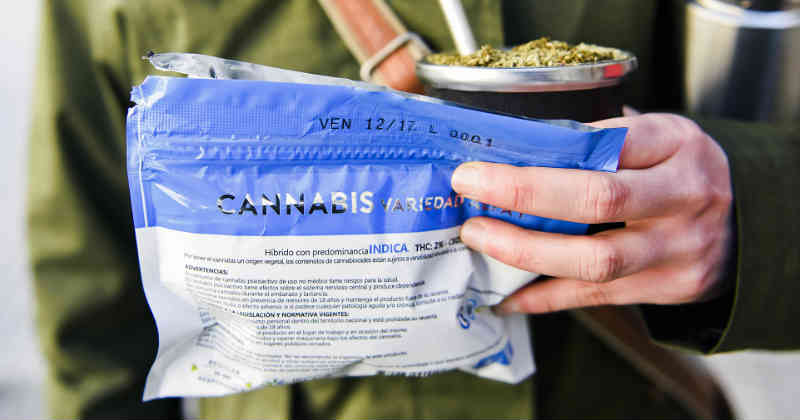
The legalization of cannabis in Uruguay has introduced three ways to obtain cannabis: personal cultivation, cannabis social clubs, and purchase at pharmacies. The government oversees these three channels and currently limits them to residents of the country, although the Congress is considering opening the market to visiting tourists.
Approximately 49,630 Uruguayan men and women are registered to purchase cannabis at the country’s 28 pharmacies that sell it, 14,035 grow it at home, and 7,166 are members of the 249 registered clubs.
«Regulating cannabis has been more effective than enforcement in curbing drug trafficking,» explains Mercedes Ponce de León, director of the Cannabis Business Hub and ExpoCannabis Uruguay.
Legalization has also led to the emergence of a the emerging medical cannabis export industry. According to data from the Uruguay XXI information portal, exports in 2020 doubled compared to the previous year, reaching 7.3 million euros. In 2021, revenues reached 8.1 million euros, and in the first half of 2022, 4.4 million euros.
For now, exports are focused on flowers for medical use and are mainly destined for the United States, Switzerland, Germany, Portugal, Israel, Argentina, and Brazil.
Upcoming updates
The government now plans to sell stronger cannabis in pharmacies by the end of the year in order to attract more consumers to the legal market. Available strains are, in fact, limited in number and THC content, at 9%, a relatively low percentage.
«There are some users who are asking for a higher THC content or more variety, and this undermines the system’s effectiveness because it means that some consumers who might otherwise buy from pharmacies are turning to other options within the regulated market or to the black market,» explains Daniel Radío, secretary general of the National Drug Council.
Furthermore, there are relatively few licensed pharmacies compared to the total population. These The latter are also facing difficulties with the banking system due to international legislation regarding cannabis.
Another obstacle to adoption is cannabis users must be registered in a national registry. Some people prefer not to reveal their identity, even though the government says the information is used only for consumer research.
As for the clubs, they can only have a limited number of members (between 15 and 45), and many of them even have a waiting list for new members. The rules stipulate that each member’s supply cannot exceed 40 grams per month.
Underground cannabis cultivation
Experts say that the largest suppliers in the illegal market are now small local growers who cultivate their own plants without being registered.
According to Marcos Baudean, a professor at ORT University in Uruguay and a researcher for the Monitor Cannabis project, «there are many more home growers who do not appear in the records,» so it is impossible to make a concrete estimate of the black market’s share.
Despite this, the professor asserts that unregistered growers «have already surpassed» the number of trafficking networks in the cannabis trade. Nevertheless, drug traffickers continue to operate in Uruguay, primarily by selling the famous «prensado», very cheap, low-quality bricks of pressed cannabis.




















Kentucky now has 26 medical cannabis dispensaries

«Vincy Gold»: Humboldt Seed Company on the Hunt for Saint Vincent Sativas

Cronos Completes the Acquisition of CanAdelaar for 57.5 million euros

Cannabis with a "bloody" twist: Discover Sensi True Blood and Sensi Sangria, the two new strains from Sensi Seeds

Hemp: The Council of the EU Takes a Stand on New Production and Marketing Rules

Missouri's legal cannabis market accounts for 93 % of consumer spending

THC Gummies: How to Read a Certificate of Analysis Before Buying

British patients now have access to THCV-rich cannabis flowers

Spain: Medical Cannabis Is Coming to About 50 Hospitals

JIHE 2026: Japan’s Largest Trade Show Dedicated to Hemp and CBD Returns to Tokyo with More Than 100 Industry Players
-
 Business3 weeks ago
The legal cannabis market in New York exceeds 4 billion $ in revenue
-
Cannabis in France1 week ago
France already has 3,000 cannabis retail outlets. None of them are legal.
-
Cannabis in the U.S.2 weeks ago
A DEA report confirms that there are no fatal cannabis overdoses
-
Cannabis in France4 weeks ago
France’s Drug Policy Chief Defends Cannabis Prohibition... and Runs Into the Facts
-
Studies on cannabis2 weeks ago
Cannabis Oil and Endometriosis: A Promising Study for Pain Relief
-
CBD3 weeks ago
In Brazil, researchers are developing an innovative CBD eye drop
-
Business2 weeks ago
Tilray is accelerating its operations in Europe thanks to a license in Portugal
-
Cannabis in France2 weeks ago
CBD in France: Traceability, Retail Stores, THC and Driving… What the New Bill Proposes

















You must be logged in to post a comment Login