

45% patients give up benzodiazepines for medical cannabis

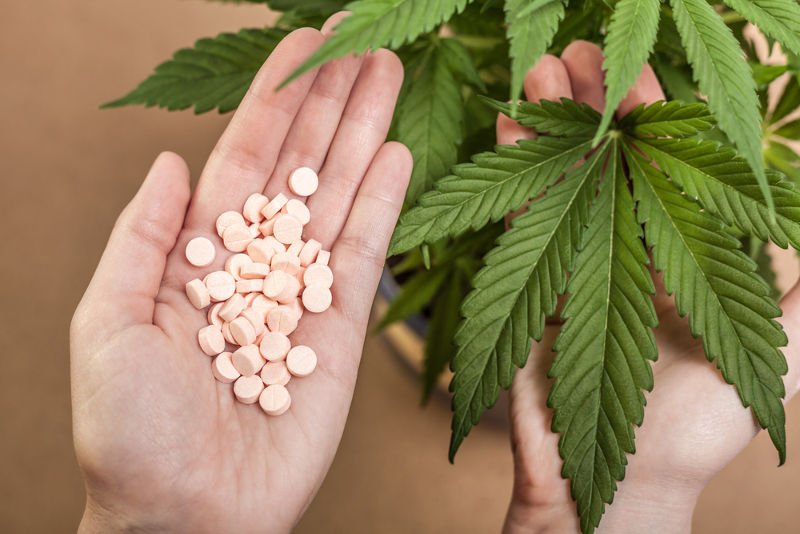
A study conducted by Canabo Medical Inc. on 146 patients shows that 40% to 45% of benzodiazepine (anxiolytic) users discontinue their medication when undergoing medical cannabis therapy. Canabo is a company that operates 15 clinics in Canada. Patients there are treated exclusively with cannabinoids.
Dr. Neil Smith, executive director of the 15 Canabo clinics, described these results as «extremely promising.» He held a press conference at the Canadian Consortium for the Investigation of Cannabinoids : »In this type of study, researchers are pleased when the response rate reaches 101%. These 451 patients who are switching from conventional treatments to medical cannabis »show that the industry is making tremendous progress."
The observational study
L’study was conducted at the 15 Canabo clinics among 146 patients. The average age of the patients was 48 years. Women accounted for 60% of the study group. 61% of the patients began treatment at cannabis to treat their physical pain, 27% for psychiatric treatment and 11% for neurological reasons. After a month and a half, two out of five patients (40%) stopped conventional treatment. Over the course of a year, this rate rose to 45%.
Dr. Smith says, «We’re not celebrating just yet; there’s still work to be done. We hope to expand this type of analysis in partnership with other healthcare institutions like ours. The analyses would be more comprehensive and would allow us to make faster progress than we have in recent years.»
In fact, medical cannabis proved effective for only 45% of the patients over the course of a year. The remaining 55% therefore did not feel any improvement in their condition. Furthermore, the study does not explain what happened to these 55%. Are they treating themselves by combining the benzodiazepines and cannabis ? What is the physical and mental condition of these individuals? Have they switched to different strains of cannabis during treatment? What are the symptoms of those who continue with conventional treatment, and why hasn’t cannabis worked for them?
These are important questions that the company did not address. The next clinical trial should focus on replacing opioids with medical cannabis.
Théo Caillart








The «cannabis» fine raised to 500 euros under the RIPOST Act

Sacha Baron Cohen Brings Ali G Back to Life During a Surprise Appearance at Wimbledon

Botswana Paves the Way for Commercial Hemp Cultivation

The First Authorized Medical Cannabis Cultivation in the Canary Islands

Germany Ends Public Health Insurance Coverage for Medical Cannabis Flowers

Cannabis Legalization in Pennsylvania Once Again on Hold

Democratic senators are reviving a bill to legalize cannabis at the federal level in the United States

A THC:CBD oil shows promising results in reducing agitation in people with dementia

San Francisco Allows «Cannabis Cafés»

Kenya Denies Rastafarians the Right to Use Cannabis
-

 Cannabis in Europe4 weeks ago
Bosnia and Herzegovina Continues to Roll Out Medical Cannabis Following Its Legalization
-
Cannabis in France4 weeks ago
France Submits the Long-Awaited Decree on the Reimbursement of Medical Cannabis to the Council of State
-
Cannabis in the U.S.4 weeks ago
The DEA Begins Hearings on the Federal Rescheduling of Cannabis
-
Business3 weeks ago
China Invests $10 Million in Medical Cannabis in Lebanon
-
Cannabis in Australia3 weeks ago
South Australia is working to identify more water-efficient hemp varieties
-
Cannabis in Thailand4 weeks ago
Thailand Threatens Cannabis Shops with Severe Penalties
-
Exchange4 weeks ago
Glass House will be the second U.S. cannabis company to list on the New York Stock Exchange
-
Cannabis in France1 week ago
The «cannabis» fine raised to 500 euros under the RIPOST Act














Y a n n o s
April 12, 2017 at 13 h 31 min
Very interesting study. Just for the record, the doctors had put me on benzodiazepines to treat my sleep disorders. They were sleeping pills like Stilnox or Imovane. Within a few weeks, I had become extremely dependent on these drugs, which were only vaguely effective at helping me sleep and left me feeling completely out of it every night (for example, I remember a hallucination where I was talking to Marie Curie, whom I saw lying next to me…).
So it was really fun, until I realized I was addicted to that crap. So I quit cold turkey. It was the worst night of my life. But I’d rather do that than spend my whole life relying on sleeping pills to get some sleep, even though I still had trouble sleeping.
And, a few years later, I (re)discovered weed. And, miraculously, my nights improved considerably. And since then, I haven’t had any trouble sleeping. So I wouldn’t go so far as to say that weed «saved my life» or anything like that, but I certainly owe it a lot.
That said, I won’t deny that I’m somewhat addicted to weed, but it’s far better than being addicted to sleeping pills, and I use it to my advantage when working out (by the way, when are we getting an article on that? 😀)
And just for your information, I believe Stilnox (a benzodiazepine) was banned from sale (or at least made much harder to obtain—I can’t quite remember) in France a few weeks ago due to the risks it poses…