
Canada: cannabis legalization bill under scrutiny

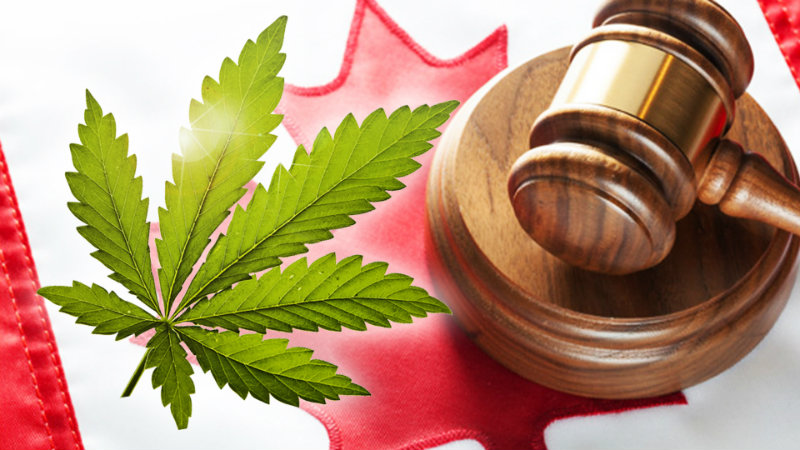
This Thursday, April 13, 2017, the Canadian government tabled a bill on the legalization of cannabis. Let's decipher the text of this bill, which will serve as a basis until it is voted on, and its implementation is expected to begin on July 1, 2018.
Possession and self-cultivation
Any adult 18 years of age or older may possess in public up to 30 grams of dried flowers or the equivalent in cannabis oil. However, the provinces can adapt these last two figures. Each could set a higher legal age for sale, or even prohibit possession. We could therefore end up with provinces authorizing purchases from the age of 30 and possession of up to 5g.
Each household will be able to grow up to 4 plants not exceeding one metre in height (excluding roots). It is strictly forbidden to grow plants outside the home, let alone in a public place.
Canadians will be able to make their own concentrates as long as it's legal cannabis.
Quantities authorized for possession 30 grams of publicly dried flowers, 150 grams of freshly picked flowers, 450 grams of space cake. 2.1 kilos for an infused drink. 7.5 grams of concentrate and 30 seeds.
Protection of minors
Minors will not be prosecuted if they possess less than 5 grams of cannabis. They are, however, prohibited from growing cannabis and buying it through the legal channel. If they exceed the 5g threshold, they will face criminal charges.
Ottawa foresees prison sentences of up to 14 years for anyone selling cannabis to a minor. The same penalties apply if an adult uses a minor to commit a cannabis-related offence.
Sale of bongs, leaves, pipes and other accessories for the consumption of cannabis is forbidden to minors.
The government will provide $9.6 billion over five years for prevention programs for young people and their parents. In addition, $5 billion will be allocated over 10 years to facilitate access to mental health care.
Promotion, advertising and sponsoring
Cannabis sponsorship is prohibited. A dispensary will only be allowed to advertise inside its store, indicating the price and remaining quantity of the product.
It will be forbidden to make product packaging or labelling attractive, whether by means of a logo, a phrase, an animal or any other fictitious character. Promotion of the «smoking lifestyle» is also forbidden. However, information may be provided to help consumers choose the right product for them.
The dispensaries and other entrepreneurs in the sector will be entitled to «informative promotion» via targeted and nominative marketing operations. They will also be able to promote in places where minors are not allowed, such as cannabis fairs.
Authorized cannabis promotion must not target minors.
Weed vending machines are a priori prohibited, although authorizations may be granted at a later date. If a producer or seller incites promotion, lies about the chemical composition or provenance of the product, they could face license suspension, up to 3 years' imprisonment and a fine of up to 5 million dollars.
The ban on promotion does not apply to scientific, literary, musical or cinematographic works, unless there is a financial consideration.
Other control elements
- Authorized sales The dispensaries will be able to sell dried or fresh flowers, oil, cannabis plants or seeds. They will not be able to sell space-food for the time being.
- Each province can decide who sells and distributes of cannabis on its territory
- Importing and exporting of cannabis by a private individual is prohibited. A professional may only import/export medical cannabis or industrial hemp.
- THC limit for driving : the limit is set at 0.5 ng THC per milliliter of blood at the wheel. Police officers will be able to use saliva tests during roadside checks if they have any doubts about the driver's condition. Penalties will be adjusted according to THC concentration, or if a cocktail of drugs is detected in the blood.
- Pricing and taxation : For the moment, the bill does not provide for a regulatory selling price, and no taxation of the merchandise has been specified. Provinces will be able to adapt their taxation systems
- Conditions for opening a business Only a Canadian resident can apply for a license for a cannabis-related business.
- The Ministry of Health may, at any time, disclose confidential information from cannabis companies if it deems that public health is at stake.
The bill received a mixed reception from the various Canadian parties. Some provinces, such as Quebec, have denounced Ottawa's «hand-wringing». Basically, the federal government is putting all ambiguous issues such as taxation, the legal purchase age and workplace prevention on the backs of the provinces.
The promising Bill C-45 is available at link. The text has passed its first reading. Parliamentarians will be able to amend and modify it until July 1, 2018.
Théo Caillart









Argentina Opens Its Market to Hemp Flowers Containing 1% of THC

The French Socialist Party still doesn't know how to approach the legalization of cannabis

Science in the City International: Paris at the Heart of Transatlantic Scientific and Medical Dialogue

Christine Fréchette is alienating Quebec’s cannabis industry

Rima Hassan: When «Drugs» Become a Political Weapon

From Marathons to Ultratrails: How Extreme Running Affects the Endocannabinoid System

Four days of THC may make breast cancer less aggressive, according to a new study

Medical Cannabis: 14 Organizations Finally Call for Enforcement of the Law

One year after the launch of the Dutch cannabis experiment, the first trends are emerging

High Ground: The Crash of a Plane Full of Marijuana That Made History in Yosemite
-
 Cannabis and driving1 week ago
Cannabis and CBD: French Drivers Can Now Lose Their License Even Without a Positive Test Result
-
Cannabis in France2 weeks ago
Cannabis Legalization: The LFI Bill Has a Major Problem—THC
-

 Cannabis in the Netherlands4 days ago
One year after the launch of the Dutch cannabis experiment, the first trends are emerging
-
Cannabis in France5 days ago
French medical cannabis remains stalled at the Ministry of Health
-
Business4 days ago
The United Kingdom Is Moving Closer to a Regulated CBD Market
-
Cannabis in Europe2 weeks ago
Andorra Paves the Way for Medical Cannabis Cultivation
-
Cannabis in France2 weeks ago
Drought: Could Hemp Become the New Hope for French Farmers?
-
Cannabis in Argentina1 day ago
Argentina Opens Its Market to Hemp Flowers Containing 1% of THC














You must be logged in to post a comment Login