
Leafly evolves its cannabis strain visualization model

Launched in 2010, Leafly is one of the largest cannabis websites, owned by Privateer Holdings, a private equity firm that also owns a 76.1% stake in Tilray (a Canadian cannabis producer) and the brand Marley Natural. In particular, the site offers a nearly comprehensive directory of cannabis strains, complete with user reviews, along with a tool for locating dispensaries and analyses of the cannabinoid and terpene profiles for each strain.
After nine years of loyal service, Leafly has decided to change the way it displays cannabis strains, the Cannabis Guide. Until now, he had categorized strains into sativa, indica, and hybrid, as you can see below.
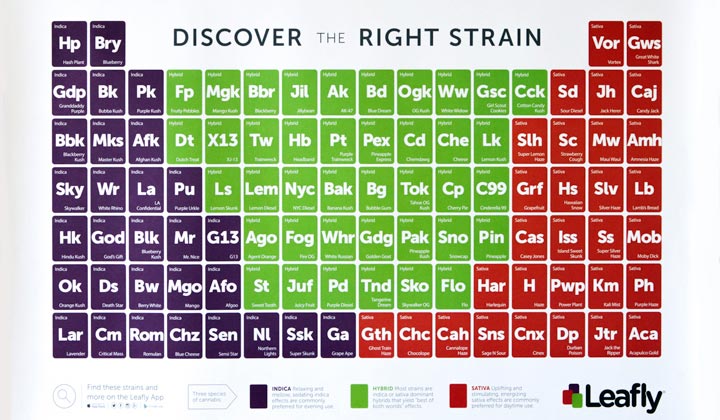
However, the Indica/Sativa classification is incomplete and no longer really allows us to distinguish the effects of different strains, given that hybridization has created so many new phenotypes. We’ve all heard that sativa is energizing and indica is more relaxing, but this categorization doesn’t do justice to the chemical complexity of the strains. Furthermore, the cannabis marketing has given rise to dozens of catchy names, but ones that can also confuse the novice consumer (think of Gorilla Glue or Alaskan Thunder Fuck).
Leafly is therefore introducing a new visualization model based on cannabinoids and terpenes.
How does the new system work?
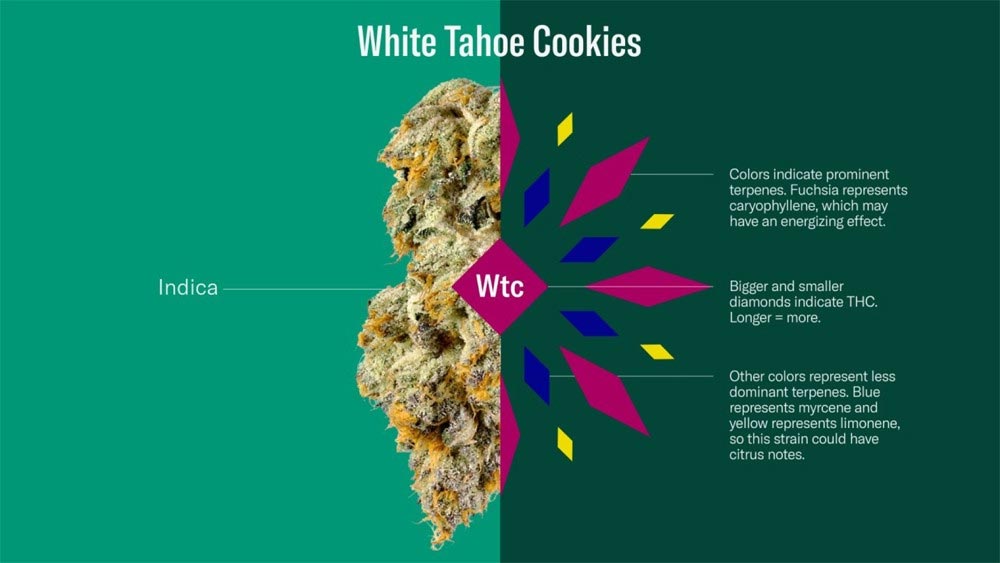
It takes a few minutes to fully understand how the new visualization system works. The guide «makes it easier to explore the cannabis varieties »for consumers through flower-shaped visualizations that offer a simple way to explore the complexity of cannabis,« according to Leafly's press release. "It uses easily recognizable shapes to illustrate the dominant profile of the cannabinoids of each variety, circles for the CBD and diamonds for the THC, and uses vibrant colors to illustrate the flavors and aromas coming from terpenes. »
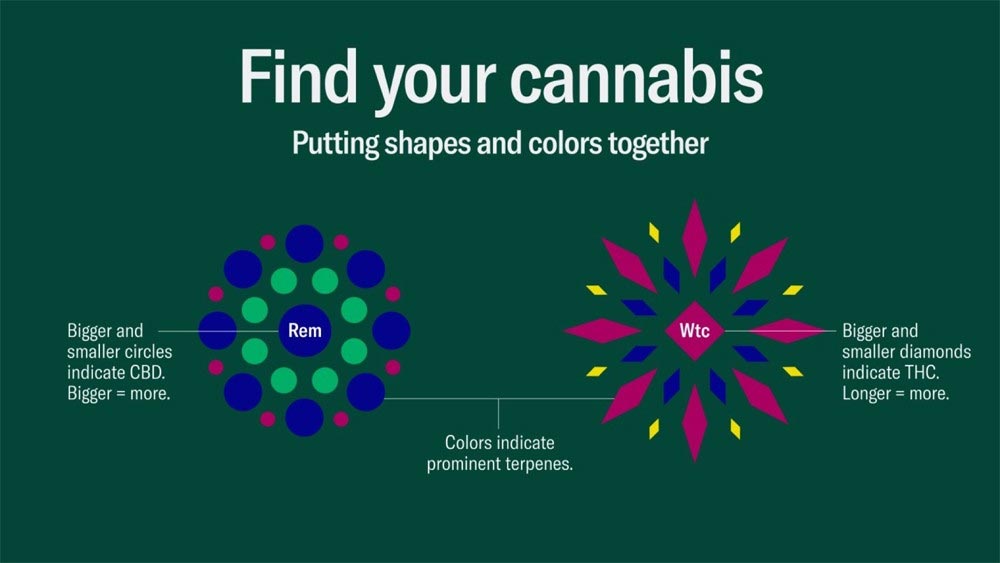
Leafly has assigned geometric shapes to the various attributes of the strain. CBD is represented by a circle, and THC by a diamond. Terpenes, on the other hand, are represented by colors: pinene in green, myrcene in blue, terpinolene in orange, limonene in yellow, and caryophyllene in purple.
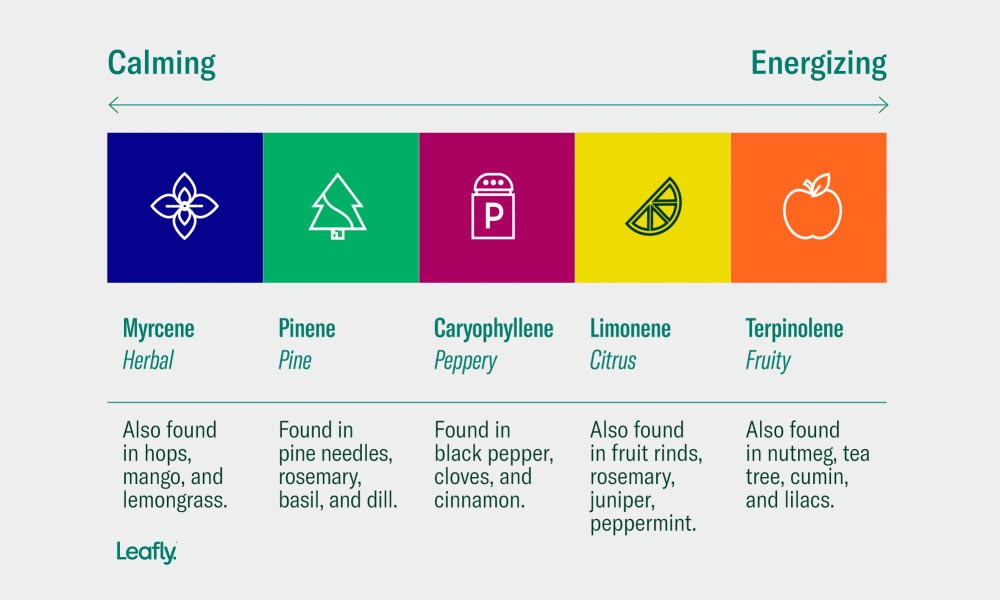
The larger the shape and the more prominent the color, the higher the concentration of the cannabinoid or terpene.
The data shown comes from partner laboratories in Canada and the United States and also includes feedback from website users. Some flower varieties do not have enough data to establish a typical profile and are therefore shown in gray.
«Cannabis has unique physiological effects for each of us,» said Tim Leslie, CEO of Leafly, in a press release. «As our understanding of cannabis grows, so does our need for a more sophisticated yet intuitive language to help people navigate the highly personal effects of cannabis.».

















Which countries legalized medical cannabis before France?

From the boom in dispensaries to a purely medical approach: Thailand is revising its cannabis policy

South Korea is preparing to begin local production of medical cannabis to meet rising demand

In the United States, cannabis use among high school students has reached an all-time low

Medical cannabis use surges by 64 % in Denmark

Canopy Growth Enters the U.K. Market with Four Canadian Strains

CBD: Full-Spectrum Extracts Under Threat in Greece

Medical Cannabis and Back Pain: Opioid Use Has Dropped by 90 % in 10 Years

Cannabis: Wisconsin Could Finally Legalize It in 2027

Argentina Opens Its Market to Hemp Flowers Containing 1% of THC
-
 Cannabis and driving2 weeks ago
Cannabis and CBD: French Drivers Can Now Lose Their License Even Without a Positive Test Result
-
Cannabis in France3 weeks ago
Cannabis Legalization: The LFI Bill Has a Major Problem—THC
-

 Cannabis in France14 hours ago
Which countries legalized medical cannabis before France?
-
Cannabis in the Netherlands2 weeks ago
One year after the launch of the Dutch cannabis experiment, the first trends are emerging
-
Cannabis in France2 weeks ago
French medical cannabis remains stalled at the Ministry of Health
-
Cannabis in Argentina1 week ago
Argentina Opens Its Market to Hemp Flowers Containing 1% of THC
-
Business2 weeks ago
The United Kingdom Is Moving Closer to a Regulated CBD Market
-
Cannabis in France1 week ago
Rima Hassan: When «Drugs» Become a Political Weapon














You must be logged in to post a comment Login