
Leafly share price
Leafly is the encyclopedia of cannabis. Since 2010, this American platform has referenced thousands of varieties and tens of thousands of dispensaries, attracting tens of millions of visitors a month in search of information on the effects, aromas and therapeutic properties of cannabis. Its story is one of an amateur project that became a global reference, then a company struggling to transform its massive audience into a sustainable business model.
Three engineers from Southern California
In 2010, Scott Vickers, Cy Scott and Brian Wansolich are working as web developers for Kelly Blue Book, the automotive price reference site, in Orange County, California. Vickers has just been prescribed medical cannabis to treat his insomnia. He searches for reliable information on the strains available and finds nothing that matches what he imagines: a serious resource, without flashy cannabis symbolism, designed for professionals and patients.
The three engineers built Leafly at weekends, on the side, with a simple concept: a database of cannabis varieties with detailed information (effects, aromas, flavors, medical uses).
and a Yelp-style system of user reviews for dispensaries. No neon images of cannabis leaves, no reggae in the background: a clean, informative design, designed to standardize access to cannabis information.
Success was immediate. By July 2011, the site was already attracting 180,000 unique visitors a month, with monthly growth of 30%.
Acquisition by Privateer Holdings and separation of the founders
In 2011, Brendan Kennedy - co-founder of Privateer Holdings, the first private equity fund dedicated exclusively to legal cannabis, which will found Tilray two years later - spotted Leafly and invested $1 million via Privateer. The platform is officially acquired, with the founders remaining on board to support growth.
When Washington State legalized recreational cannabis in 2012, Leafly moved from Orange County to Seattle. By April 2012, the platform was already registering 2.3 million monthly visits and 50,000 mobile app downloads per month.
On August 2, 2014, Leafly became the first cannabis company to place an ad in the New York Times, a powerful symbolic moment for the normalization of the sector.
In 2015, the three founders left Leafly to launch Headset, a market intelligence startup for the cannabis industry - the equivalent of Nielsen for dispensary sales data. Privateer Holdings now steers Leafly on its own, before giving it back its independence in 2019 via a spin-off.
The marketplace pivot and pre-exchange growth
In 2016, Leafly passed the milestone of 6 million monthly visitors. That same year, the platform makes a major strategic pivot: from a simple directory and database, it becomes a transactional marketplace enabling consumers to place orders online for pickup or delivery. This change is the basis of the subscription-based revenue model that Leafly is developing with dispensaries.
In 2020, the pandemic strikes: Leafly lays off 91 employees in March, and expected funding comes to a halt. CEO Yoko Miyashita - the platform's former legal director - is appointed head of the company in August 2020, with a mission to turn around the financial trajectory.
The SPAC IPO and disillusionment
In August 2021, Leafly announces its merger with Merida Merger Corp. a cannabis SPAC, to list the platform on NASDAQ under the symbol LFLY with a valuation of around $532 million. The deal is expected to close in February 2022.
Disillusionment was swift. The stock loses over 95% of its value by mid-2022, swept along by the general collapse of the listed cannabis sector. Revenues plateau at $42.25 million in 2022, then decline to $34.64 million in 2024, with a shrinking base of paying customers as dispensaries rationalize their marketing spend.
The financial crisis and delisting
At the end of 2023, Leafly issued a going concern alert: its $29.7 million convertible bills were due to mature in January 2025, and there was insufficient cash to repay them. An agreement was reached with creditors to extend the maturity date to July 1, 2025.
In January 2025, Leafly is delisted from NASDAQ for failing to meet minimum capitalization requirements. The stock migrates to the OTC Pink market under the symbol LFLY. Management explores strategic options, including a possible delisting to reduce the costs associated with being a public company.
Leafly today
Despite its financial difficulties, Leafly remains the world's largest cannabis discovery platform, with over 5.1 million average monthly visitors, more than 14,000 listed dispensaries and an unrivalled database of strains. Its model is based on monthly subscriptions sold to dispensaries and brands for their visibility on the platform, with a gross margin of nearly 90% - an excellent ratio for a tech platform, but insufficient to cover operational losses and debt.
Every year, the platform publishes its «Strain of the Year» awards, which have become an eagerly-awaited industry event: in 2024, Super Boof, a hybrid of Black Cherry Punch and Tropicana Cookies, was honored.
-

 July 30, 2024
Uber Eats and Leafly expand cannabis delivery to Alberta
Starting July 30, Alberta cannabis consumers will have a new option for cannabis delivery. Uber Eats, in partnership with Leafly,...
-

 5 April 2024
Chaos in New York after a judge strikes down part of cannabis legalization
New York's cannabis industry is in limbo following a major court ruling that initially appeared to overturn a wide range...
-

 January 16, 2024
Permanent Marker: Leafly's variety of the year 2023
Every year, Leafly selects the best cannabis strains of the year based on its user data. If Jealousy had been elected in 2022, the year...
-

 5 June 2023
After Toronto, Uber Eats delivers cannabis to British Columbia
Since April 18, Uber Eats, in partnership with marketplace Leafly, has enabled adults over the age of 19 to order cannabis and...
-

 December 6, 2022
Leafly's 11 best cannabis strains of 2022
Every year, the American website Leafly organizes the election of the best cannabis strains, which provides an insight into trends in the cannabis markets...
-

 December 5, 2022
Legal cannabis is the 6th largest cash crop in the U.S.
According to the new Leafly Cannabis Harvest Report 2022 released last month, cannabis prices in the US have plummeted despite a year of inflation...
-

 October 17, 2022
Uber Eats and Leafly team up to deliver cannabis to Torontonians
Uber Eats will begin offering cannabis deliveries for three Toronto cannabis stores starting Monday, October 17. The announcement, made on...
-

 March 1, 2022
In January 2022, the US cannabis industry will employ 428,059 people
Leafly, in partnership with Whitney Economics, has released its sixth annual cannabis jobs report. The Leafly Jobs Report 2022, which...
-

 December 9, 2021
Leafly's 9 best cannabis strains of 2021
Leafly's Best Cannabis Strain 2021 competition is one way to get an idea of trends in regulated markets. In...
-

 10 February 2020
United States: 243,700 jobs in the legal cannabis industry
Leafly's annual Cannabis Jobs Report tallied 243,700 full-time equivalent (FTE) jobs in the legal cannabis industry in the U.S....
-

 October 1, 2019
Leafly evolves its cannabis strain visualization model
Launched in 2010, Leafly is one of the largest cannabis sites, owned by Privateer Holdings, a private equity firm that also owns 76%...
-
 January 21, 2019
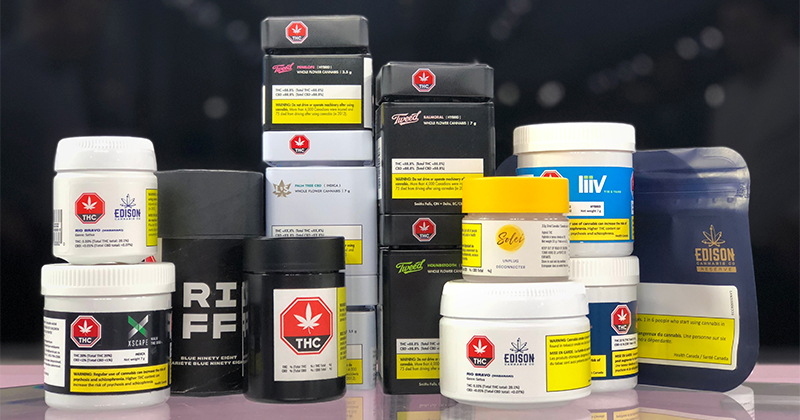
The most popular cannabis strains in Canada since legalization
It's now been three months since cannabis became legal in Canada. It's a good time to take a look at the cannabis strains that have most piqued the...
-
 January 19, 2017
How many jobs has the legal cannabis industry generated in the USA?
Currently, 122,814 people are employed full-time in the legal cannabis industry in the United States. Yet these jobs are not recognized by the federal government....
-
 22 June 2015
Leafly and the first cannabis commercial
A cannabis company advertising in the New York Times would have been unimaginable two or three years ago....





Boston will host the 10th annual State of the Cannabis Industry Conference on October 26

A DEA report confirms that there are no fatal cannabis overdoses

A British patient is challenging the NHS's refusal to reimburse medical cannabis

October 2026 CBD Highlights: 10 Strains and Hash to Discover from 5 French Producers

CBD in France: Traceability, Retail Stores, THC and Driving… What the New Bill Proposes

Organigram Enters the Race for Aurora Cannabis

Medical Cannabis: Augur Associates’ latest report provides an update ahead of the publication of the decrees

Golden Buds is relaunching its Nova High vape pens with a cannabinoid formula that’s out of the ordinary

Cannabis is now Canada's fifth-largest commercial crop
