
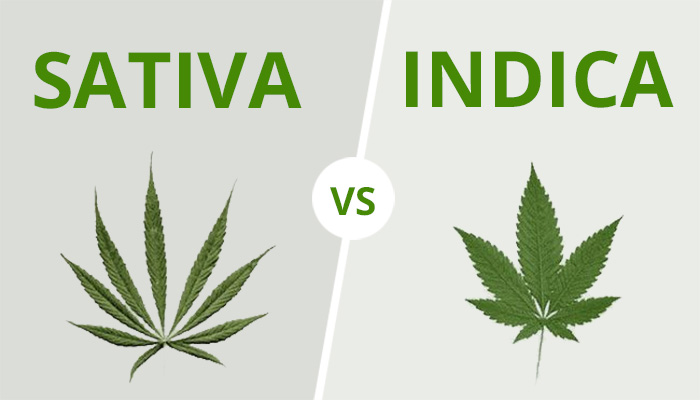
What are the differences between indica and sativa cannabis?
All plants are classified according to a system that dates back hundreds of years. The Cannabis sativa L. is the binomial name of the cannabis plant, which belongs to the Cannabinaceae or Cannabaceae family, and includes other plants such as hops and hackberry.
In practice, there are two main subspecies of Cannabis: sativa and indica. Other variations exist in the form of hybrids (a plant created by crossing indica and sativa) or subspecies such as the Cannabis Ruderalis which is less widespread and is mainly used to create autoflowering cannabis varieties.
The difference between Indica and Sativa cannabis is based on four main criteria: geographic origin (mountainous regions of Central Asia for Indica, equatorial regions for Sativa), morphology (Indica is compact and stocky, while Sativa is tall and slender), the flowering cycle (7 to 9 weeks for indica versus 10 weeks or more for sativa), and the perceived effects (more relaxing and physical for indica, more stimulating and cerebral for sativa). However, these distinctions—both botanical and related to effects—are increasingly being challenged by researchers in favor of a classification based on terpene profiles.
So let's take a look at the differences between sativa and indica cannabis varieties :
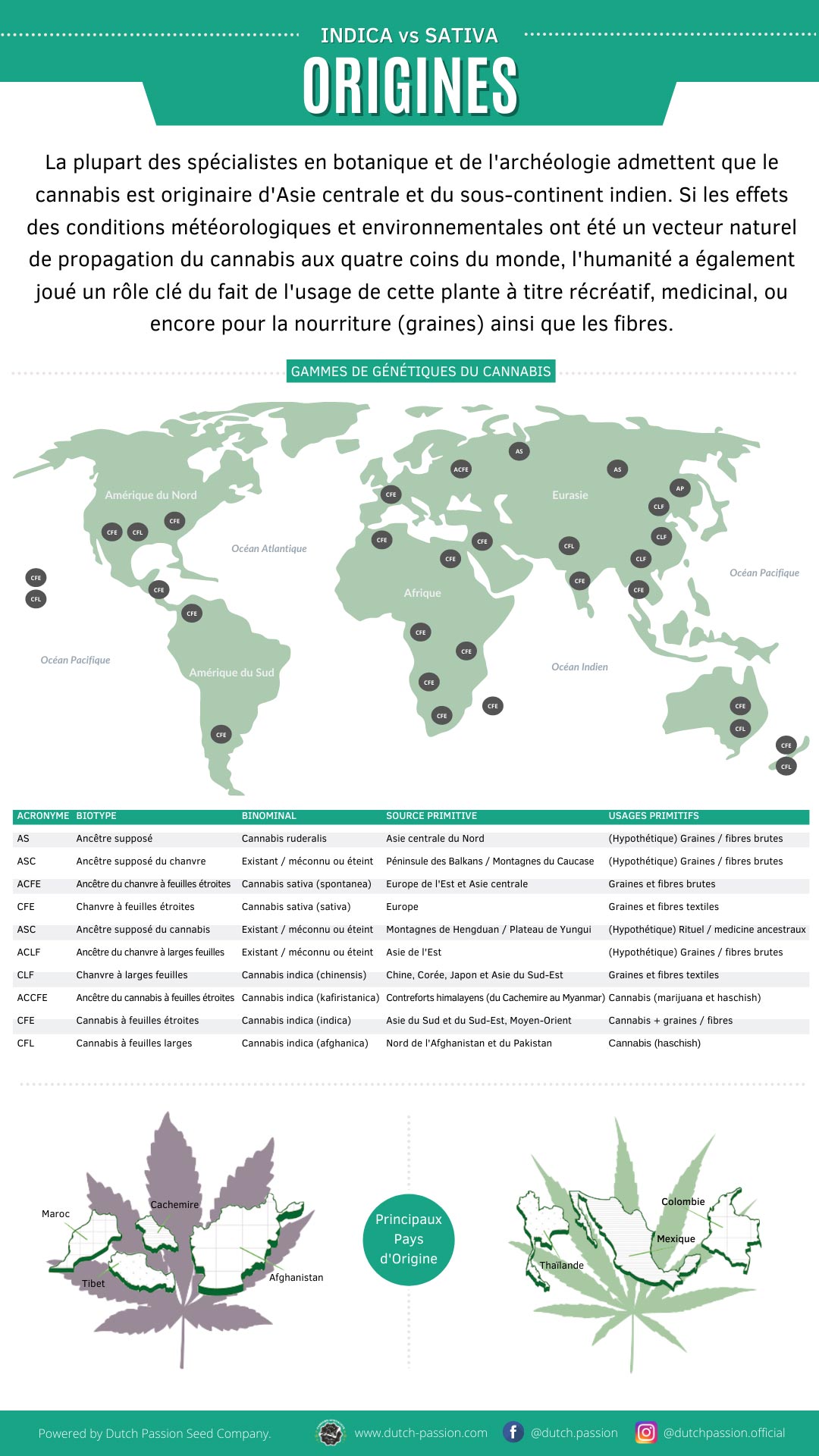
Geographical origins
The cannabis sativa varieties originally grow around the equator and can be found in Colombia, Mexico, Thailand and several African countries.
The indica cannabis strains grow at high altitudes, mainly in countries known for their hashish cultivation, such as Morocco, Afghanistan, Nepal and the United States. Turkey.
However, the Cannabis sativa (“cultivated” in Latin) is considered the most popular subspecies in the field of cannabis cultivation over the past few decades. It was classified as such by the scientist Carl Linnaeus in 1753. In his taxonomic work, the Swedish botanist chose the name Cannabis sativa L, because he was unaware of the existence of other species. There are several hypotheses concerning the birth of the plant, some of which place its origins in tropical regions and equatorial regions such as Colombia or Mexico, or even certain African countries, while other theories favour the idea of an appearance in the Himalayan mountain regions, in Asia.
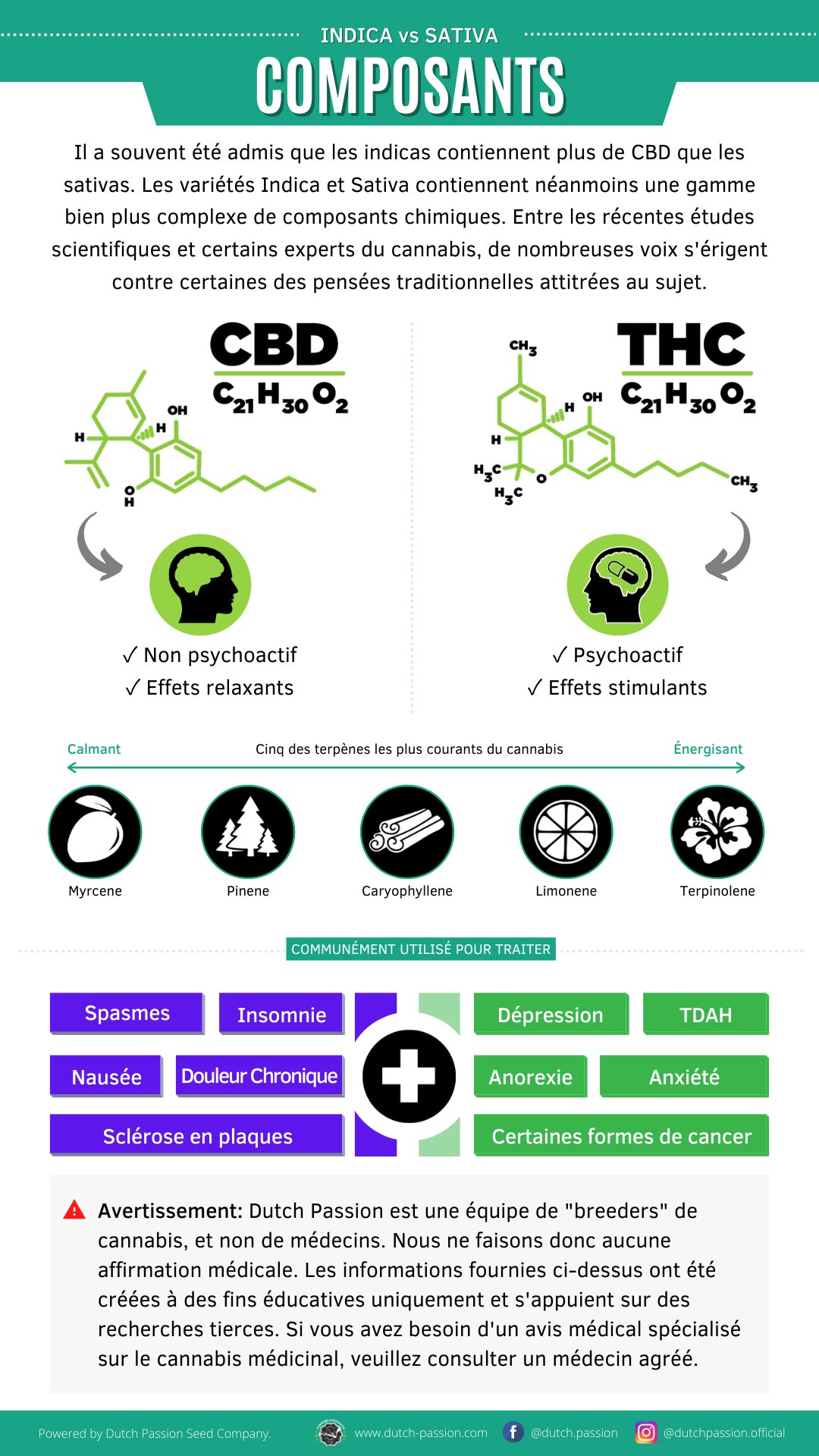
It was the French naturalist Jean-Baptiste Lamarck who, a few years later, attributed the name Cannabis Indica to plants arriving from India, which had more medicinal and therapeutic properties. The first data collected on this subspecies suggest that it finds its origin in Central Asia, more precisely in Afghanistan, Tibet and Pakistan. Due to its particularly high cannabidiol (CBD) content, its use is often associated with relief of various body aches or mental disorders.
Appearance and size
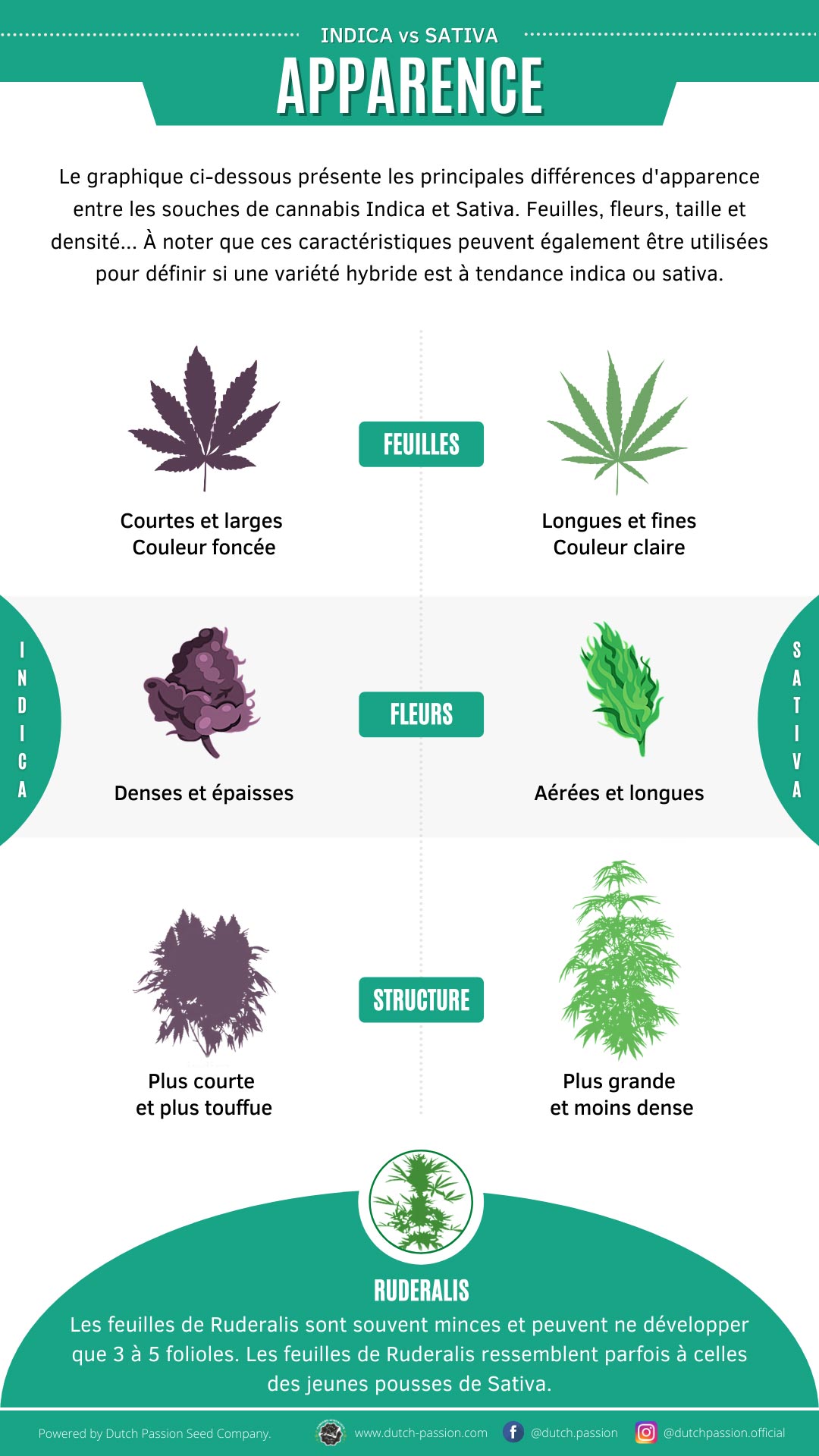
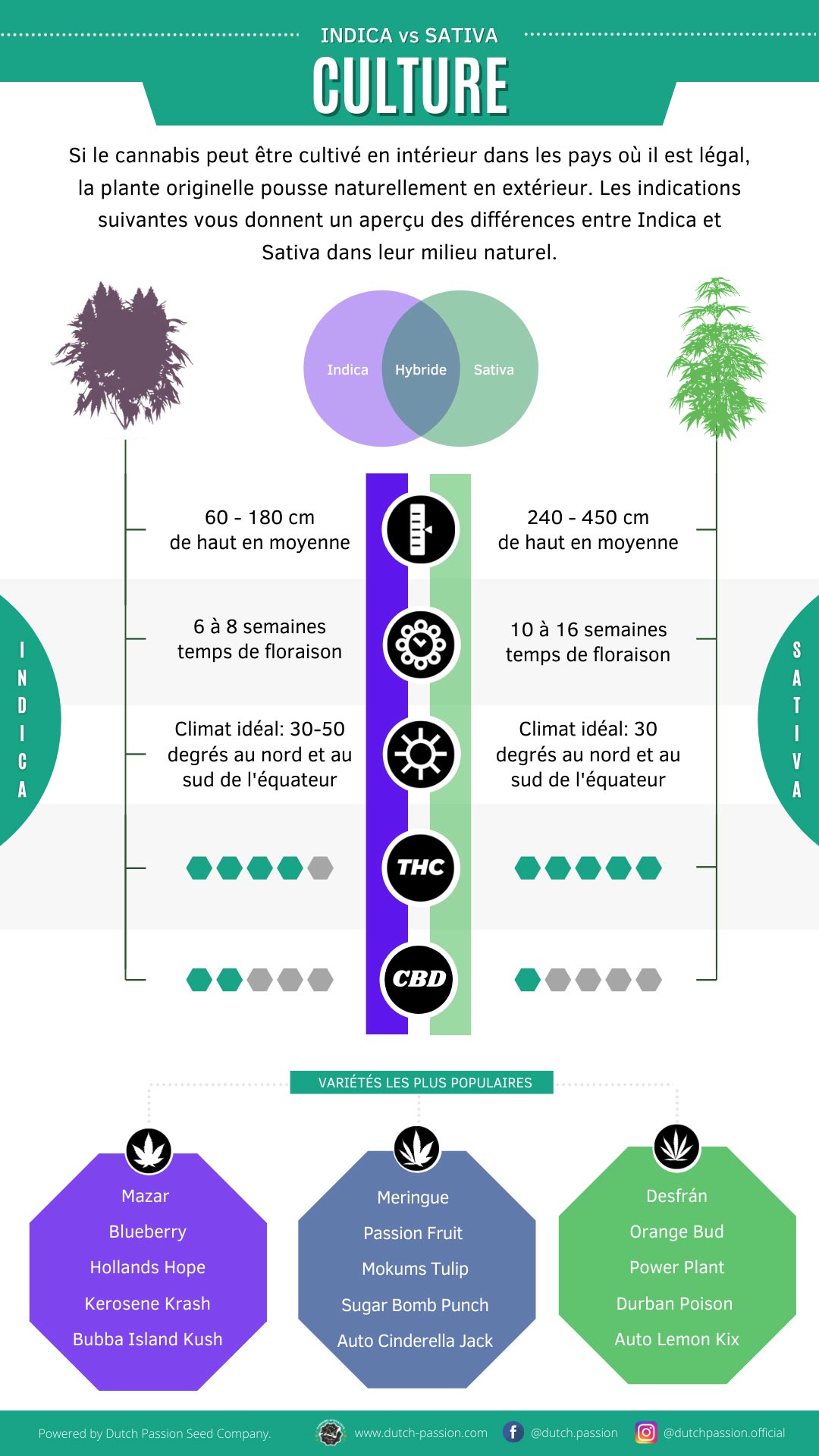
The sativa will always be bigger than their sisters indica. A foot of sativa can reach 1m80, while the’indica rarely exceeds 90cm. This difference is largely due to the geographical origins of each of the two subspecies. Sativa buds are often longer and less dense. They grow on the branches of the plant rather than at the base of each node. Sativa leaves are generally long and thin.
The sativa have evolved with the particular climate found around the equator (short, regular periods of sunshine), while the indica have not had to struggle to capture the sun, giving them a bushy appearance. Sativa flowers generally grow between the nodes of each branch, which tends to give them a clustered shape and a certain density. The leaves of indica plants are shorter and broader than those of sativas.
In addition, another fundamental difference between the two subspecies lies in the duration of the flowering. Most of the cannabis varieties Sativa strains have a longer flowering period and will not be fully mature until after ten weeks. To survive hot, humid climates, these plants have evolved over time to become a taller, more elongated structure, It has developed a major resistance to mildew, fungus and the risk of flower rot.
For their part, the indica plants usually blossom after a period of flowers for 7 to 9 weeks, This means they are less exposed to pest attacks or other types of infestation that can considerably reduce harvest volume. In addition, thanks to their resistance, indica plants better withstand low temperatures, They produce very attractive purple, violet or reddish calyxes.
What are their main organoleptic differences?
The cultivation of these two types of cannabis genetics has made it possible to determine the specific virtues of each over time. On the subject of terpene profiles, it is worth mentioning that plants sativa generally present a higher terpene content such as carene, cineol and terpinolene. Concentrations of these phytochemical molecules give rise to genetics offering smells and tastes with more citrus, ammonia, pungent notes, and incense and wood, These flavors are reminiscent of gasoline and are similar to the most classic cannabis flavors and aromas, even tropical and floral.
Stumps indica, for their part, have a concentration important limonene and myrcene, which also implies a citrus flavour, albeit combined with notes of sweet and musky. They also feature earthy and dried fruit, as in the various strains of Kush, But they can have a more woody smell, like the different varieties of Skunk and hybrid Indicas.
Indica varieties, embodied by’OG Kush, are often considered the strongest-smelling cannabis strains. They are said to contain 16% more terpenes than Sativa varieties.
Some also believe that the indica/sativa distinction is defined by a myrcene level above or below 0.5%, with Sativa having -0.5% myrcene.
| Criterion | Sativa | Indica |
|---|---|---|
| Geographic Origin | Equatorial regions (Colombia, Mexico, Thailand, Africa) | Mountainous regions (Morocco, Afghanistan, Nepal, Turkey) |
| Size | Up to 1.80 m | Rarely more than 90 cm |
| Leaves | Long and thin | Short and wide |
| Flowering Period | ~10 weeks or more | 7 to 9 weeks |
| Yield | Generally lower | Generally higher |
| Dominant terpenes | Carene, cineole, terpinolene | Limonene, myrcene |
| Effect Profile | Intellectual, stimulating, energizing | Physical, relaxing, soothing |
| Intended Use | Day, Creative Activities | Evening, relaxation |
Difference in effects
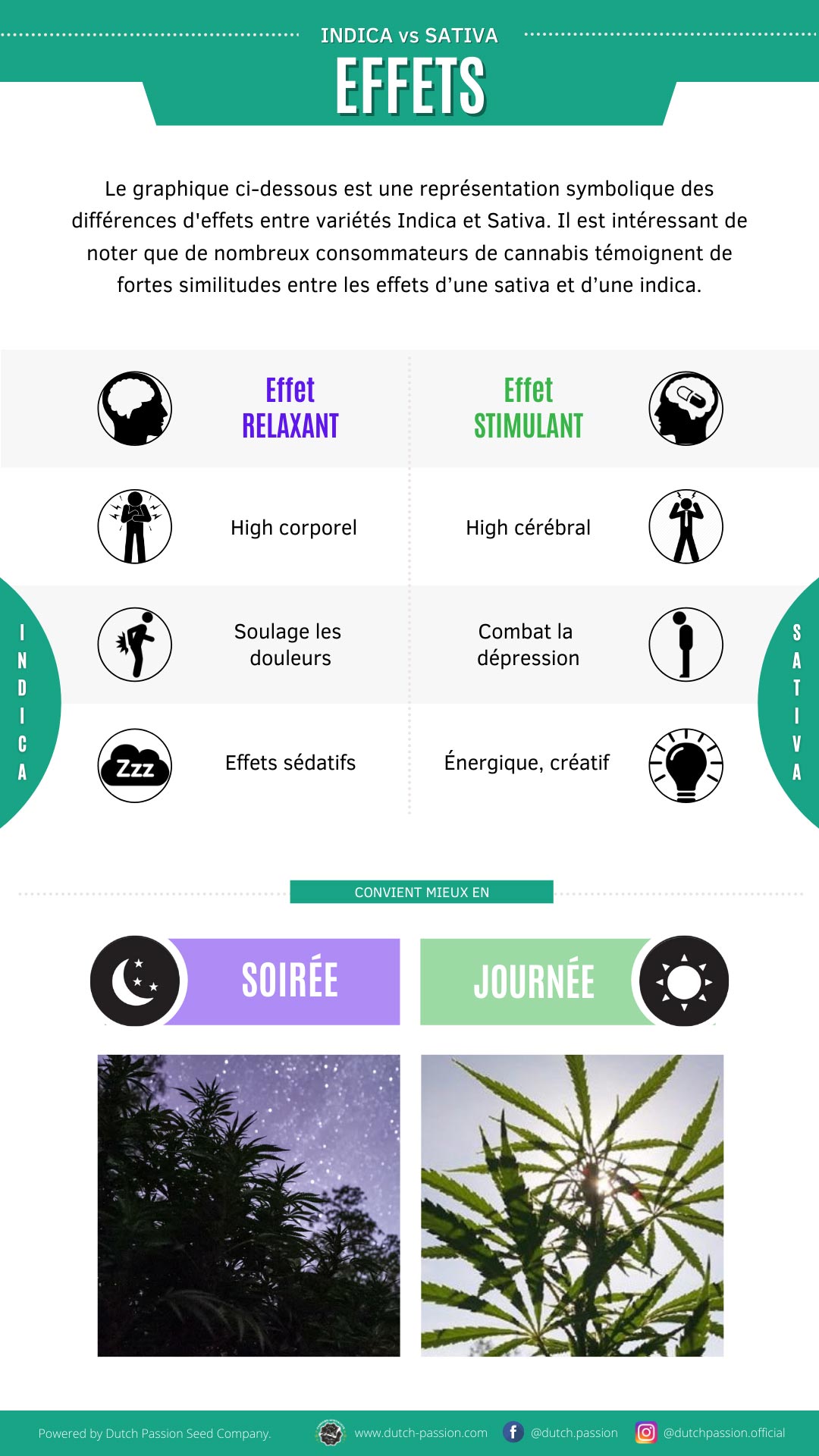
The botanical designation indica / sativa has historically been associated with different effects.
In terms of therapeutic cannabis, varieties of’indica have the best analgesic effects, while sativa have a higher ratio of THC / rate cannabidiol.
The sativa promote cerebral activity, whereas the indica more easily produce a relaxing effect, calming stress and mood.
For recreational users, the difference between indica and sativa will depend on the type of sensation. Sativas often provide a high stimulating and energizing effects, while indica products produce a stone and a feeling of relaxation. Sativas are best suited to daytime use or festive evenings, while indica goes well with a quiet evening alone, with friends or lovers.
However, the botanical distinction no longer makes much sense, as Dr. Ethan Russo believes, since most varieties are hybrids and provide balanced effects. It has also been proven that the effects depend more on terpenes than cannabinoids.
Flowering
The sativas generally take longer to flower than the indicas, This is mainly because the plants are taller. Although the sativa varieties marketed today have been bred to flower at around 10 weeks, some landraces still take their time, at over 18 weeks, and much longer for the sativa varieties of zamal.
The indicas flower after 8 to 10 weeks, whereas the sativas can flower in twice the time, although for both species specific inputs can accelerate flowering.
Yield
In general, the’indica produce more than sativa. In practice, some’indica such as the OG Kush, produce significantly less than their counterparts.
Indica has historically been used to make the best-known hashes: manala cream and charas.
Here are the main differences between indica and sativa, illustrated by Dutch Passion.
FAQ: Indica and Sativa
What is the main difference between indica and sativa?
Sativa is a tall, slender plant native to equatorial regions, with a long flowering period (10 weeks or more) and effects that are primarily cerebral and stimulating. Indica is a compact plant native to the mountainous regions of Central Asia, with a shorter flowering period (7 to 9 weeks) and effects that are more physical and relaxing.
Indica or sativa—which is more potent?
Neither is inherently more potent: the perceived potency depends primarily on the strain’s terpene profile and cannabinoid content, not on its botanical classification. Indica strains, however, are said to contain, on average, more terpenes than sativa strains.
How can you tell an Indica from a Sativa just by looking at it?
A sativa has long, narrow leaves and a tall, airy shape. An indica has short, broad leaves and a compact, bushy shape with denser buds.
What is a hybrid variety?
A hybrid is a plant resulting from the crossbreeding of a sativa and an indica, combining characteristics of both subspecies. The vast majority of varieties sold today are hybrids.
Does the indica/sativa distinction still have any scientific significance?
More and more researchers, such as Dr. Ethan Russo, believe that this botanical distinction is becoming less relevant: the effects experienced seem to depend more on each strain’s terpene profile than on its classification as indica or sativa.













CBD is said to promote athletic recovery, without improving performance

294 cannabis clubs in Chile: a booming movement with uneven distribution

Chronic Sciatica: New York Approves First Clinical Trial of a THC-Based Medication

United States: The DEA is accelerating the integration of medical cannabis at the federal level

Florida is nearing one million patients using medical cannabis

Uruguay Revives Its Plan to Allow Tourists to Legally Access Cannabis

In Brazil, researchers are developing an innovative CBD eye drop

Autism: Medical Cannabis Is Linked to Reduced Anxiety

The $28 billion U.S. hemp market remains under threat

