
How 193 cannabis genomes could revolutionize health, industry and the planet


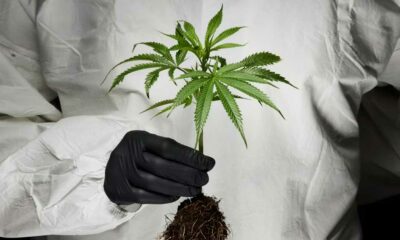
Led by researchers from the Salk Institute, in collaboration with Oregon CBD, theOregon State University and the HudsonAlpha Institute of Biotechnology, the team produced the cannabis pan-genome the most comprehensive to date. Compiled from 193 different cannabis genomes, this genetic map reveals astonishing diversity and lays the groundwork for accelerated breeding in the fields of medicine, agriculture, and industry.
«Cannabis is one of the most extraordinary plants on Earth,» said Todd Michael, lead author of the study and research professor at the Salk Institute. «Thanks to this new genomic map, we can now apply modern breeding techniques to discover new compounds and traits in the fields of agriculture, medicine, and biotechnology.»
Unleashing the plant's chemical arsenal
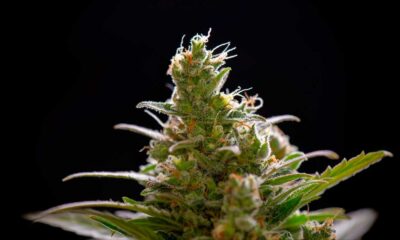
The Cannabis Sativa L. is a veritable chemical goldmine. It can produce more than 30% of its dry weight in cannabinoids and in terpenes, small molecules synthesized in the glandular trichomes that cover the plant's flowers. These compounds serve as a natural defense mechanism for the plant, but are used by humans for their therapeutic, aromatic, and psychoactive effects.
Among them, the CBD (cannabidiol) and the THC (tetrahydrocannabinol) are the best known. The popularity of varieties such as the Charlotte's Web, known for its antiepileptic properties, has, for example, promoted the acceptance of CBD by the general public and sparked renewed scientific interest.
However, despite the The Versatility of Cannabis, ranging from biofuels to edible oils, its genomic architecture remained a mystery for a long time. Legal restrictions prevented systematic selection and research, leaving many traits unexplored and underdeveloped.
A breakthrough in genomic technology
Traditional genetic studies have encountered difficulties with cannabis because of its complex genome. Since only 5% of the plants, the cannabis is dioecious, which means there are distinct male and female plants. Its genome is also saturated with’transferable elements, segments of DNA that «jump» around the genome, making sequencing and analysis more difficult.
The team overcame these challenges by using long-read sequencing technologies, which make it possible to decode thousands of base pairs at once, rather than piecing together fragmented sequences. This approach allowed them to map the two sets of chromosomes (one from each parent) in a process called haplotype resolution, a first for cannabis.
«We are among the first to apply this long-read technology on a large scale in the context of the pan-genome,» said the co-lead author Lillian Padgitt-Cobb, a postdoctoral researcher in Michael's lab.
«This gives us all this information about structural variations and gene order »which can inform final decisions regarding the selection of desirable traits in cannabis plants."
Hidden Diversity and Opportunities for Innovation
The pan-genome study, which examined 144 plants from around the world, revealed a surprising level of genetic diversity. By mapping the two sets of chromosomes in each plant, the team assembled 193 genomes, 181 of which had never been cataloged before.
These results call many assumptions into question. Only 23 % of genes were found in all genomes, whereas 55 % were almost universal and 21 % varied from one genome to another. Surprisingly, the genes associated with fatty acid metabolism, to the growth and plant protection were the most variable, thus providing a pool for new selection strategies.
Among the most important discoveries is the genetic basis of the tetrahydrocannabivarin (THCV), a lesser-known cannabinoid that is attracting growing interest in its energizing and non-psychotropic effects. Researchers have found that variations in the fatty acid biosynthesis pathway determine THCV production, thereby opening up a new frontier in the functional breeding of cannabis.
In addition, the genes THCAS and CBDAS, which are responsible for the synthesis of THC and CBD, have been found to be integrated into transposable elements, suggesting that human-directed selection—the breeding – has contributed significantly to the species’ genomic diversity.
Rethinking Selection: The Role of Male Plants
The study also highlights the sex chromosomes in cannabis. For years, modern selection has prioritized feminized seeds by inducing female plants to produce male flowers, thereby eliminating any contribution from the Y chromosome. But this shortcut could come at a cost.
«There are genes found only in «father» plants that can be used to select for higher-performing offspring,» the authors write. By ignoring the male genome, breeders could miss out on valuable traits related to vigor, resilience, or even the production of new compounds.
According to Ryan Lynch, another co-lead author, believes that incorporating this genetic knowledge into commercial breeding could spur significant growth: «Once market interest aligns with this new knowledge about the cannabis genome—which can guide breeding efforts—I think the hemp and hemp oils »will experience significant growth in applications for human health and industry."
What's next?
The research team hopes that the cannabis pan-genome will serve as an open and dynamic resource for scientists, breeders, and policymakers around the world. This knowledge could guide the precise selection in order to develop cultivars suitable for medical applications, for the’sustainable agriculture and even to bioindustrial applications such as alternative jet fuels or seed oils with high nutritional value.
The study also points to the probable existence of a wild ancestor of cannabis in Asia, which could harbor untapped genetic traits shaped by unique environmental conditions. The discovery and sequencing of such a plant could further expand the pan-genome and provide even more tools for global crop development.
How was that possible?
The creation of this unprecedented genetic map of cannabis was made possible only through the combination of the scientific perseverance, the’technological innovation and the’regulatory changes. Visit the U.S. Farm Bills of 2014 and 2018, which legalized hemp research and cultivation, played a decisive role. They provided researchers with the legal framework needed to collect plant samples, collaborate across institutions, and apply advanced genomic techniques to a crop that had previously been relegated to the fringes of science.
According to Todd Michael: « These same legal restrictions have spurred an underground revolution in breeding, revealing the power of cannabis as a chemical factory. »But today, with changing policies and scientific advances, cannabis is stepping out of the shadows, armed with a genome, a roadmap, and a future.".
















Contest: Win a trip to Quebec to experience the hemp harvest firsthand

Bedrocan on Hold Amid Uncertainty Over Medical Cannabis

Newsweed Launches Its Own AI
A new tax of 0.5% could disrupt the hemp industry in Canada

Medical Cannabis and Driving: New South Wales Ends Automatic Penalties for THC

China's Yongji Health Takes Control of Tasmanian Botanics

Autism and Cannabis: Results from the First Placebo-Controlled Trial of NTI164

Which countries legalized medical cannabis before France?

From the boom in dispensaries to a purely medical approach: Thailand is revising its cannabis policy

South Korea is preparing to begin local production of medical cannabis to meet rising demand
-
 Cannabis and driving3 weeks ago
Cannabis and CBD: French Drivers Can Now Lose Their License Even Without a Positive Test Result
-

 Cannabis in France5 days ago
Which countries legalized medical cannabis before France?
-
Cannabis in France3 weeks ago
Cannabis Legalization: The LFI Bill Has a Major Problem—THC
-
Cannabis in the Netherlands2 weeks ago
One year after the launch of the Dutch cannabis experiment, the first trends are emerging
-
Business6 days ago
South Korea is preparing to begin local production of medical cannabis to meet rising demand
-
Cannabis in Thailand5 days ago
From the boom in dispensaries to a purely medical approach: Thailand is revising its cannabis policy
-
Cannabis in Argentina2 weeks ago
Argentina Opens Its Market to Hemp Flowers Containing 1% of THC
-
Cannabis in France2 weeks ago
French medical cannabis remains stalled at the Ministry of Health












You must be logged in to post a comment Login