Dutch scientists solve the mystery of the origins of THC, CBD and CBC

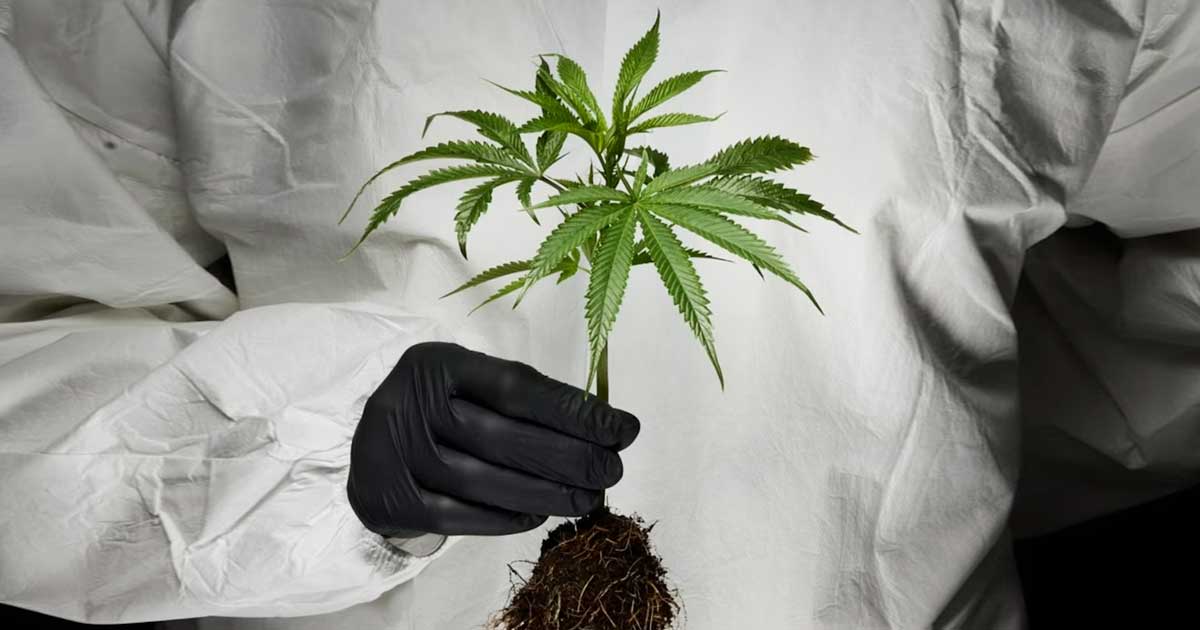
For decades, scientists have known how cannabis produces its main cannabinoids, but are unaware of the why these molecules exist in their current form.
A new study conducted by researchers at the’Wageningen University and Research Center (WUR) is now shedding light on the evolutionary origins of the THC, from CBD and CBC, revealing that these compounds are the result of a long process of trial, error and enzymatic specialization.
Published in Plant Biotechnology Journal, This research combines evolutionary biology, molecular genetics and biotechnology to experimentally retrace the history of the human body. how cannabis has developed its unique chemical profile.
From a flexible enzyme to specialized cannabinoid synthases
In the Cannabis sativa modern, the production of THC, CBD and CBC depends on highly specialized enzymes called cannabinoid oxidocyclases. Each enzyme converts the same precursor molecule, the’cannabigerolic acid (CBGA), into a different cannabinoid acid, which can then be converted to its neutral form by heat.
However, according to the WUR team, this precision is a relatively recent evolutionary development. By reconstructing ancient enzymes that existed millions of years ago, the researchers demonstrated that the first cannabinoid-producing enzymes were versatile: they could generate several cannabinoids at once.
«It was only after genetic duplications that enzymes began to specialize,» explains Robin van Velzen, one of the study's authors. In evolutionary terms, cannabis has evolved from a «Swiss Army knife» enzyme to a finely-tuned set of molecular tools.
Bringing extinct enzymes back to life in the lab
To reach these conclusions, the researchers used a method called reconstruction of ancestral sequences. By comparing the DNA of modern Cannabis plants and their close relatives such as hops, they calculated what the ancestral enzymes probably looked like. These extinct enzymes were then recreated and expressed in yeast cells for testing purposes.
The results were striking. The oldest reconstructed enzyme capable of metabolizing CBGA simultaneously produced THCA, from CBDA and CBCA. Subsequent evolutionary stages reduced this activity, leading eventually to the THCA synthase and CBDA synthase highly selective.
Above all, the study provides the first experimental evidence that cannabinoid biosynthesis arose within the Cannabis lineage itself, rather than having been inherited as such from a distant plant ancestor.
Why the CBC could be of particular importance
Among the discoveries, the CBC is particularly noteworthy. Researchers have identified an ancestral variant of the enzyme that preferentially produces CBCA, the acid precursor of CBC. This is remarkable because no known cannabis variety naturally produces high levels of CBC, despite growing interest in its properties anti-inflammatories and analgesics potential.
«There are currently no cannabis plants with a high CBC content,» explains van Velzen. «Introducing this enzyme into a plant could lead to the creation of innovative medicinal cultivars.»
This observation reinforces the idea that CBC may have been one of the first cannabinoids produced by the ancestors of cannabis, before evolutionary pressures favored THC and CBD.
Implications for biotechnology and medical cannabis
In addition to evolutionary insights, the study has direct implications for the biotechnological production of cannabinoids. The reconstituted ancestral enzymes proved easier to express in micro-organisms than modern enzymes, a key advantage for the manufacture of cannabinoids by fermentation.
While pharmaceutical interest in cannabinoids is growing, microbial production is often presented as an evolutionary alternative to cultivation. However, the low efficiency of enzymes remains an obstacle. According to the authors, ancestral enzymes could provide a more solid starting point for industrial applications.
«What was once evolutionarily «unfinished» is now proving very useful,» notes van Velzen, highlighting how ancient biology can inspire modern innovation.
A clearer picture of the evolution of cannabis
On the whole, this research reframes cannabinoids not as fixed traits, but as the result of evolutionary experimentation. The THC, CBD and CBC are the survivors of a much larger chemical landscape, shaped by gene duplication, mutation and natural selection.
For Cannabis science, this study fills a long-standing gap in our understanding of the formation of the plant's characteristic compounds, while opening up new avenues for breeding, biotechnology, and medical research.
















«Vincy Gold»: Humboldt Seed Company on the Hunt for Saint Vincent Sativas

Cronos Completes the Acquisition of CanAdelaar for 57.5 million euros

Cannabis with a "bloody" twist: Discover Sensi True Blood and Sensi Sangria, the two new strains from Sensi Seeds

Hemp: The Council of the EU Takes a Stand on New Production and Marketing Rules

Missouri's legal cannabis market accounts for 93 % of consumer spending

THC Gummies: How to Read a Certificate of Analysis Before Buying

British patients now have access to THCV-rich cannabis flowers

Spain: Medical Cannabis Is Coming to About 50 Hospitals

JIHE 2026: Japan’s Largest Trade Show Dedicated to Hemp and CBD Returns to Tokyo with More Than 100 Industry Players

New Caledonia: The Courts Clear the Way for the Return of CBD
-
 Business3 weeks ago
The legal cannabis market in New York exceeds 4 billion $ in revenue
-

 Cannabis in France4 weeks ago
Which countries legalized medical cannabis before France?
-
Cannabis in France1 week ago
France already has 3,000 cannabis retail outlets. None of them are legal.
-
Business4 weeks ago
South Korea is preparing to begin local production of medical cannabis to meet rising demand
-
Cannabis in the U.S.1 week ago
A DEA report confirms that there are no fatal cannabis overdoses
-
Cannabis in Thailand4 weeks ago
From the boom in dispensaries to a purely medical approach: Thailand is revising its cannabis policy
-
Cannabis and driving4 weeks ago
Medical Cannabis and Driving: New South Wales Ends Automatic Penalties for THC
-
Cannabis in France3 weeks ago
France’s Drug Policy Chief Defends Cannabis Prohibition... and Runs Into the Facts















You must be logged in to post a comment Login