UN votes to ban HHC

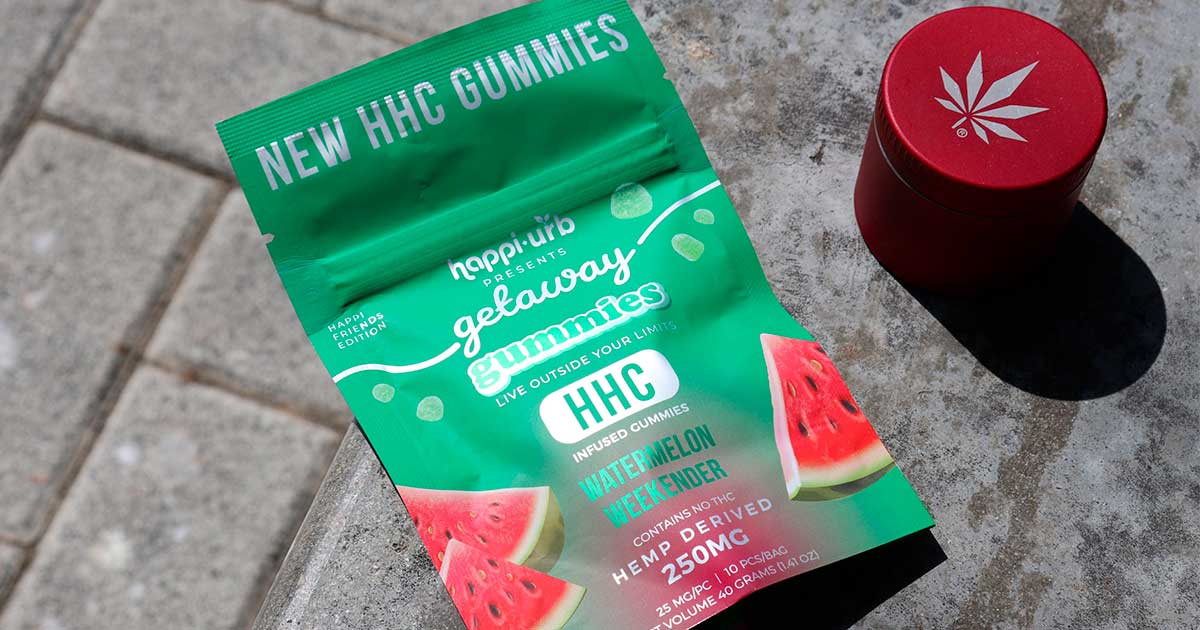
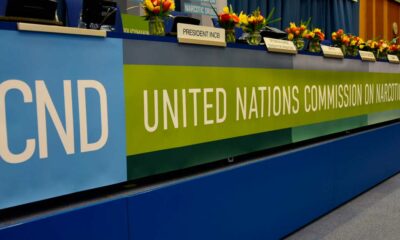
The United Nations Commission on Narcotic Drugs (CND) ) has officially decided to register the’hexahydrocannabinol (HHC) at schedule II of the 1971 convention on psychotropic substances.
This decision, taken at the 68th session in Vienna, prohibits the non-medical use of hexahydrocannabinol in the 184 signatory countries of the agreement.
The HHC classification aligns it with substances such as cannabis and methamphetamine. As a result, governments must now set up licensing systems for the production, distribution and research, Unauthorized possession or sale may result in criminal penalties.
An almost unanimous decision, with one American abstention
The decision required two-thirds majority, or at least 36 votes in favor. In the end, a large number of countries supported the ban. United States having refrained from vote. Visit France, Germany, the UK, Canada, Brazil, China, Japan and South Africa, among others, voted in favor of the ban.
The American delegation abstains raised a few eyebrows, especially considering the country's ongoing fight against «intoxicating substances in hemp» unregulated.
According to the U.S. representatives, hemp is already regulated by national laws, although its legal status in the U.S. is still uncertain. federal level remains ambiguous. At present, the Controlled Substances Act (CSA) does not explicitly mention hemp, which leaves its classification open to interpretation in the context of the 2018 farm bill.
The rapid spread and regulation of HHC
HHC, a semi-synthetic cannabinoid, has established itself as a legal alternative to delta-9 THC since 2022. According to the’European Medicines Agency (EUDA)), HHC was detected in 70% from EU member states and is monitored as part of the early warning system (EWS) since October 2022.
WHO recommendation to ban HHC cites public health concerns, stating that it «poses a public health risk and has no recognized therapeutic use».
Some argue that the lack of sufficient research makes the decision premature.
According to a European drug survey conducted in 2024, 14% of those surveyed have used synthetic cannabinoids in the past year, ranking them among the most widely consumed substances in the EU.
Divergent international responses
While many governments have welcomed the UN's decision, others have adopted a different approach. more cautious approach.
The Czech Republic was opposed to an immediate ban on HHC, opting instead for a « under review »as part of its new law on mood-altering substances. This framework provides for evaluation period from two years to assess potential risks and benefits new psychoactive substances. Visit Czech Rational Addiction Policy Think Tank openly criticized the CND's decision, arguing that the WHO's risk assessment was inadequate and lacked scientific rigor.
Meanwhile, in Ireland, calls for a total ban on HHC have intensified. Addiction specialists and religious leaders claim that the substance has contributed to an increase in drug-induced psychosis among young people. Dr. Bobby Smyth, a leading child psychiatrist, has declared that HHC is now «the second leading cause of drug-induced psychosis» in the country, without corroborating figures.

















JIHE 2026: Japan’s Largest Trade Show Dedicated to Hemp and CBD Returns to Tokyo with More Than 100 Industry Players
New Caledonia: The Courts Clear the Way for the Return of CBD

The Brazilian medical cannabis market continues to grow

Morocco: Three Cannabis-Based Medications Approved for the Treatment of Epilepsy

Canopy Growth Receives New EU-GMP Certification to Strengthen Its Presence in Europe

Three years after legalizing medical cannabis, Albania continues to establish regulations for it

The first plant-based medical THC spray arrives in the United Kingdom

Medical Cannabis in Germany: THC Prices Vary by a Factor of 12

France already has 3,000 cannabis retail outlets. None of them are legal.

Morocco's exports of legal cannabis have expanded to 15 countries
-
 Business2 weeks ago
The legal cannabis market in New York exceeds 4 billion $ in revenue
-

 Cannabis in France4 weeks ago
Which countries legalized medical cannabis before France?
-
Business4 weeks ago
South Korea is preparing to begin local production of medical cannabis to meet rising demand
-
Cannabis in France4 days ago
France already has 3,000 cannabis retail outlets. None of them are legal.
-
Cannabis in Thailand4 weeks ago
From the boom in dispensaries to a purely medical approach: Thailand is revising its cannabis policy
-
Cannabis in the U.S.5 days ago
A DEA report confirms that there are no fatal cannabis overdoses
-
Cannabis and driving3 weeks ago
Medical Cannabis and Driving: New South Wales Ends Automatic Penalties for THC
-
Cannabis in France3 weeks ago
France’s Drug Policy Chief Defends Cannabis Prohibition... and Runs Into the Facts















You must be logged in to post a comment Login