563 coffeeshops, 103 cities: the latest Dutch Cannabis Observatory reveals

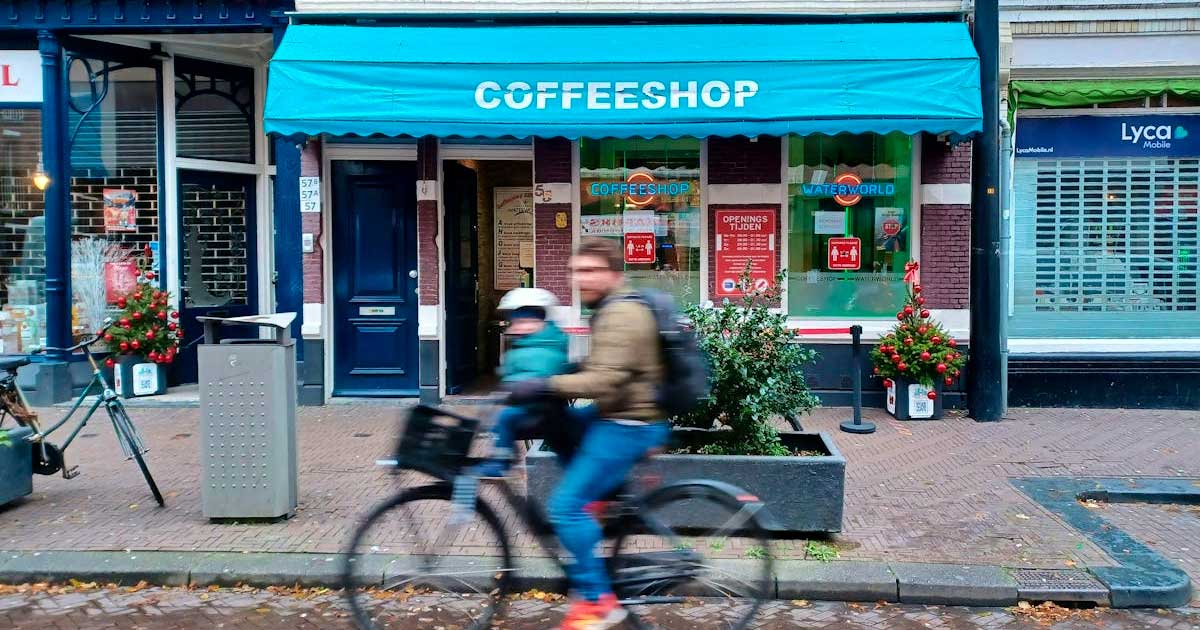
The latest version of the «Coffeeshop Monitor,» produced by Breuer&Intraval on behalf of the Ministry of Justice and Security, and reported by CannabisIndustrie.nl, presents a detailed overview of the situation of Dutch coffee shops in 2024. This national monitoring has been carried out since 1999.
At the end of 2024, the Netherlands had 563 tolerated coffee shops in 103 out of 342 municipalities, 556 of which were open at the time of the survey. This marks the continuation of the stabilization trend observed since 2017. It should be noted that, for the first time since 2010, a new municipality has joined the list of municipalities authorizing coffeeshops.
Most coffee shops (66%) operate as places of consumption, allowing customers to consume cannabis on-site (without tobacco), while 26% operate as takeout counters. This shift towards takeaway sales is partly linked to the ban on smoking rooms in 2021, which altered the role of coffee shops as social spaces.
Municipal policy and regulation
The ban on coffee shops remains a majority choice among Dutch municipalities. By the end of 2024, 233 municipalities (68%) had a zero-tolerance policy in place, refusing to allow coffee shops, while only 103 had an active policy on the matter. Six municipalities (2%) had no official policy.
Of the municipalities with coffee shops, 99% enforces a maximum limit policy, limiting the number of stores that can operate locally. In practice, 10 municipalities are operating below their maximum threshold, while three are exceeding it. Some municipalities also conclude regional agreements in order to coordinate the number of coffee shops and apply the «criterion I» which limits sales to Dutch residents.
In addition, the Bibob law, which allows municipalities to verify the integrity of applicants, has been implemented in nearly half (47%) of the municipalities, as part of an effort to prevent criminal infiltration in the cannabis sector.
Acceptance Criteria and Application
Almost all municipalities adhere to the national criteria HI THERE – that we approach in our last video :
- A no ads
- H no hard drugs
- O no public nuisance
- J no minors (under 18 years of age)
- G No sales above 5 grams per person
- I Sale restricted to residents
A maximum stock of 500 grams per coffee shop is also mandatory. If most municipalities officially include these rules, the residency criteria remains the least implemented: only 2 out of 3 municipalities actively prioritize its enforcement.
The application of the law is generalized, 85% for municipalities using formal sanction frameworks. Generally, a progressive system is applied: first a warning, then a temporary closure, with permanent closure or license revocation possible in case of repeated or serious violations. Some municipalities act more decisively against the sale of hard drugs or violations committed by minors, imposing immediate closures.
Between 2023 and 2024, authorities recorded 38 infractions in 15 municipalities, mainly related to exceeding the maximum limit of 500 grams. This resulted in 16 sanctions, including six warnings, nine temporary closures, and one indefinite closure that was subsequently overturned by the courts. Hence the demand from some coffeeshops to be able to go up to 1000 grams.
External influences on policy
Beyond national regulation, several external factors have shaped local coffee shop policy:
- Smoking Area Ban (2021): In 13 municipalities, this measure has transformed coffee shops, which have gone from meeting places to points of sale for takeaway, thus weakening their role as spaces for controlled consumption.
- Closed coffee shop chain experience: in 22 municipalities, the Pilot project regulating legal supply Cannabis has sparked political debate, with 13 of them making adjustments such as new licensing rules or new enforcement strategies.
- Cannabis Legalization in Germany (2024): the partial legalization in Germany has prompted at least seven Dutch border municipalities to reconsider their own policies, with three already monitoring visitor flows or re-evaluating the distribution of shops
- Rare licenses and rights: For the first time, municipalities were surveyed about licensing reforms. 31 1Q3Q: Changes are expected, including lotteries or point systems to more transparently award the rare coffee shop permits
The 2024 report on coffee shops highlights a system Stable but evolving prudent. The total number of coffee shops has remained stable for nearly a decade, while local authorities continue to refine their policies to strike a balance between public order, health, and legal obligations.
Emerging external pressures, whether through legalization in Germany or national experiences with regulated supply, signal greater changes in the years ahead. For now, the Dutch coffeeshop model remains anchored in its traditional framework: tolerated but tightly controlled, with municipalities wielding significant discretionary power in managing local cannabis retail.


















«Vincy Gold»: Humboldt Seed Company on the Hunt for Saint Vincent Sativas

Cronos Completes the Acquisition of CanAdelaar for 57.5 million euros

Cannabis with a "bloody" twist: Discover Sensi True Blood and Sensi Sangria, the two new strains from Sensi Seeds

Hemp: The Council of the EU Takes a Stand on New Production and Marketing Rules

Missouri's legal cannabis market accounts for 93 % of consumer spending

THC Gummies: How to Read a Certificate of Analysis Before Buying

British patients now have access to THCV-rich cannabis flowers

Spain: Medical Cannabis Is Coming to About 50 Hospitals

JIHE 2026: Japan’s Largest Trade Show Dedicated to Hemp and CBD Returns to Tokyo with More Than 100 Industry Players

New Caledonia: The Courts Clear the Way for the Return of CBD
-
 Business3 weeks ago
The legal cannabis market in New York exceeds 4 billion $ in revenue
-

 Cannabis in France4 weeks ago
Which countries legalized medical cannabis before France?
-
Cannabis in France1 week ago
France already has 3,000 cannabis retail outlets. None of them are legal.
-
Business4 weeks ago
South Korea is preparing to begin local production of medical cannabis to meet rising demand
-
Cannabis in the U.S.1 week ago
A DEA report confirms that there are no fatal cannabis overdoses
-
Cannabis in Thailand4 weeks ago
From the boom in dispensaries to a purely medical approach: Thailand is revising its cannabis policy
-
Cannabis and driving4 weeks ago
Medical Cannabis and Driving: New South Wales Ends Automatic Penalties for THC
-
Cannabis in France3 weeks ago
France’s Drug Policy Chief Defends Cannabis Prohibition... and Runs Into the Facts

















You must be logged in to post a comment Login