
Drug prohibition, a hidden factor in the climate crisis

A new international report states that the drug prohibition is not not just a social and political failure, but also a major and largely overlooked factor in the climate crisis.
Entitled From Forest to Dust (From the Forest to Dust), this study—more than 100 pages long—links the global cocaine economy to deforestation, pollution, carbon emissions, and violence in the Amazon Basin and beyond. Its conclusion is unequivocal: climate justice cannot be achieved without drug policy reform.
Produced by the « Intersection – Land Use, Drug Policy, and Climate Justice », the report brings together researchers, journalists, and policy experts from across Latin America and Europe. Rather than viewing environmental destruction as a side effect of illicit economies, the authors place prohibition itself at the heart of the problem.
Coca, Cocaine, and the Expansion of the Forest Frontier
One of the report's central arguments is that a drug policy focused on law enforcement actively accelerates deforestation. As enforcement intensifies in one region, production and trafficking routes shift to more remote and fragile ecosystems.
«When armed conflict or the military arrives, it pushes the boundaries of coca production into forested areas.»
The Brazilian journalist and human rights activist Rebeca Lerer, who coordinated the report, explains that this pattern is consistent across all regions. Eradication efforts are often followed by mining projects, cattle ranching, or land grabs, which exacerbate the ecological damage.
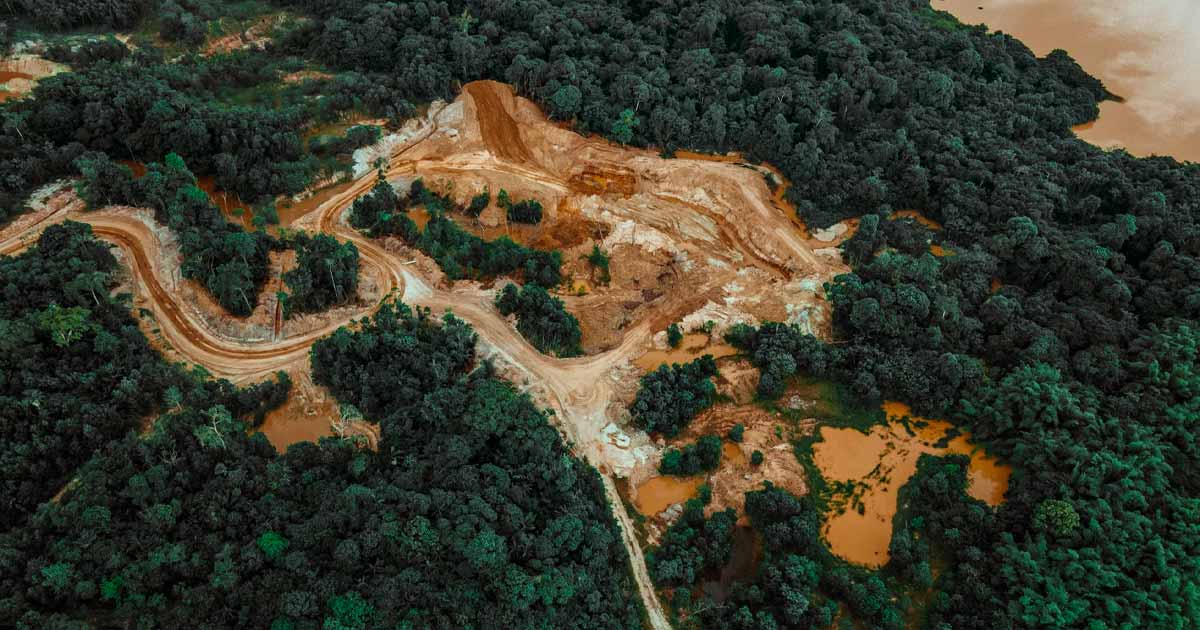
In some regions, the cultivation of coca directly contributes to deforestation. In other areas, the damage is caused by the following: roads, airstrips, and infrastructure built for transportation, which are then used by other extractive industries. According to the report, coca-related deforestation has doubled over the past decade, exceeding 20,000 hectares per year at certain times.
Pollution, carbon emissions, and toxic byproducts
Beyond land use, the report documents the’significant environmental footprint from the refining of cocaine. The process relies on gasoline, sulfuric acid, ammonia, and acetone, generating toxic waste that contaminates the soil, rivers, and wildlife.
«The production itself has repercussions,» said Ms. Lerer. «Since it is criminalized, there is no oversight of the waste disposal process. This contaminates the water, the soil, and the animals… There are health risks for laboratory workers.»
The field studies cited in the report show high concentrations of heavy metals and acid residues in waterways near processing sites, as well as increased mortality among fish and amphibians. Traces of these chemicals have even been detected far from production areas, particularly in marine species along the Atlantic coast.
The impact on the climate is just as serious. Based on estimates from the’UNODC, the authors estimate that global cocaine production in 2023 generated approximately 2.19 billion metric tons of carbon dioxide, taking into account deforestation, chemical production, transportation, and waste disposal.
Prohibition, Violence, and «Narco-Deforestation»
The report also details how prohibition fuels what researchers describe as «narco-deforestation» and «narco-mining.» Drug trafficking networks provide the financing, logistics, and armed protection necessary for illegal logging, wildlife trafficking, and mining operations.
«The cocaine trade in the Amazon functions as an investment bank for other environmental crimes,» said Mr. Lerer.
From 2017 to 2021, at least 16 major seizures in the Brazilian Amazon led to the discovery of cocaine hidden in illicit timber shipments bound for Europe. These intertwined economies fuel violence against Indigenous communities and environmental activists, while corruption undermines any form of effective oversight.
Rethinking Politics Through the Lens of reduction of environmental damage
Rather than advocating for a simplistic legalization model, the authors propose an approach they describe as reduction of environmental damage. This framework links drug policy reform to environmental protection, labor rights, and Indigenous sovereignty.
«Despite these impacts, drug policy reform is almost entirely absent from the climate policy agenda.»
The report warns that poorly designed legal markets could replicate the harms of prohibition through corporate monopolies, unsustainable agriculture, and land concentration. Instead, it advocates for models centered on Indigenous communities, family farming, and diversified agroecological systems.
According to the authors, processing and refining should be relocated to urban or industrial areas where waste can be regulated. Worker protection, land restitution, and measures to prevent forced labor and child labor are presented as essential elements of any transition.
«We must start by decriminalizing the coca leaf, then envision what this trade should look like with a view to reducing ecological damage and preventing corporate takeovers,» said Mr. Lerer. «Illegal cocaine contributes to environmental destruction, but cocaine produced by large pharmaceutical companies won’t ensure climate justice either.»
A Missing Link in the Climate Debate
From Forest to Dust ultimately positions drug policy as a missing link in global climate strategies. As long as prohibition continues to displace production, strengthen criminal networks, and externalize environmental costs, efforts to protect the’Amazon and efforts to meet climate goals will remain fundamentally incomplete, according to the report.


















A new tax of 0.5% could disrupt the hemp industry in Canada

Medical Cannabis and Driving: New South Wales Ends Automatic Penalties for THC

China's Yongji Health Takes Control of Tasmanian Botanics

Autism and Cannabis: Results from the First Placebo-Controlled Trial of NTI164

Which countries legalized medical cannabis before France?

From the boom in dispensaries to a purely medical approach: Thailand is revising its cannabis policy

South Korea is preparing to begin local production of medical cannabis to meet rising demand

In the United States, cannabis use among high school students has reached an all-time low

Medical cannabis use surges by 64 % in Denmark

Canopy Growth Enters the U.K. Market with Four Canadian Strains
-
 Cannabis and driving2 weeks ago
Cannabis and CBD: French Drivers Can Now Lose Their License Even Without a Positive Test Result
-

 Cannabis in France2 days ago
Which countries legalized medical cannabis before France?
-
Cannabis in France3 weeks ago
Cannabis Legalization: The LFI Bill Has a Major Problem—THC
-
Cannabis in the Netherlands2 weeks ago
One year after the launch of the Dutch cannabis experiment, the first trends are emerging
-
Cannabis in France2 weeks ago
French medical cannabis remains stalled at the Ministry of Health
-
Cannabis in Argentina1 week ago
Argentina Opens Its Market to Hemp Flowers Containing 1% of THC
-
Business3 days ago
South Korea is preparing to begin local production of medical cannabis to meet rising demand
-
Business2 weeks ago
The United Kingdom Is Moving Closer to a Regulated CBD Market














cbdtech
December 16, 2025 at 8:35 a.m.
By externalizing environmental and social costs through cannabis prohibition, global climate strategies remain fundamentally incomplete.