Colorado: legalization of recreational cannabis is linked to a decrease in opioid prescriptions


New research shows that the legalization of recreational cannabis is linked to lower opioid prescriptions in Colorado. For this study, researchers chose to compare the states of Maryland and Utah with Colorado, since these three states were among the first to legalize recreational cannabis. Maryland has similar demographics in terms of population, home ownership and education levels. Utah, however, is the most similar state geographically, and has a median body mass index similar to Colorado's, an essential piece of data for analyzing the volume of opioids prescribed. Its median income is also comparable to that of Colorado.
The study authors examined prescription rates in the three states for nine opioid analgesics (oxycodone, fentanyl, morphine, hydrocodone, hydromorphone, oxymorphone, tapentadol, codeine and meperidine), and two drugs used to treat opioid use disorders (methadone and buprenorphine) between 2007and 2017. To provide a baseline for comparison, they converted the quantity of each drug dispensed into what the equivalent would be in oral morphine doses in milligrams (MME). According to the study, Maryland had the highest quantity of pharmaceuticals distributed during the study period, since in 2011, the weight of 11 opioids peaked at 12,167 kg MME. This was more than double the weight found in Colorado and Utah, peaking at 5,029 kg MME in 2012 and 3,429 kg in 2015, respectively. The two most prescribed opioids in all three states were methadone and buprenorphine.
When the researchers looked specifically at drugs prescribed to help people who abuse opioids, i.e. methadone and buprenorphine, they found that Utah reduced the number of prescriptions by 31% over the study period. Colorado and Maryland, however, both increased these prescriptions by 19% and 67%, respectively. This shows, on the one hand, the extent of the problem of opioid addiction in the USA, but also the willingness to get rid of these addictions.
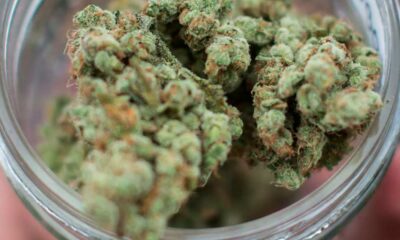
The study concluded that Colorado and Maryland experienced an overall decline in opioid sales, although the decrease was greater in Colorado. It's not yet clear why this decline was particularly significant in Colorado, but the researchers suggest that many residents are now sourcing from recreational cannabis circuits. That's right, a study in the Journal of Psychoactive Drugs had shown that 65% of recreational cannabis users in Colorado did so to relieve pain.
Medical cannabis can be prescribed in Colorado if the patient has a prescription for opioids, as it is already the case in Illinois. The state's positioning may explain this more significant decline than in Maryland or Utah.















Silent Seeds introduces its CB2 gummies: a new generation of THC-free wellness products

2,800-Year-Old Cannabis Seeds Discovered in Siberia

2026 U.S. Midterm Elections: A Major Victory for Cannabis Legalization

The United Kingdom is set to ban THCA and HHC

Cannabis in Nepal: The Supreme Court Paves the Way for Historic Legalization

Hempspresso 54 | Le Zap du Canna

After CBD, South Korea is betting on CBG, CBN, and CBC starting in 2027

Massachusetts Rejects Repeal of Cannabis Legalization by an Overwhelming Majority

Organigram is set to acquire Aurora for 360 million euros

Massachusetts Set to Allow Out-of-State Patients Access to Medical Cannabis
-
 Business2 weeks ago
Cronos Completes the Acquisition of CanAdelaar for 57.5 million euros
-
Cannabis in France3 weeks ago
France already has 3,000 cannabis retail outlets. None of them are legal.
-
Cannabis in Quebec1 week ago
Cannabis: What France Could Learn from Quebec, Eight Years After Legalization
-
Cannabis in the U.S.3 weeks ago
A DEA report confirms that there are no fatal cannabis overdoses
-
Studies on cannabis4 weeks ago
Cannabis Oil and Endometriosis: A Promising Study for Pain Relief
-
Cannabis in France3 weeks ago
CBD in France: Traceability, Retail Stores, THC and Driving… What the New Bill Proposes
-
Business3 weeks ago
Tilray is accelerating its operations in Europe thanks to a license in Portugal
-
CBD3 weeks ago
October 2026 CBD Highlights: 10 Strains and Hash to Discover from 5 French Producers














You must be logged in to post a comment Login