

Cannabis legalization does not increase crime, says US federal study

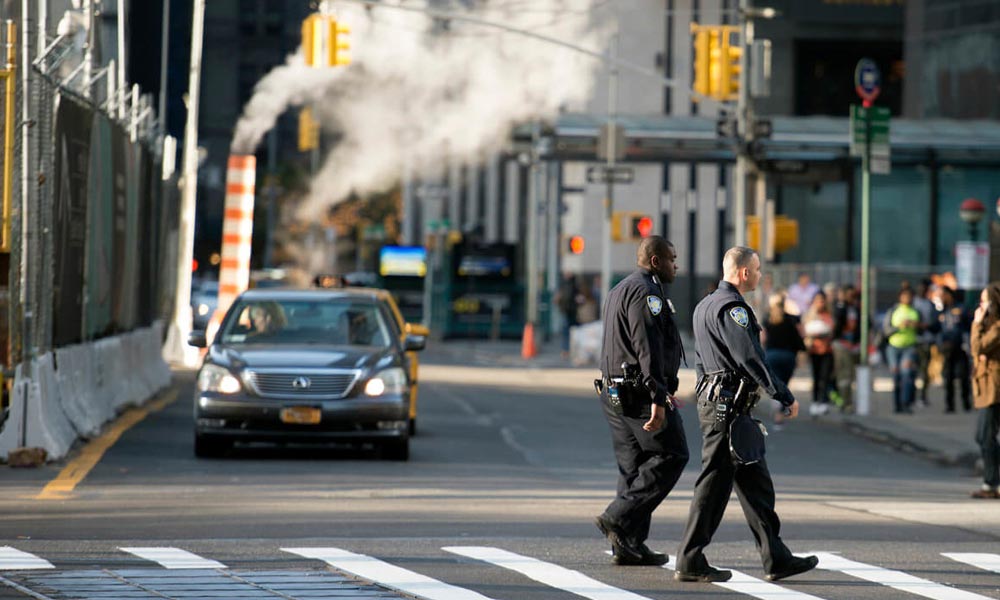
According to a recent U.S. study funded by a federal agency, the legalization of cannabis has little or no impact on rates of violent crime or property crime. However, cannabis regulation appears to be linked to a long-term decline in burglaries in a state.
Previous attempts to understand the relationship between cannabis legalization and crime have yielded mixed results. It was only recently understood that cannabis legalization enabled police officers to better solve certain crimes, or that Oregon and Washington had seen a decline in their violence statistics.
The researchers involved in this study used an improved methodology—a «quasi-experimental, multi-group, interrupted time-series design»—to generate more robust evidence.
The study, published published in the journal *Justice Quarterly* and funded by the National Institute of Justice, revealed that rates of violent crime and property crime were not affected in any statistically significant way in the years following legalization in Colorado and Washington.
«Our findings suggest that the legalization and sale of cannabis have had little or no effect on major crimes committed in Colorado or Washington,» the report concludes. «We observed no statistically significant long-term effect of recreational cannabis laws or the launch of retail sales on rates of violent crime or property crime in these states.»
The authors of the study explicitly cited the statements made by the prohibitionist group Smart Approaches to Marijuana and Alex Berenson, the Jean Costentin local, as being contradicted by their conclusions.
To determine the impact of legalization, researchers developed experimental models comparing crime rates in Colorado and Washington to those in 21 states where cannabis is not legal, from 1999 to 2016. The analysis is based on FBI data on violent crime, property crime, auto theft, burglary, and robbery.
Immediately following legalization, a temporary increase in property crimes was observed in both states, along with a sharp rise in violent assaults in Washington, but these did not reflect long-term trends, «suggesting that if cannabis legalization affects crime, it does so only in the short term,» the study’s authors write.
The only significant long-term effect noted by researchers is the decline in the burglary rate in Washington.
«In summary, our findings suggest that there may have been immediate increases in crime at the time of legalization, but there were no long-term changes in crime rates due to legalization, apart from a decline in burglary in Washington. Although the short-term increases appear to suggest a rise in cannabis-related crime, we caution against this interpretation, as these increases do not correspond to permanent changes and may have been artificially induced by the short time lag between legalization and the start of sales.»






















The «cannabis» fine raised to 500 euros under the RIPOST Act

Sacha Baron Cohen Brings Ali G Back to Life During a Surprise Appearance at Wimbledon

Botswana Paves the Way for Commercial Hemp Cultivation

The First Authorized Medical Cannabis Cultivation in the Canary Islands

Germany Ends Public Health Insurance Coverage for Medical Cannabis Flowers

Cannabis Legalization in Pennsylvania Once Again on Hold

Democratic senators are reviving a bill to legalize cannabis at the federal level in the United States

A THC:CBD oil shows promising results in reducing agitation in people with dementia

San Francisco Allows «Cannabis Cafés»

Kenya Denies Rastafarians the Right to Use Cannabis
-

 Cannabis in Europe4 weeks ago
Bosnia and Herzegovina Continues to Roll Out Medical Cannabis Following Its Legalization
-
Cannabis in France4 weeks ago
France Submits the Long-Awaited Decree on the Reimbursement of Medical Cannabis to the Council of State
-
Cannabis in the U.S.4 weeks ago
The DEA Begins Hearings on the Federal Rescheduling of Cannabis
-
Business3 weeks ago
China Invests $10 Million in Medical Cannabis in Lebanon
-
Cannabis in Thailand4 weeks ago
Thailand Threatens Cannabis Shops with Severe Penalties
-
Cannabis in Australia3 weeks ago
South Australia is working to identify more water-efficient hemp varieties
-
Exchange4 weeks ago
Glass House will be the second U.S. cannabis company to list on the New York Stock Exchange
-
Cannabis in Africa2 weeks ago
Kenya Denies Rastafarians the Right to Use Cannabis














You must be logged in to post a comment Login