8 years of cannabis legalization in Colorado: what has been achieved?

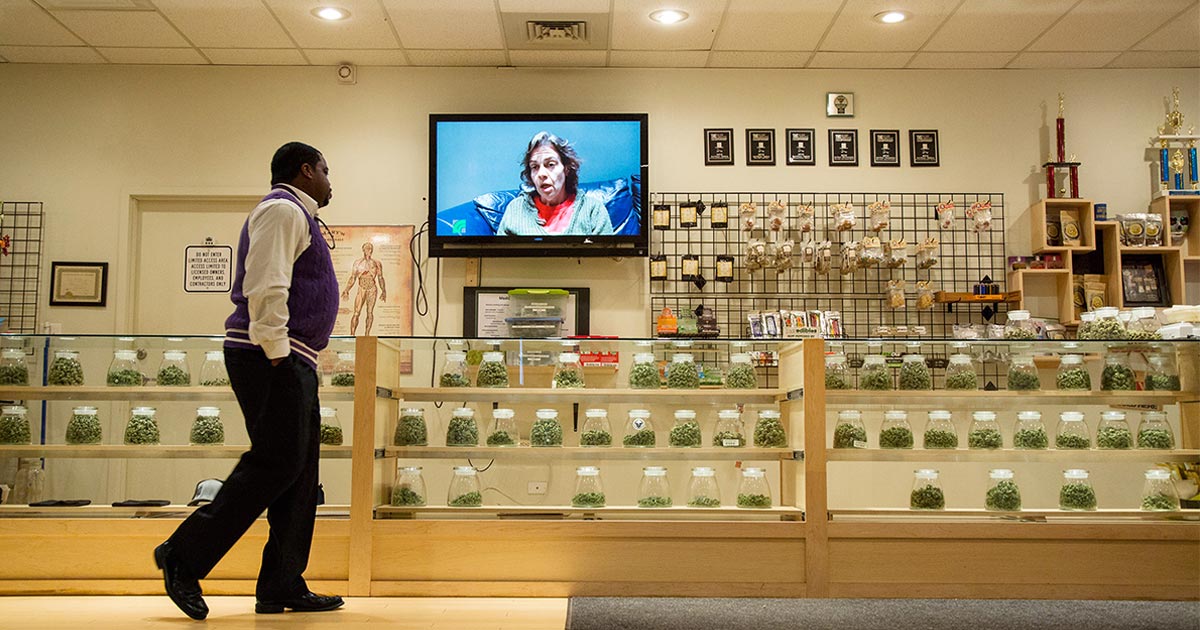
In 2012, Colorado became the very first American state to legalize cannabis for adult use, passing Amendment 64. On Election Day, 55% of Colorado voters cast ballots for the measure, which would allow personal use of cannabis and establish a regulated market.
This legal market was launched in 2014. There are now around 590 cannabis retail stores in Colorado, and combined recreational and medical cannabis sales in 2019 reached a record 1.75 billion $, up 13% on the previous year.
Over the past 8 years, a number of studies, surveys and statistics have been published giving an overview of the effects since the market was launched. The latest, the 2019 Regulated Marijuana Market Update, For example, it provides a number of parameters for assessing regulatory performance.
Cannabis sales and taxes
Financially, Colorado has benefited from these 6 years of legal cannabis sales. Total cannabis sales in the state rose from approximately 683.5 million $ in 2014 to over $1.75 billion in 2019. In the first 7 months of 2020, the state is on track to exceed 2019 totals, a rise in legal sales boosted by the coronavirus pandemic and containment, with July 2020 at over 200 million $ in sales.
In total, since the market opened in January 2014 through July 2020, Colorado's medical and recreational retail stores have sold nearly 9 billion $ of cannabis products. And while flowers accounted for some 75% of products consumed in the adult-use market in 2014, they account for just 46.8% today and 32% for concentrates, while the edibles remained stable at around 14%.
These retail cannabis sales have translated into significant tax revenues for the State of Colorado, which have more than tripled over the past six years, from nearly 67.6 million $ in 2014 to over 302 million $ in 2019.
Medical cannabis taxes are distributed to several government functions, including education, public health, construction, law enforcement and addiction prevention and services. Some of these funds have helped open new mental health clinics.
Taxes on recreational cannabis were distributed to the Ministry of Education to the tune of 200 million $ for school construction alone, and also financed programs to prevent school dropouts and bullying, as well as subsidies for school health professionals and education.
Municipalities also reaped a share of the taxes. The City of Denver spent more than 16 million $ on education between 2014 and 2019, funding 8 youth diversion programs and substance abuse prevention programs in 17 different schools. The city has also invested nearly 9 million $ to repair aging parks and recreation centers, about 11.2 million $ each year for its affordable housing fund and more than 3 million $ for opioid intervention and resources.
Jobs
With the deployment of a cannabis industry in Colorado, related employment and ancillary sectors have also expanded. The exact number of jobs is not public, but as of April 2020, Colorado has issued 40,267 individual licenses and 1,686 business owner licenses. According to estimates from Marijuana Policy Group, One active license equals 0.467 full-time equivalent positions. This would suggest that Colorado's cannabis industry employs approximately 19,592 full-time equivalent employees.
Colorado may have the largest per capita cannabis employment market in the U.S. according to Leafly which estimates that Colorado's industry accounts for 34,705 cannabis jobs, second only to California.
Tourism
As the very first U.S. state to launch a legal cannabis market, Colorado has enjoyed a boost from tourism, a fact so ingrained in the state that Colorado's governor recently urged Texas not to legalize cannabis so as not to dampen Coloradan tourism.
Yes BUT it would reduce tourism to Colorado, so make sure to consider Colorado first in any Texas decisions https://t.co/5Gh8bNBKu0
- Jared Polis (@jaredpolis) October 20, 2020
Tourism to Colorado has increased by 51% since 2014. More than 6% of Colorado travelers that year said access to cannabis was one of the main reasons for their visit.16% of winter 2018-2019 travelers and 15 percent of summer 2018 travelers have declared have visited a retail marijuana store during their stay in the state.
Some also believe that cannabis legalization has led to an increase in the state's homeless population. A survey conducted in 2018 among seven Colorado city and county jails showed that 1/3 of homeless inmates admitted to coming to Colorado after 2012, at least in part, because of legal cannabis, though this was not necessarily the only reason.
Crime rates
THE total number of cannabis-related arrests dropped after legalization. According to an October 2018 report from the Colorado Division of Criminal Justice's Office of Research and Statistics, arrests dropped by 56% between 2012 and 2017, from 12,709 to 6,153.
The report from Colorado Division of Criminal Justice Office of Research and Statistics also revealed that the total number of cannabis industry-related crimes remained stable and represented only a very small part of overall crime, mainly burglaries, accounting for 59% of all industry-related crimes in 2017.
At the same time, however, all forms of violent crime in Colorado have steadily increased over the past five years, according to the latest report annual Colorado Bureau of Investigations on statewide crime statistics.
Violent crime, including murder and aggravated assault, increased by 25% from 2013 to 2017 and has continued to rise in the years since. Property crime rates also increased statewide during this period, but have since begun to stabilize and even declined slightly in 2018.
A 2019 study analyzing crime rates in Colorado and other states concluded that cannabis legalization appears to have little or no effect on the number of violent and property crimes. Whether Colorado's rising crime rates are related to legalization is hotly debated. Larimer County Sheriff Justin Smith declared to CNN that cannabis doesn't make it more likely that a person will commit a crime, but rather that it attracts a «growing seasonal transient population» more likely to commit a crime.
Medical use of cannabis
The legalization of cannabis in Colorado has led to a drop in the number of patients registered with the state's medical cannabis program. The number of patients fell from 111,030 in 2014 to 81,722 in March 2020.
Data suggests that patients have exited Colorado's program in favor of the state's retail trade, with participation in the medical cannabis program adding regulatory hurdles. Patients must see their doctor each year for a new recommendation, then pay a 25$ treatment fee.
The convenience of recreational retail sales may be attractive to patients who still use cannabis therapeutically but obtain it on the adult-use market.
Cannabis use among teenagers
Federal data shows that cannabis use among teens has plummeted in Colorado since cannabis legalization. The percentage of high school students who used cannabis in the past month dropped by 11% between 2011 and 2017. In addition, teens who reported ever trying cannabis also dropped by 11% over the same period.
According to a report October 2018 report from the Colorado Division of Criminal Justice, adult-use cannabis has also had no impact on graduation or dropout rates in Colorado. Since 2012, graduation rates have increased while dropout rates have decreased.
Cannabis advocates argue that legalization helps reduce teenage use by making cannabis more difficult to obtain. By hindering the illegal market and imposing stiff penalties on regulated cannabis businesses for selling to minors, cannabis becomes less accessible to minors.
The lower cannabis use among teenagers in some parts of Colorado could also be partly attributed to youth education and prevention campaigns. In Denver, a recent survey showed that 81% of teens aged 13 to 17 said the prevention campaign had discouraged them from using cannabis. 80% of teens in this age group also said they were not currently using cannabis.




















JIHE 2026: Japan’s Largest Trade Show Dedicated to Hemp and CBD Returns to Tokyo with More Than 100 Industry Players
New Caledonia: The Courts Clear the Way for the Return of CBD

The Brazilian medical cannabis market continues to grow

Morocco: Three Cannabis-Based Medications Approved for the Treatment of Epilepsy

Canopy Growth Receives New EU-GMP Certification to Strengthen Its Presence in Europe

Three years after legalizing medical cannabis, Albania continues to establish regulations for it

The first plant-based medical THC spray arrives in the United Kingdom

Medical Cannabis in Germany: THC Prices Vary by a Factor of 12

France already has 3,000 cannabis retail outlets. None of them are legal.

Morocco's exports of legal cannabis have expanded to 15 countries
-
 Business2 weeks ago
The legal cannabis market in New York exceeds 4 billion $ in revenue
-

 Cannabis in France4 weeks ago
Which countries legalized medical cannabis before France?
-
Business4 weeks ago
South Korea is preparing to begin local production of medical cannabis to meet rising demand
-
Cannabis in France4 days ago
France already has 3,000 cannabis retail outlets. None of them are legal.
-
Cannabis in Thailand4 weeks ago
From the boom in dispensaries to a purely medical approach: Thailand is revising its cannabis policy
-
Cannabis in the U.S.5 days ago
A DEA report confirms that there are no fatal cannabis overdoses
-
Cannabis and driving3 weeks ago
Medical Cannabis and Driving: New South Wales Ends Automatic Penalties for THC
-
Cannabis in France3 weeks ago
France’s Drug Policy Chief Defends Cannabis Prohibition... and Runs Into the Facts
















You must be logged in to post a comment Login